The Counter (Mitja Birlo) - Zurich
The Counter - Cosmopolitan Contrasts
There’s no shortage of top restaurants in extraordinary locations. Under water, high up on a mountain peak, in the Eiffel Tower - but The Counter in Zurich is likely unique in the world right now: two stars in a railway station. (Jiro Ono’s sushiya in Tokyo’s Ginza station, once awarded three stars, hasn’t been listed in the Michelin Guide since 2019.) And not just any station, but Zurich’s main station, one of the busiest in Europe. Up to half a million people are swept through its halls and passages every day, and another 200,000 bustle about in the surrounding area. Quite a noisy throng.
The counterpoint to the full-contact sport of the station concourse at rush hour is this intimate counter restaurant in the south wing of the former main building. Contrasts have always accompanied Mitja Birlo. He was born in cosmopolitan Berlin and grew up in East Westphalia. The 40-year-old has cooked at Traube Tonbach, Viajante in London and 7132 Silver in Vals, among others. In Vals he was awarded two stars for the first time as head chef. In 2023 he took the culinary reins at the newly opened The Counter, Zurich’s most cosmopolitan Michelin-starred restaurant, which opened its doors in December of that year. Given his CV, it’s hardly surprising that after a long stint in the Swiss mountains he was drawn back to the city. Nor will anyone who had already dined with him in Vals have been surprised when he and his small, young team cooked their way straight back to his customary two stars.
I’ve been a guest here many times, several visits a year since the opening. That says a lot about how much I appreciate Birlo’s food, his wife Florentina’s wine list and the restaurant in general. Until now, though, I hadn’t written about my experiences at The Counter. Time to finally make up for that omission.
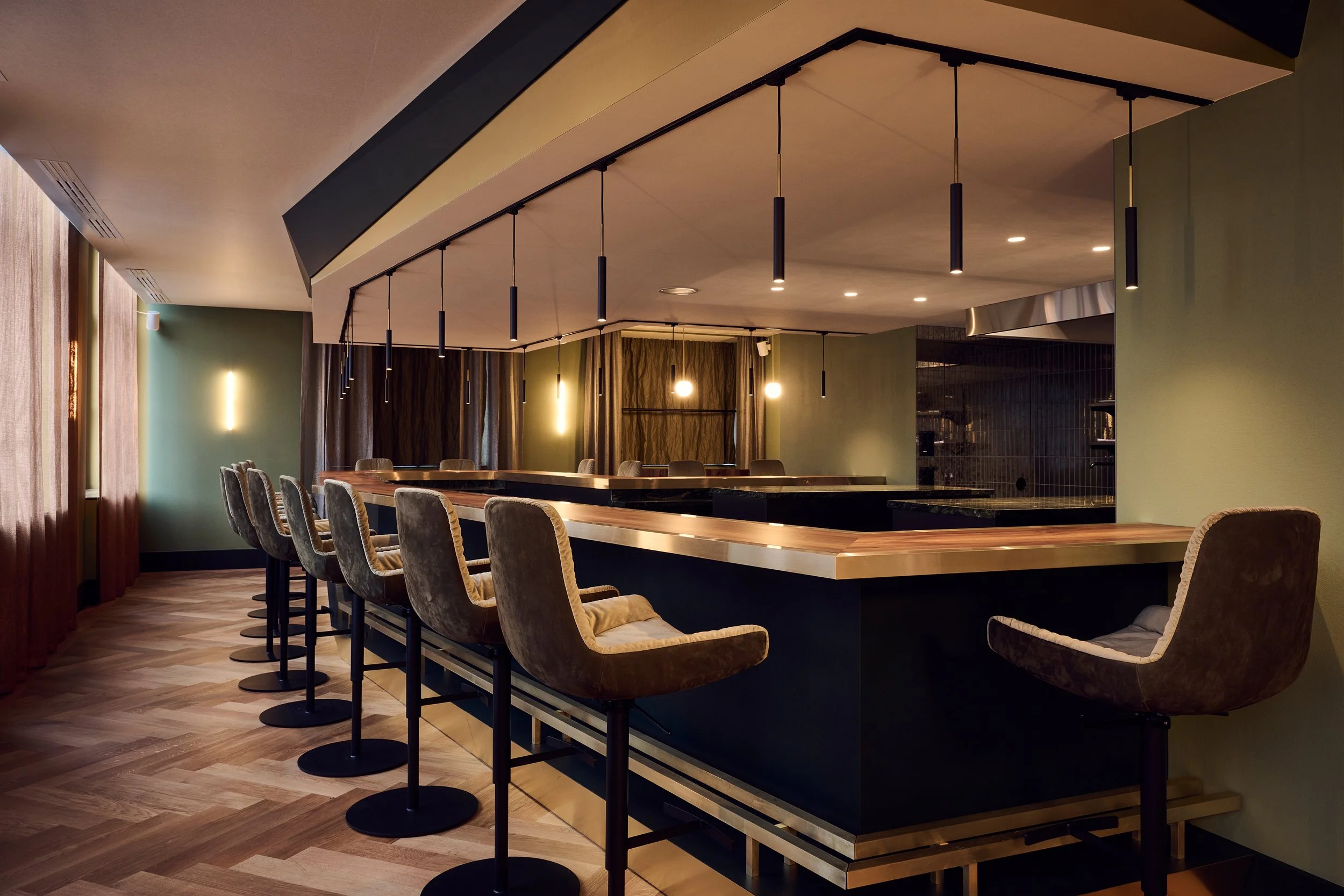
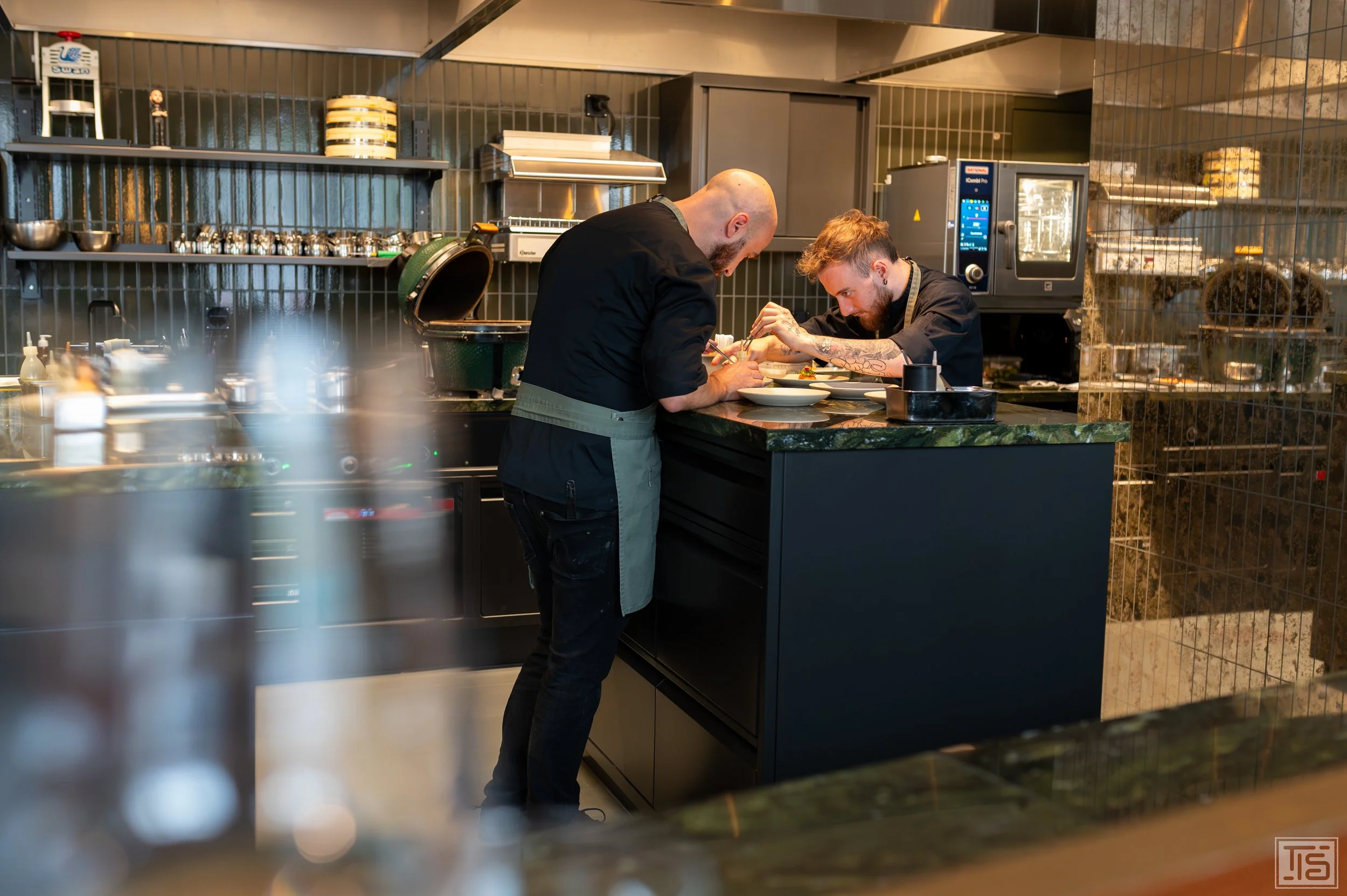
Although I’m visiting on a Saturday lunchtime, both the city and the station are packed. I quickly make my way into the building that houses the restaurant. Some of the hustle fades as the automatic entrance door closes behind me. At a second door, screened by opaque curtains, you have to ring the bell. You can’t just stroll in here, and that’s a good thing. Without a reservation, you won’t get in anyway. A friendly smile appears as the door opens. By the time it falls shut behind me, I feel I’ve entered another world. The brass-trimmed nutwood counter, the darkly shimmering marble, the softly upholstered bar stools, gentle green as a splash of colour. It’s all more reminiscent of New York, London or Singapore: urban and cosmopolitan, luxurious yet relaxed. Above all, the place feels inviting. Unlike many other counter restaurants, there is plenty of space and room to breathe here. That impression grows at lunchtime, when daylight filters through the curtains. From every seat at the counter you can watch the kitchen crew at work. An eclectic playlist, personally curated by the chef, runs through the best songs from the ’60s to the present day, and yet everything feels calm and serene. It’s almost like sitting in the Vals thermal baths in winter, watching the sugar-white, snow-covered mountains slowly being cloaked in black as the sun sets. The Birlos have brought this alpine calm with them, and it rubs off on their guests.
Even though I have a pretty clear idea of what to expect, I’m full of anticipation for the hours ahead. Over a glass of the excellent Les Terres Fines from Dhondt-Grellet, I watch the focused activity at the kitchen islands. You never have to wait long here for the first snacks anyway.
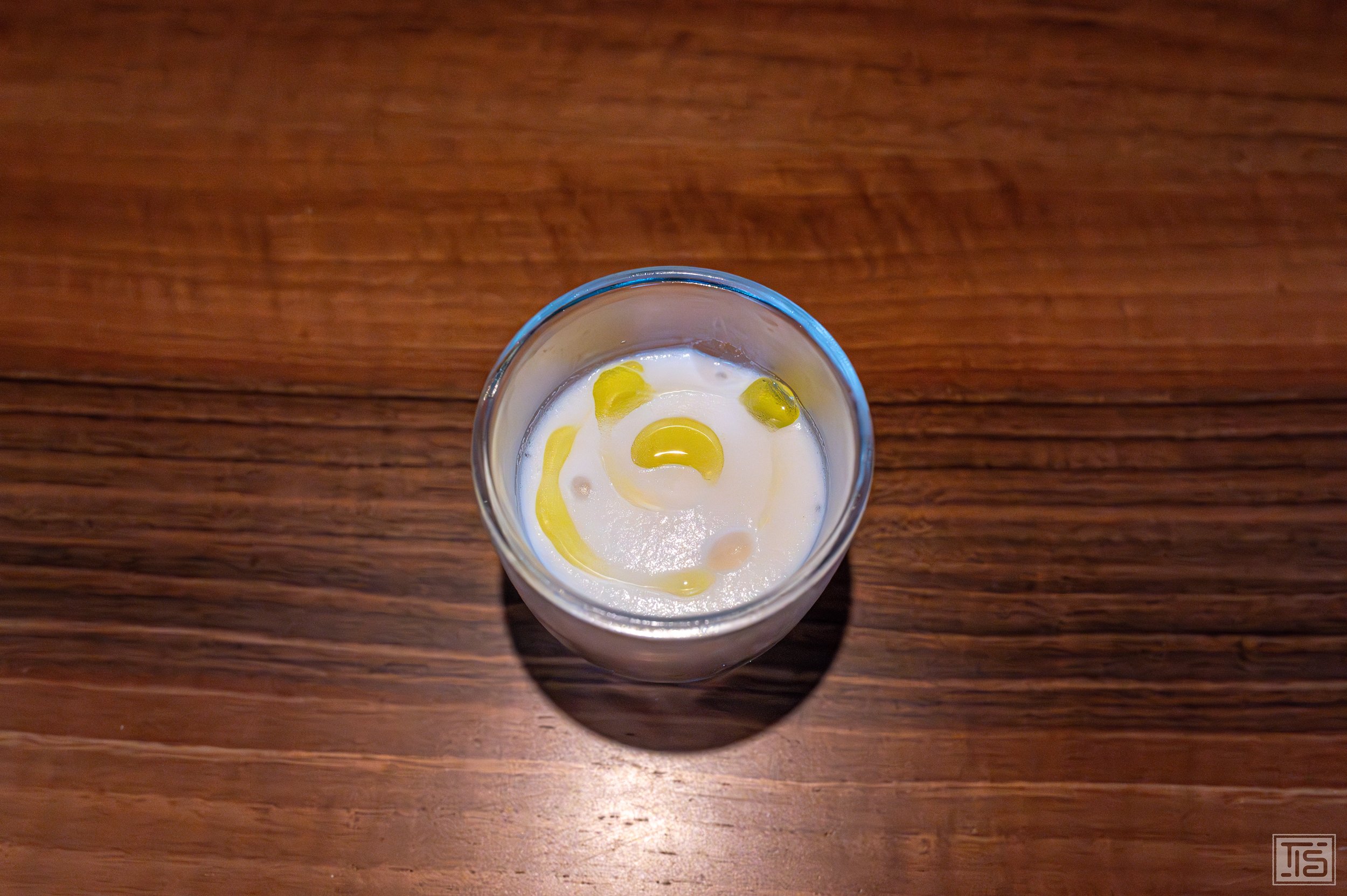
The opening act belongs to the last days of summer: gazpacho with sherry and cassis. The clarified tomato soup shows tomatoes at their very best. It’s deeply umami, yet with clear fruit and lively acidity. On top sits a tomato foam carefully seasoned with sherry, whose subtle nuttiness adds an accent as unusual as it is exciting. Cassis, or more precisely an oil made from blackcurrant wood, is something I’ve been coming across more often lately, here from Birlo’s mother’s garden. Often it’s barely perceptible. In this case, as a clearly defined seasoning element, it provides a pointed counterweight. Its layered profile of tart, bittersweet and warm green spice gently perfumes the soup and lightens everything up.
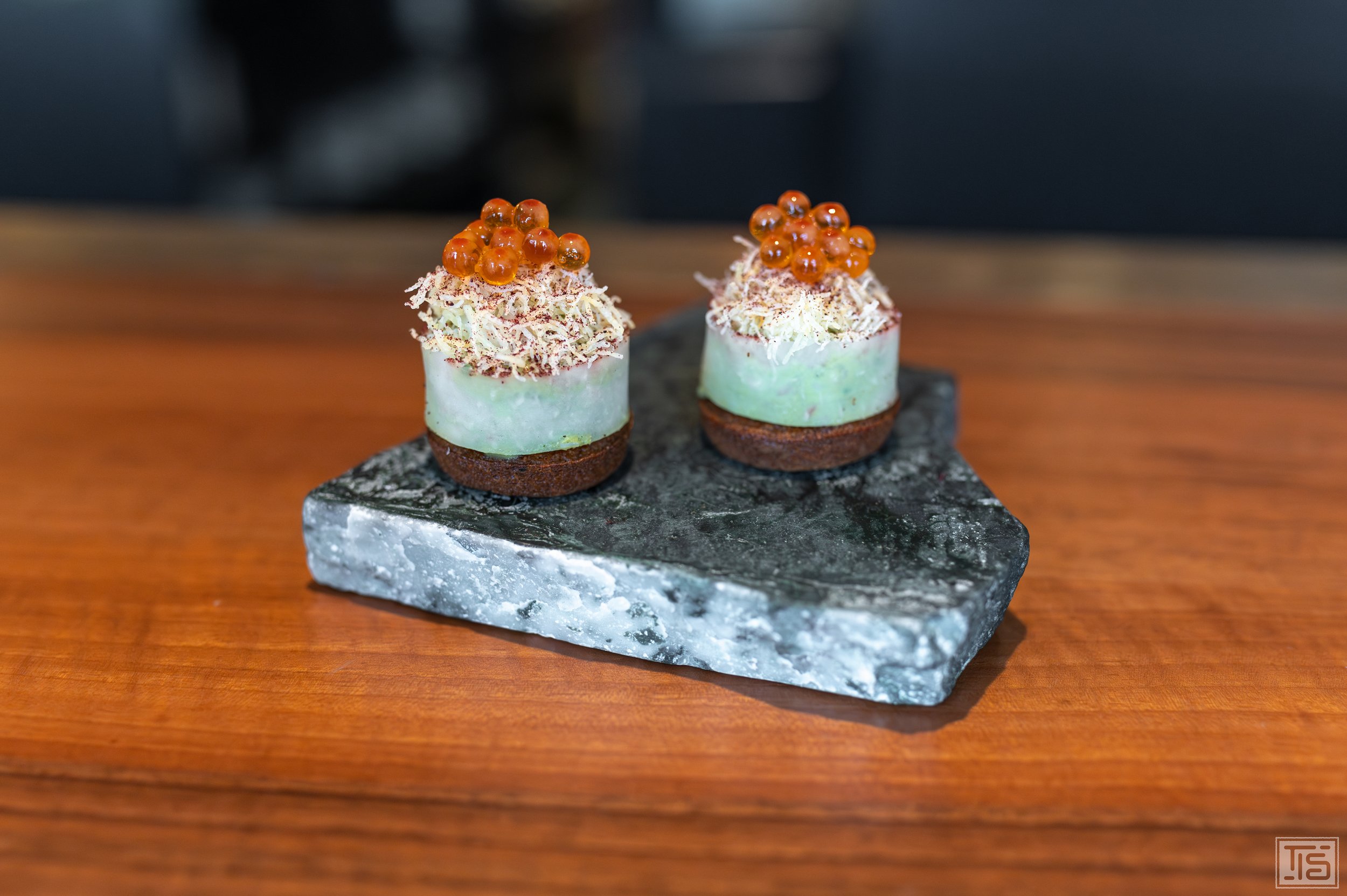
The lobster with potato and tarragon is an old acquaintance. The Breton crustacean picks up robust grill notes on the Big Green Egg, so the tender meat conjures up a laid-back beach barbecue with friends. The sides there, though, would certainly not be this elegant. The disc of fermented potato and the ethereal, anise-scented tarragon cast the lobster in an unusual, wintry, almost festive light. Ikura underlines the maritime character with a cool, clear note. Getting from a barbecue with friends to hints of Christmas in a single bite is something few manage. This amuse, too, is immensely delicious, and the best version I’ve eaten so far.
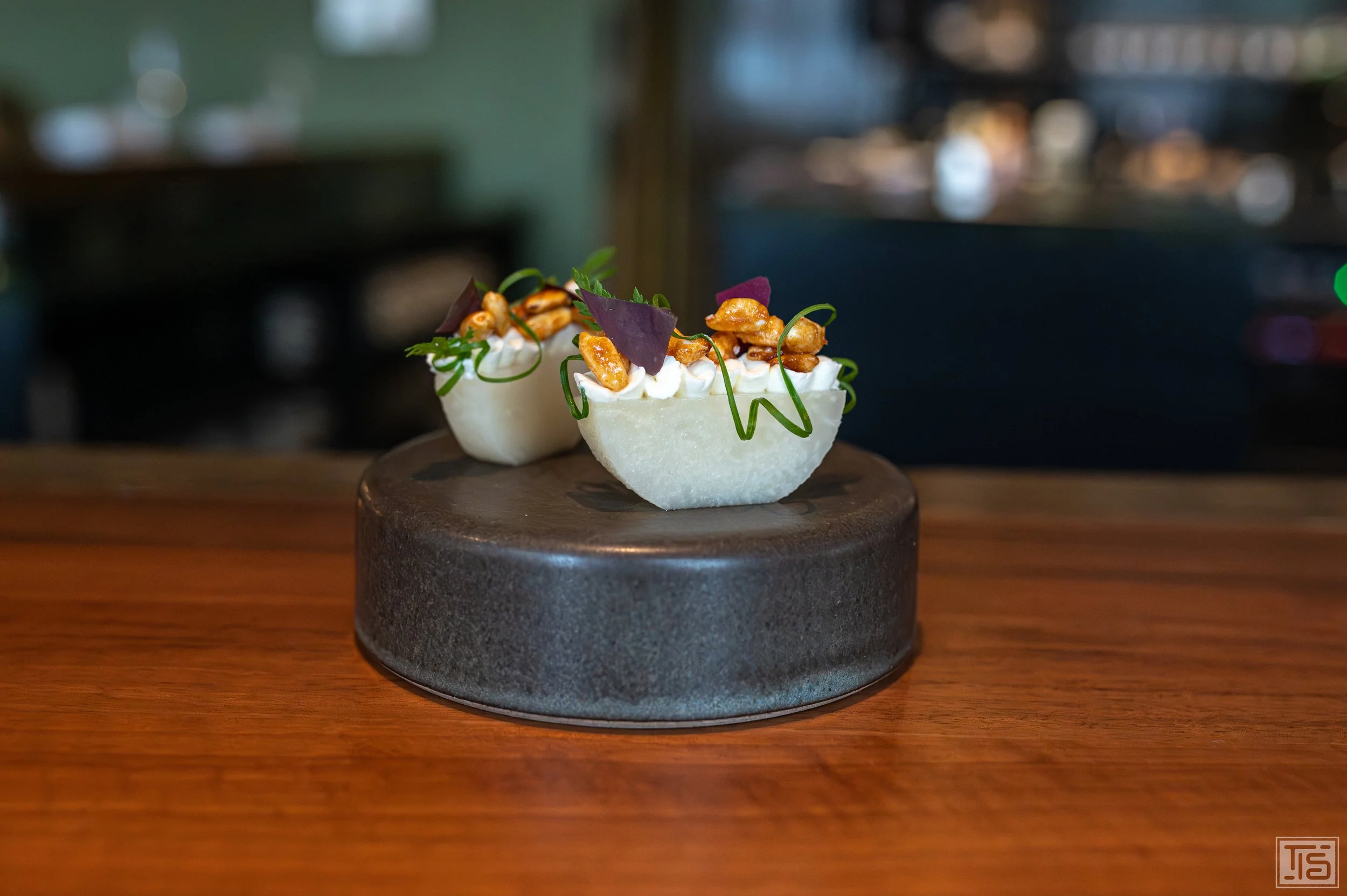
Next comes a classic that Birlo already served in Vals. Crunchy kohlrabi is pickled in yuzu overnight. The dainty half-moon is plated with a little crème fraîche, puffed rice and fresh herbs. It sounds so simple, yet it has everything you could wish for from an amuse-bouche at this level. It starts with the kohlrabi, juicy and crunchy throughout. The multifaceted, bitter acidity of the citrus accentuates the vegetable’s own flavour perfectly and carries everything with balletic lightness. The crème gives the morsel a pleasant fullness, while the crispy rice adds extra crunch along with depth and structure from its nutty, roasted notes. The precisely dosed herb tips round it off with even more liveliness and depth, and the result is a perfect snack. I can never get enough of this little treat. It’s one of my all-time favourite savoury bites, and it has never tasted as outstanding as it does today.
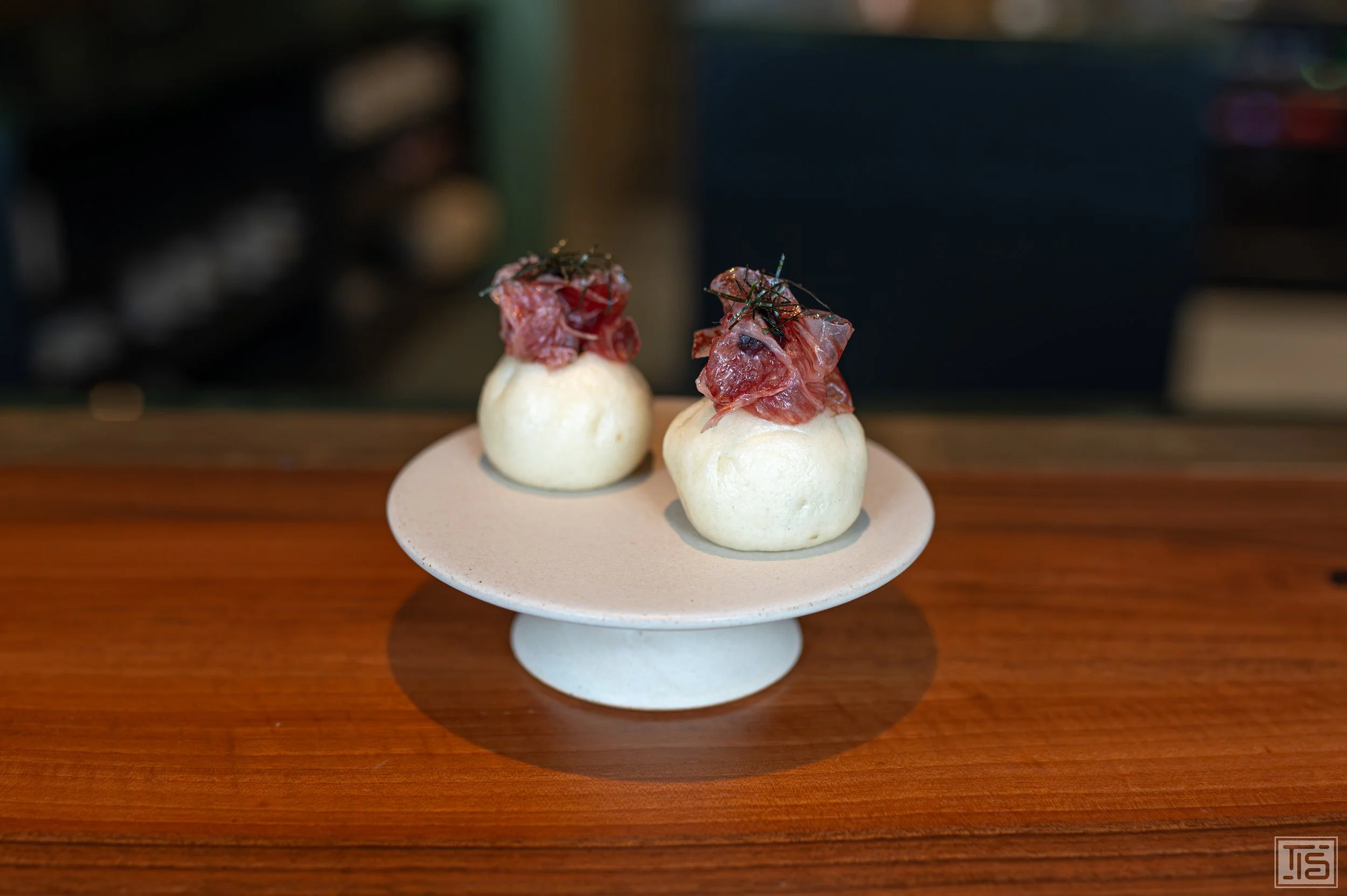
I’ve also enjoyed the last of the four amuses several times before. Juicy, fatty beef brisket is worked into an elastic, airy bao. The steamed bun is topped with nori julienne and a piece of dried wagyu beef. The wagyu is imported from Japan and aged by Luma in a salami cave in Ticino. For all the undeniable power and drive for umami, the chef knows exactly how to strike the right balance. A deft hand with seasoning and proportions creates another mini masterpiece full of depth and intensity.
The four snacks already establish that things at The Counter don’t run quite the way they do elsewhere. They’re listed on the menu as courses in their own right, on an equal footing with the rest. This shows in their striking complexity and quality. It also shows in the fact that they’re served one after the other rather than all at once, so each little bite arrives in the best possible condition. As we all know, it’s often the small details that make the difference.
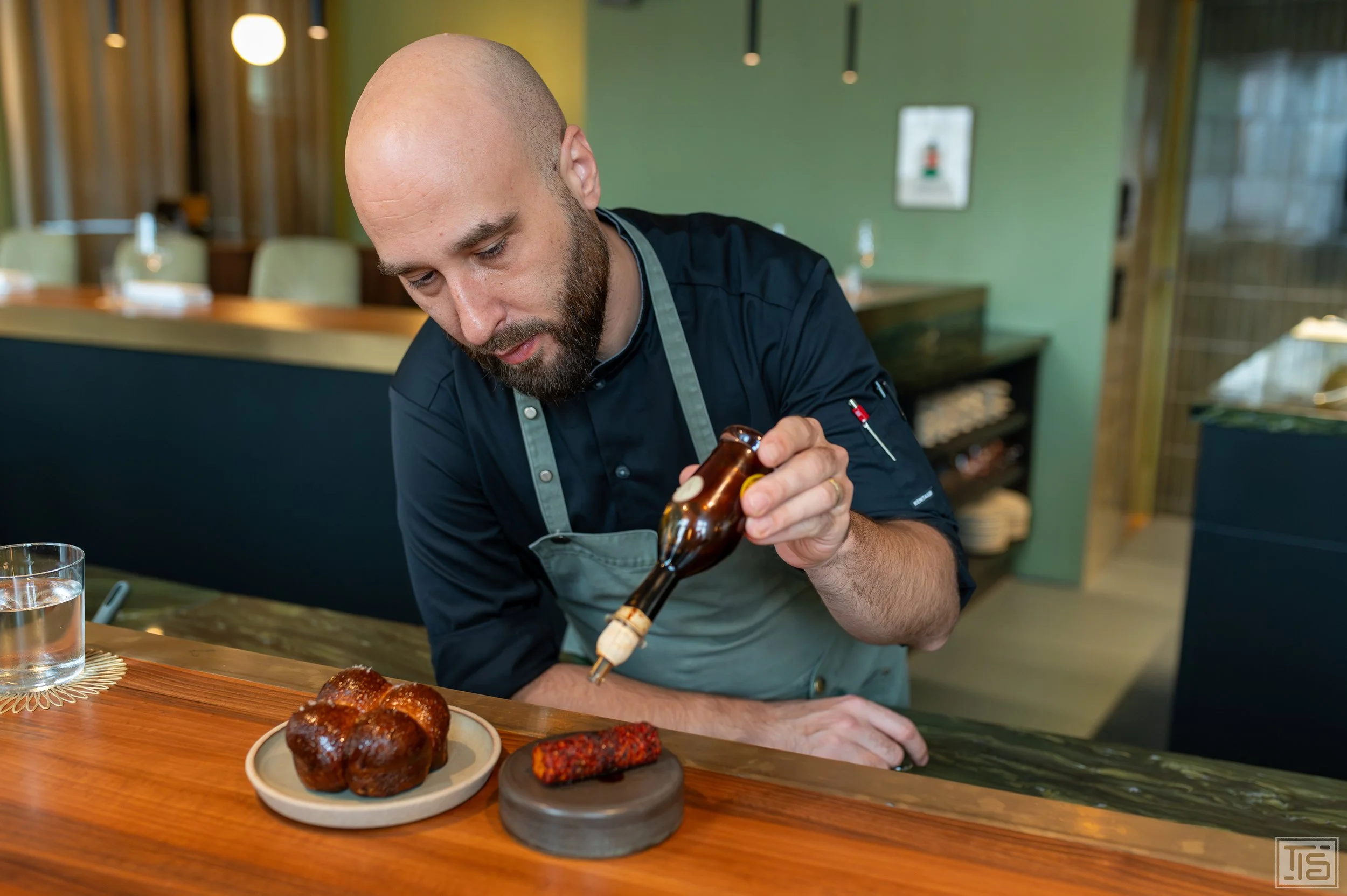
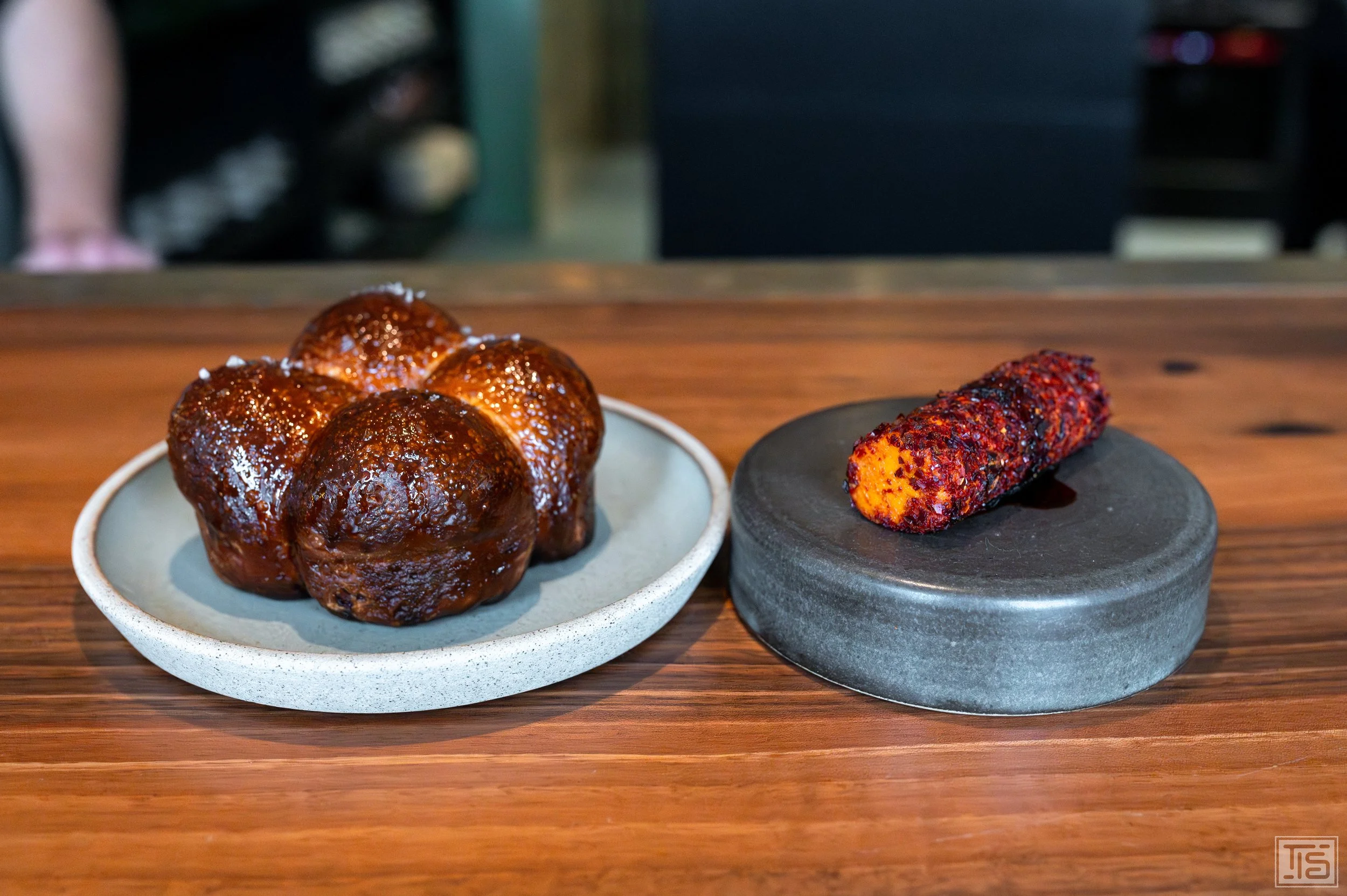
I don’t usually write about the bread service. But what I’m served here at the counter is worth more than a footnote. The kitchen has taken on Japanese milk bread, shokupan. The fluffy, soft, brioche-like loaf is given a lye bath, steering everything in the desired savoury direction. It comes with a butter that is half brown butter and is additionally seasoned with a sauce inspired by Catalan romesco. Finally, a few drops of 25-year-old balsamic are drizzled over the top. I’m a purist when it comes to bread service: a piece of first-class bread and high-quality butter is all it takes. Here, my cherished purism is reduced to absurdity. The pretzel bread alone is so outrageously good that I have to stop myself from eating it all at once. That would be a shame, because the spread deserves a patent and should be sold in delicatessens. Restraint rarely comes hard to me, especially with a whole menu still ahead, but this time I really have to hold back.
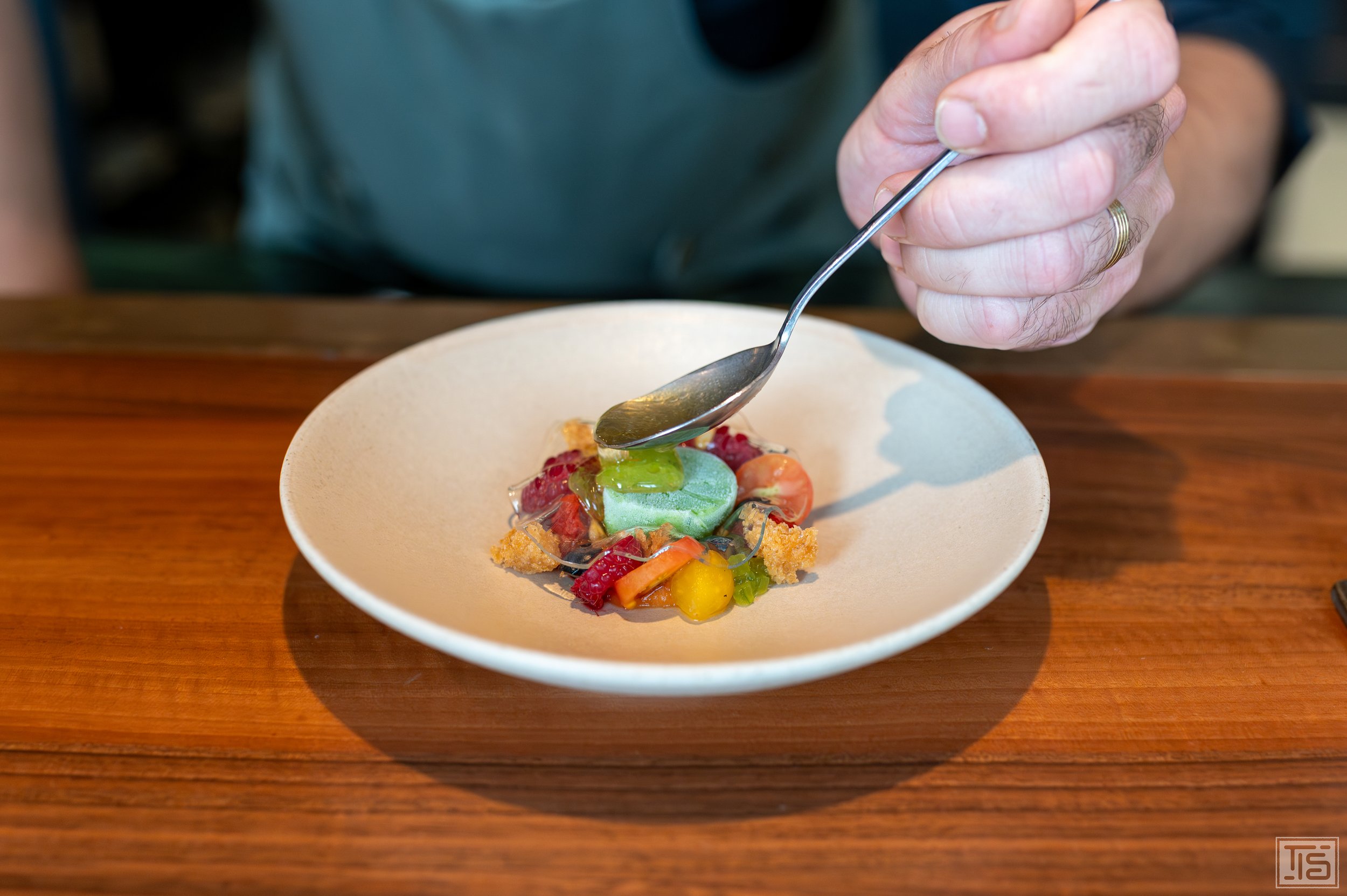
The tomatoes make another appearance, this time as a salad with raspberries and verbena. You might expect refined boredom. Admittedly, the composition isn’t particularly exciting, but the execution is flawless and a few clever touches bring tension to the dish. The various tomatoes show their natural differences: some are more acidic, others sweeter, some more umami, others more fruit-driven. In between are a few tomatoes that have been dehydrated and then rehydrated in their own water. They tie everything together and add a varied play of textures faintly reminiscent of fruit gums. Enthroned in the centre is a cucumber sorbet, assertively seasoned with chilli and packing quite a kick. Not much more is needed. Fresh berry highlights bring liveliness and verve to the plate. The verbena adds a cool, citrusy note, like a fresh breeze as the days grow shorter again. The vinaigrette strikes the same chord and balances everything out. If only every tomato salad were this delicious…
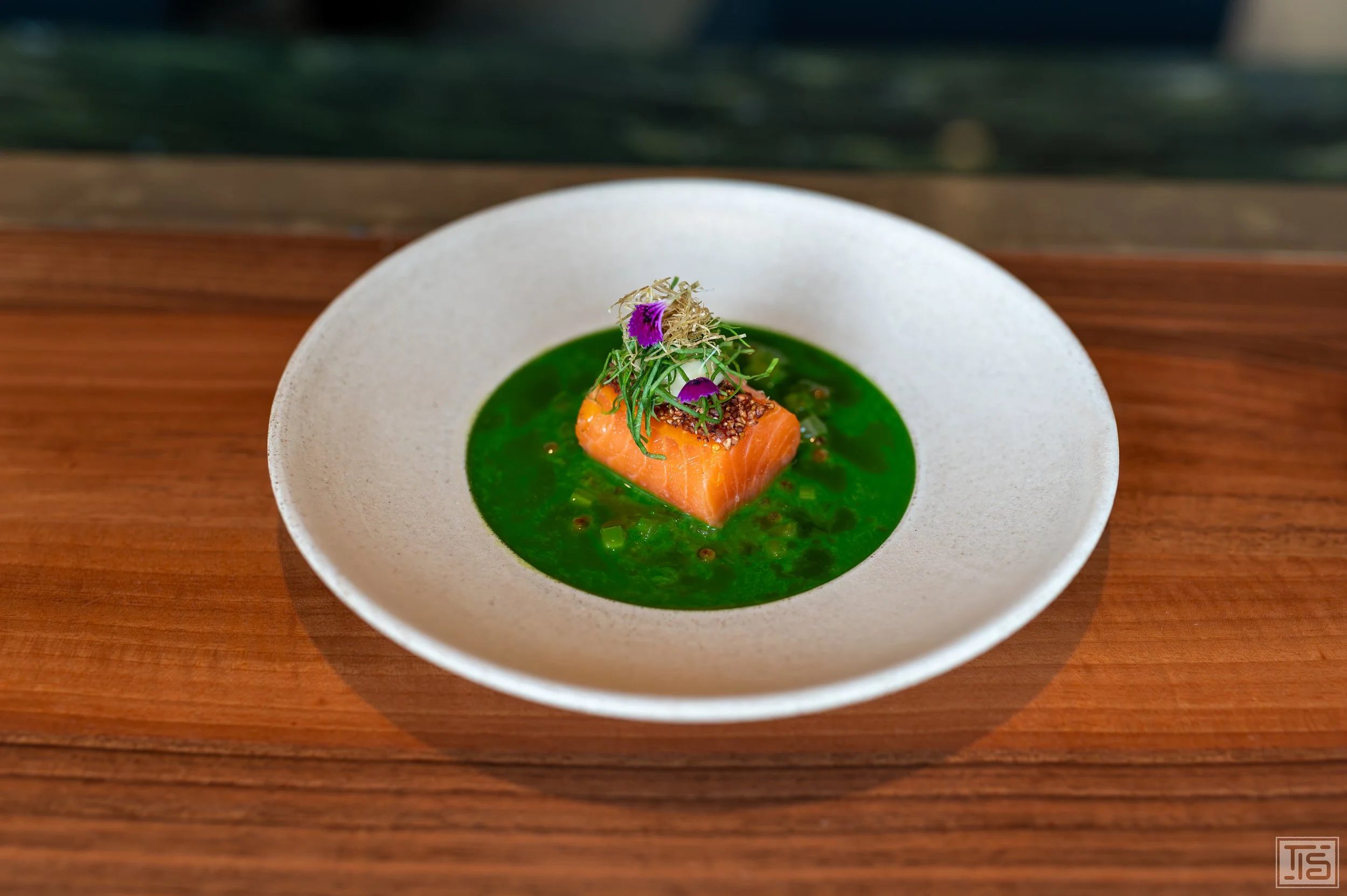
The chef indulges his penchant for seasoning with real oomph in the next course, too. At its heart is a vivid green, opaque aguachile. According to Ale, the cook presenting the dish to me, it contains pretty much every herb currently available. As befits an aguachile, though, the coriander clearly stands out, backed by pronounced heat and pointed lime acidity. The sauce is accompanied by a char fillet, first cured and then gently cooked at 36 degrees, along with cashews, buckwheat, flowers and herbs. Personally, I prefer fish with a little more structure, though that doesn’t affect the flavour. For me this creation clearly revolves around the fantastic sauce anyway, so the fish takes something of a back seat, excellent as it undoubtedly is. For all its power, this unforgettably magnificent elixir stays in balanced harmony. My earlier restraint with the bread now comes in very handy, because I can mop up every last drop of this intoxicating sauce. Magnificent!
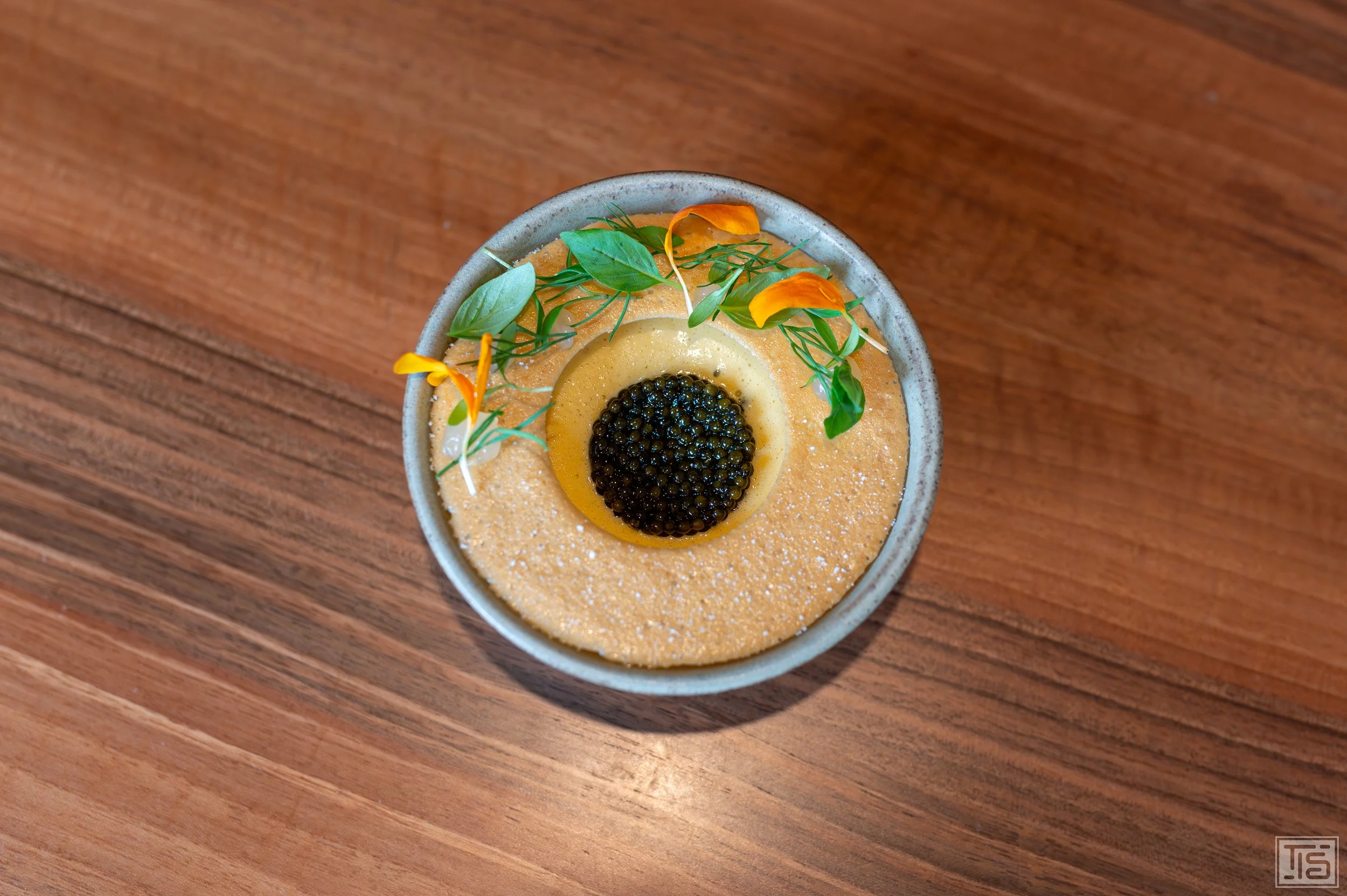
A chawanmushi has featured on the menu almost continuously since Birlo’s early days in Vals. This time the Japanese savoury egg custard is topped with Kristal caviar from Kaviari, a zabaglione and a perfectly round milk crisp. On the crisp sit basil, tarragon and marigold leaves. The theme of egg with egg (and egg) clearly offers an inexhaustible wealth of possibilities, and this version may well be its lightest and most elegant form. Aromatically, the ensemble is opulent and mouth-filling, yet the different preparations of (hen’s) egg keep it wonderfully airy. This lets the iodine-salty, slightly nutty caviar shine all the more as the central element. The herbs prove especially charming, lending the whole an ethereal summer freshness. This is definitely another highlight. The only thing to watch is the crispy ring: if too much of it lands on the spoon, the overall impression can tip a touch too sweet. But that’s easy enough to control.
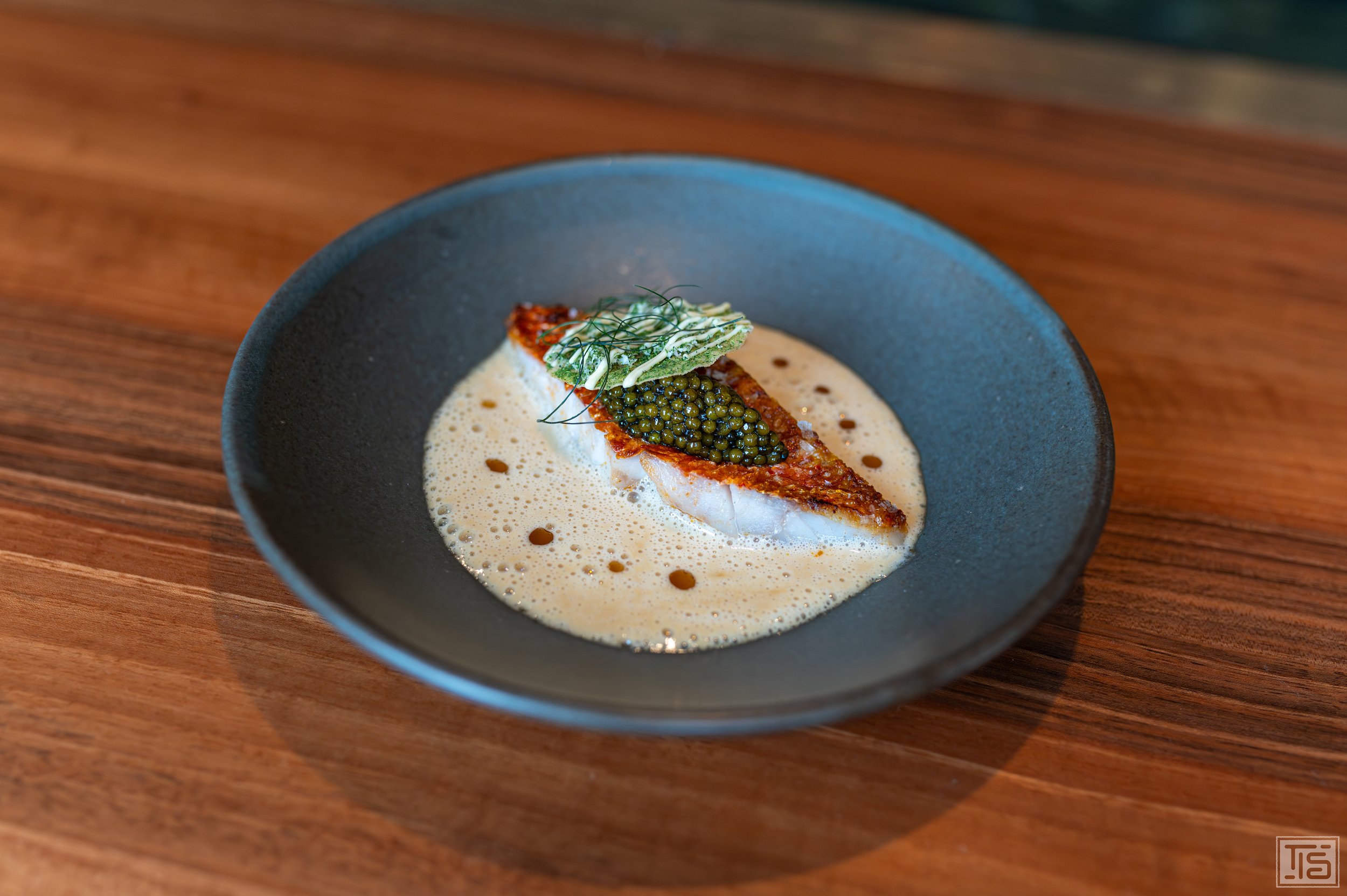
Red mullet with capers and vanilla sounds a little wild when it’s announced. The combination of vanilla and fish isn’t the issue, since plenty of long-established French three-star chefs have it in their repertoire. What raises eyebrows is the choice of fish, and the capers. As is almost always the case, creations like this are either completely off the mark or downright genius, with rarely much in between. This one is definitely the latter. It works so brilliantly because Birlo goes all in and makes no compromises. The superb, juicy and pleasantly firm fish lives off its powerful maritime notes, which always remind me of a hot day by the sea. The caviar accentuates this scent of the ocean; this time it’s AKI Prestige from Altona Kaviar in Hamburg. The pointedly tangy base of capers naturally pairs superbly with it. That alone, together with the frothed beurre blanc, would already make a convincing composition. But the perfectly dosed vanilla turns it into a plate that lingers long afterwards. It lends warmth to the rather cool ensemble and brings in a varied potpourri of aromas (smoky notes, exotic flowers, butterscotch) that catapults the dish to the next level. I’ve never had three consecutive courses at this level here before. What could possibly come next?
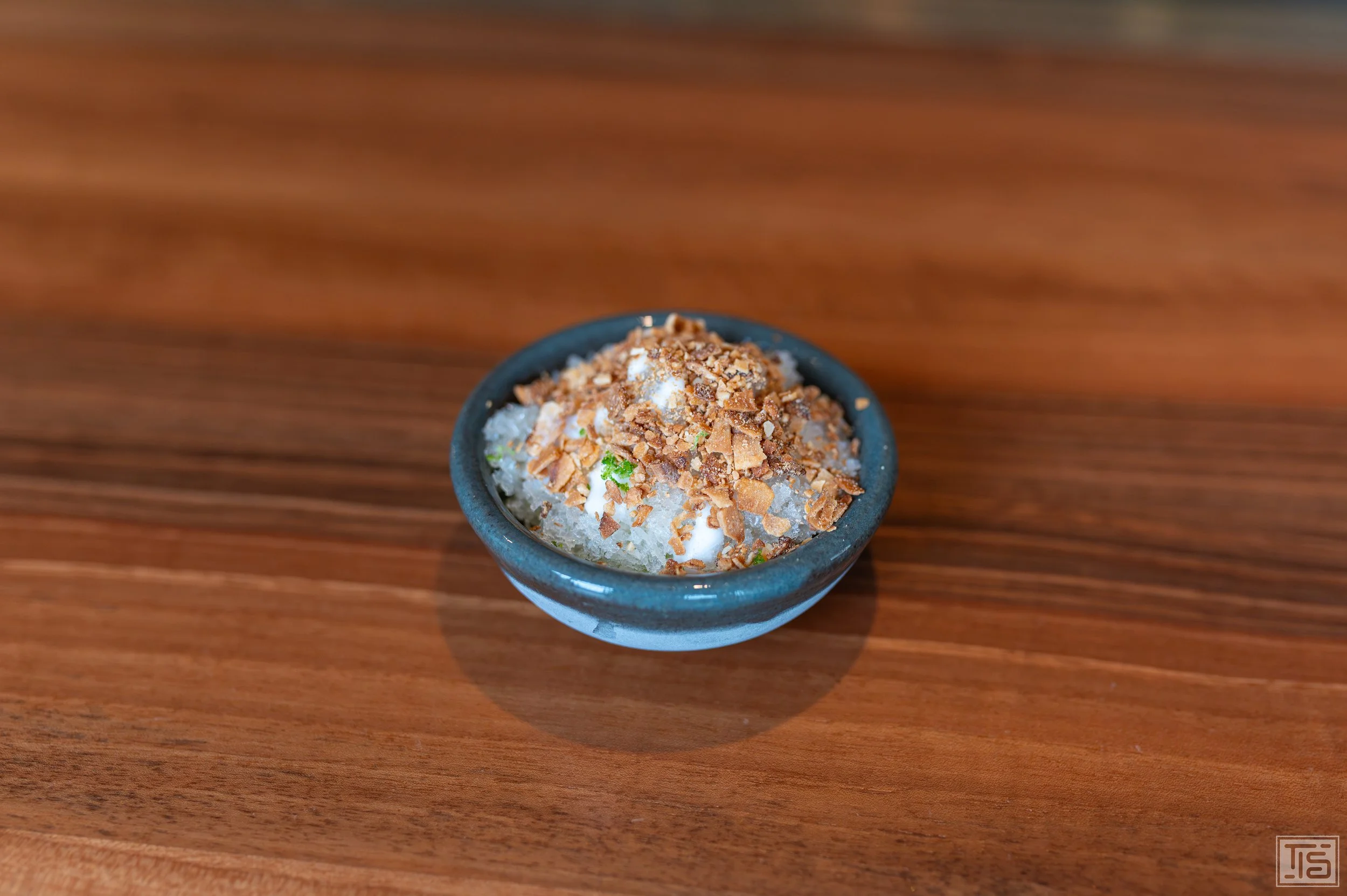
First, a refresher. Once again it’s clear that The Counter has little appetite for half measures. Out comes the Japanese Swan kakigori machine, and the shaved ice is flavoured with Thai curry and coconut. If you’re going to wake up the taste buds, this is how to do it: boldly seasoned, savoury, invigorating and full throttle. If culinary fatigue has set in by now, you’re definitely wide awake again.
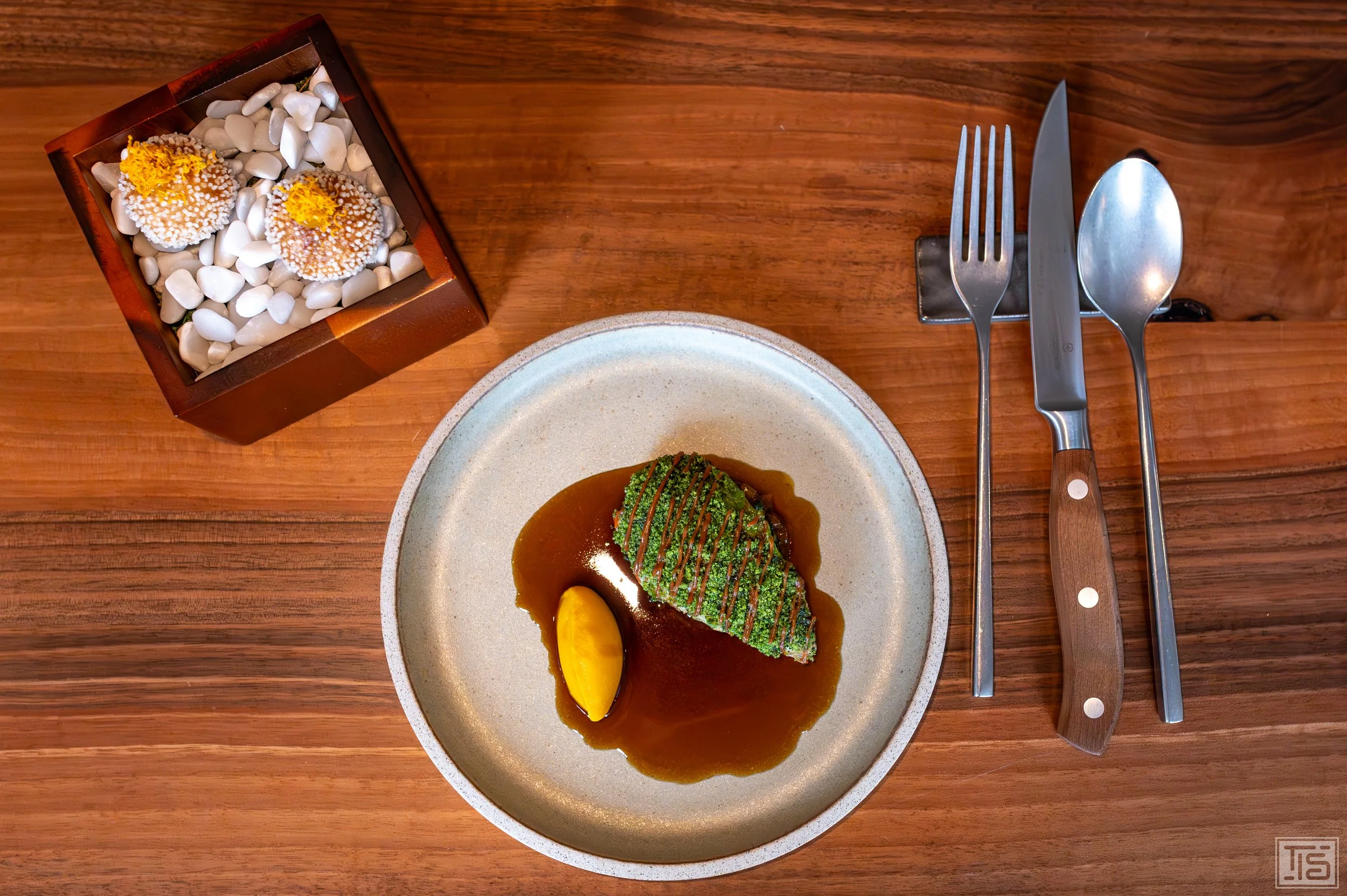
And that’s exactly as it should be, because the main course of quail with orange and chard deserves to be properly enjoyed. The Bresse bird is aged in-house for roughly another week and finally grilled on the carcass on the Kamado egg. The breast lies before me with chard and orange sauce. In a separate side dish comes the leg meat in a sourdough beignet, topped with an orange gel and fried carrot strips. Even chefs in starred restaurants don’t always cut a fine figure at the grill. Birlo, on the other hand, seems to have mastered playing with fire. A piece of Ibérico presa at Silver remains unforgettable (read the review). He finds the right amount of smoke and char for every product and every composition. Here, unlike the lobster earlier, there’s somewhat more restrained overall. A spinach farce shields the tender bird from the heat. On the plate, purism is the order of the day: grilled chard, a concentrated carrot purée and a generous jus. Alongside the breast, which is so superb it’s worth going down on your knees for, it’s above all the fine-tuning that impresses. Orange is often a tricky ingredient in savoury fine dining and needs precise calibration. Here it’s perfectly integrated, delivering a touch of sunshine and subtle Mediterranean overtones and carrying the dish with its delicate acidity. The beignet is every bit its equal. In contrast to the ascetic-looking main plate, it’s all about lascivious hedonism. There’s also a pinch of S&M, because the ball has prominent nubs that work the tongue like a foam roller. Pure bliss.
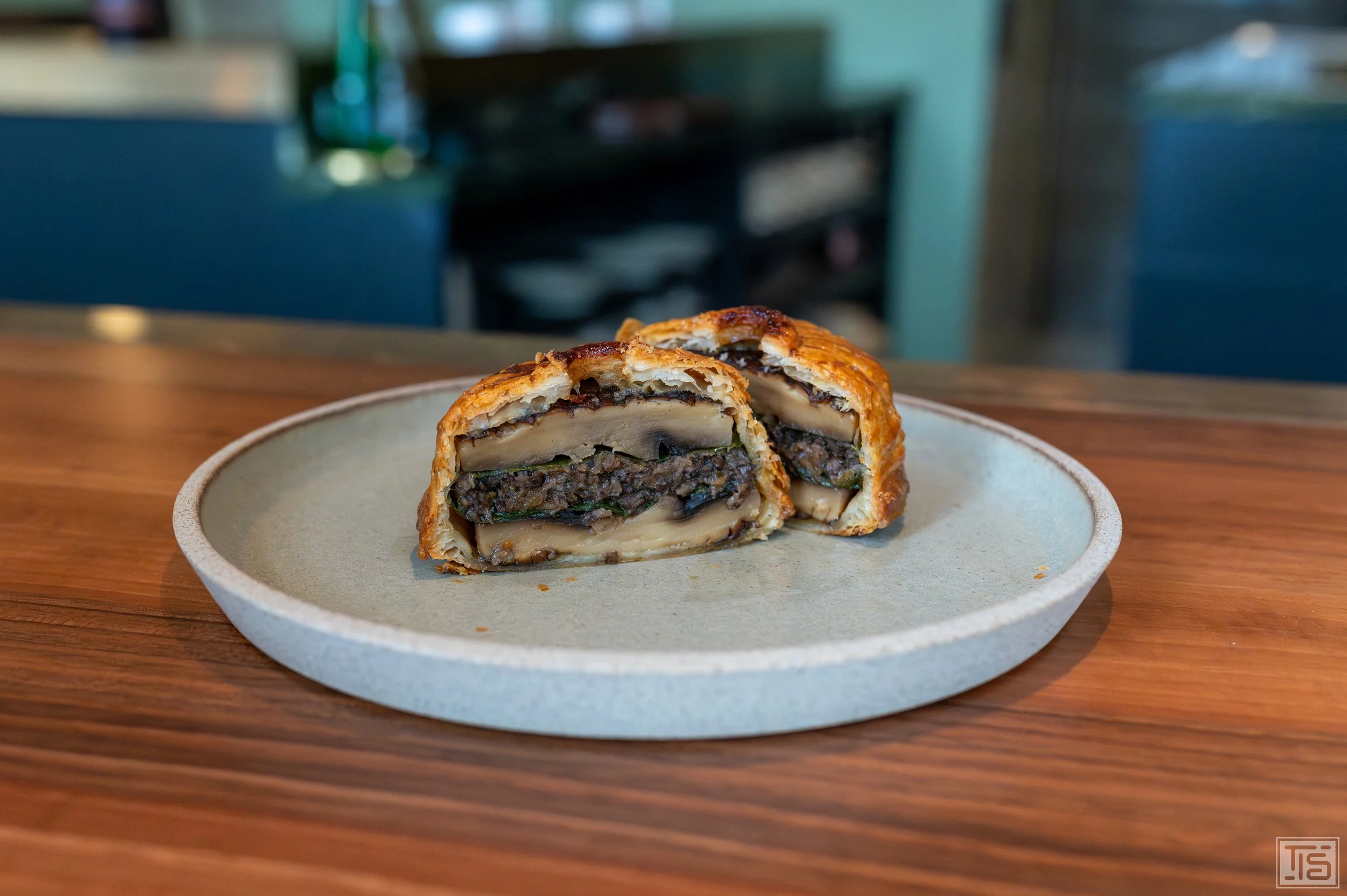
To my surprise, I also get to try the current main course from the vegetarian menu: a portobello pithivier. Inside a flaky yet juicy puff-pastry crust with seductive roasted notes are two thick slices of heavily seared, full-bodied, meaty mushroom. Between them, wrapped in chard, lies a precisely seasoned mushroom farce that gives the pie even more power and umami. Why not go one step further and serve something this glorious as the main course of the omnivore menu? Even the most die-hard carnivores wouldn’t miss a thing.
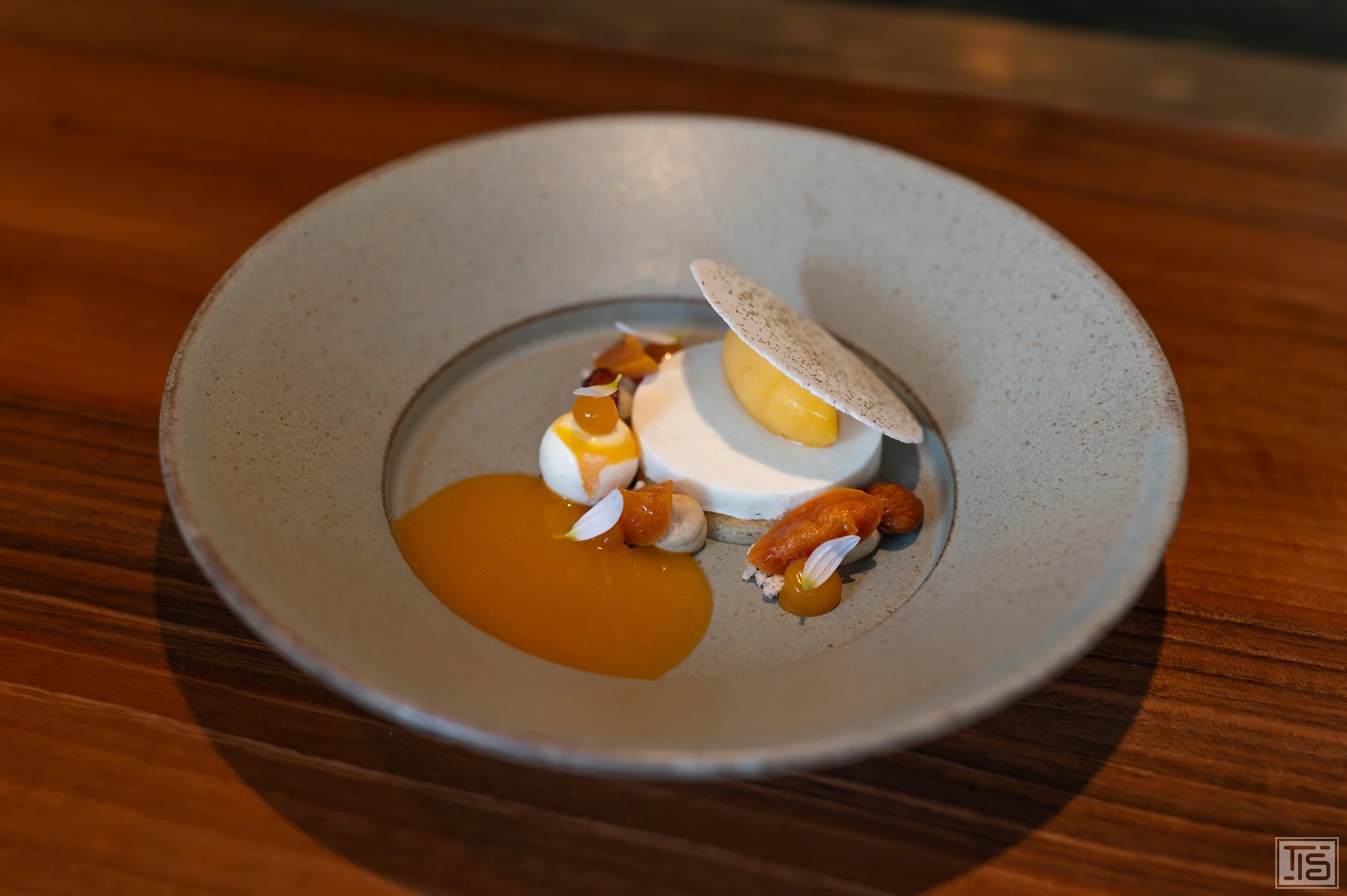
Franziska Baumann recently joined The Counter team as head pastry chef. She has previously worked at CAAA in Lucerne, at Schloss Schauenstein and under Benoît Carcenat at Valrose, among others. Her CV sounds just as promising as the first dessert: apricot, hay and fermented honey. The stone fruit is put through its paces: fresh, pickled, as ice cream, as a caramelised kernel (!) and as a sauce. Hay (milk) comes in various forms, and lacto-fermented honey is drizzled over the top and partly worked in. The very first bite convinces across the board. There’s ripe fruit and a present, mouth-watering acidity. It’s wonderfully light yet highly aromatic, and despite being firmly rooted in the warm season, its aromatic density makes it quite opulent. At the finish, a certain saltiness always shimmers through, skilfully adding another dimension and giving the whole more depth. This is exactly what a modern summer dessert should be.
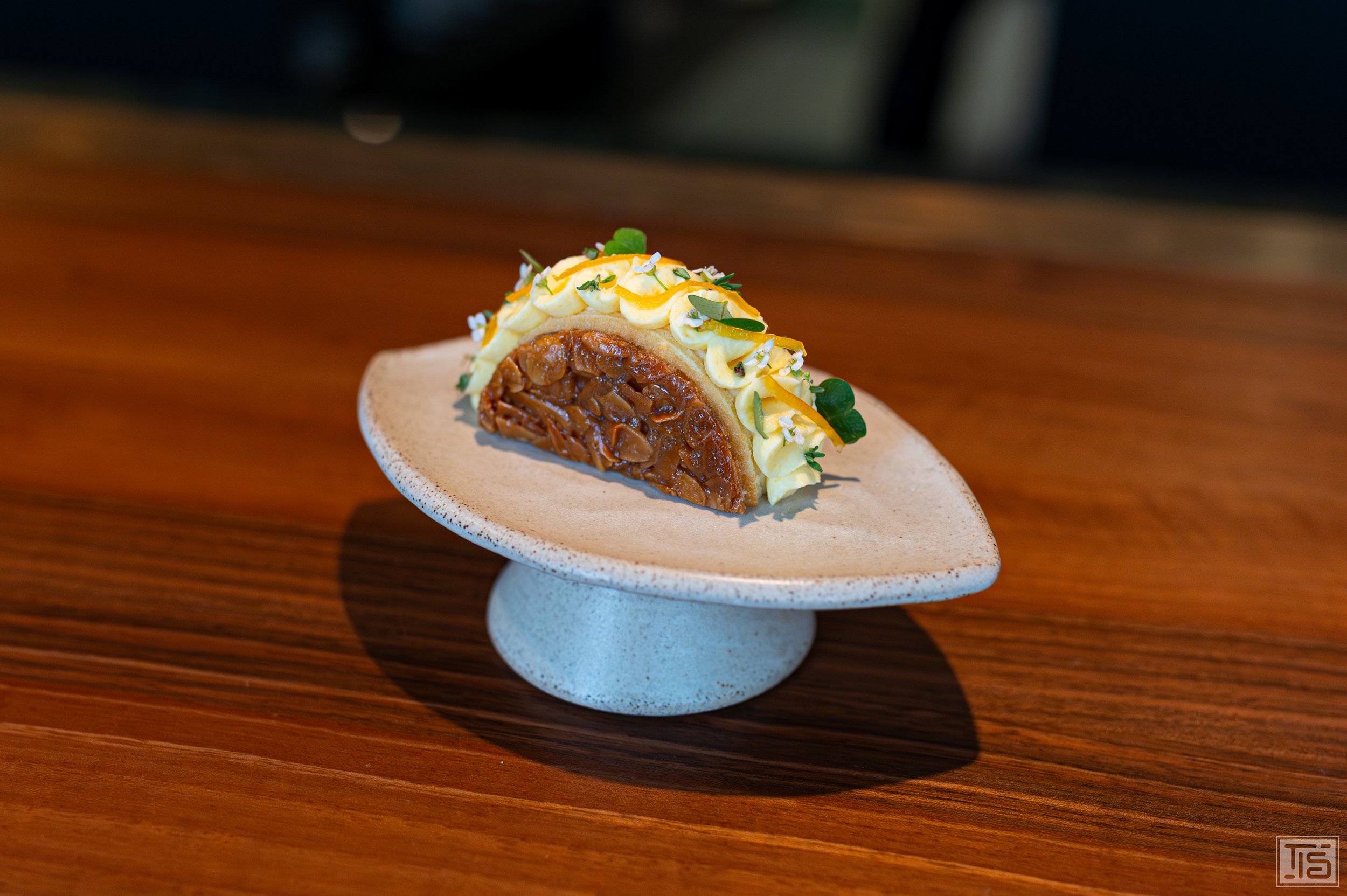
Birlo has now been a head chef for almost a decade, and in that time a few signature dishes have become established. The one that has been with him longest is probably his take on Bienenstich, the German “bee sting” cake. Inside a crackling, crisp, not-too-sweet brittle shell lies a rum parfait. On top sit a whipped panna cotta cream flavoured with spiced orange, kumquat zest and thyme. “Favourite” is going to be a key word in this article, because this is one of my absolute favourite desserts. The delicate, cool ice cream has a pointed Caribbean flair that the green herb contrasts brilliantly. Meanwhile, the subtly sweetened brittle casing and the cream exude classic dessert luxury. Besides the thyme, the citrus zest adds another unusual accent. Alongside its exotic citrus note, kumquat peel has a wonderfully integrated bitterness. This undertone gives the bite its finishing touch and, once again, adds further dimensions. It’s an experience every single time. It’s rightly a signature dish and, as of today, in my Hall of Fame.
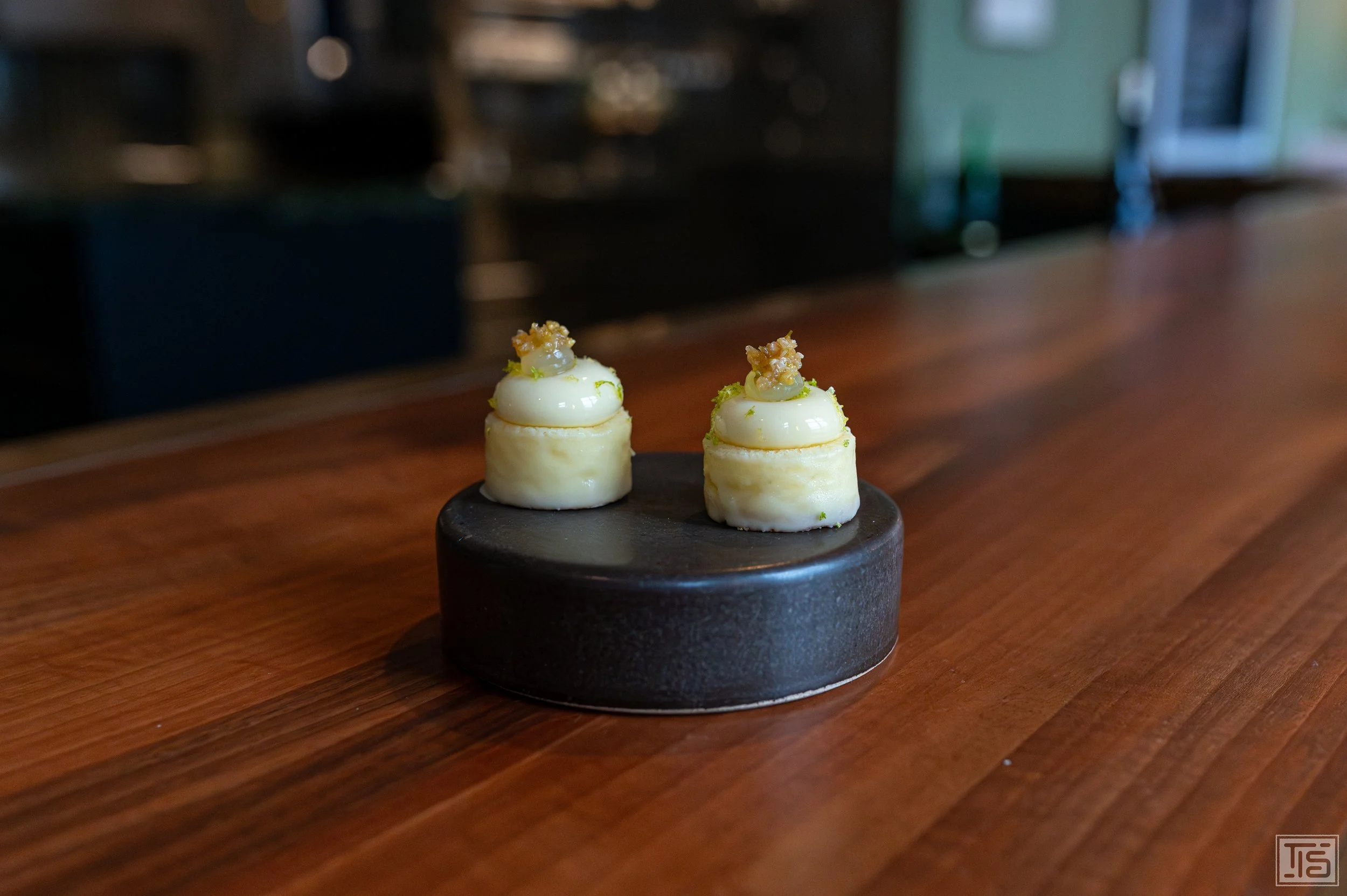
The lime with olive oil and elderflower is somewhat more restrained. After the profound complexity of the Bienenstich, this little treat is noticeably more straightforward, which in no way diminishes the enjoyment. At this point, a simple sweet-and-sour interplay with a charming, harmoniously integrated kick from the oil is exactly what’s needed.
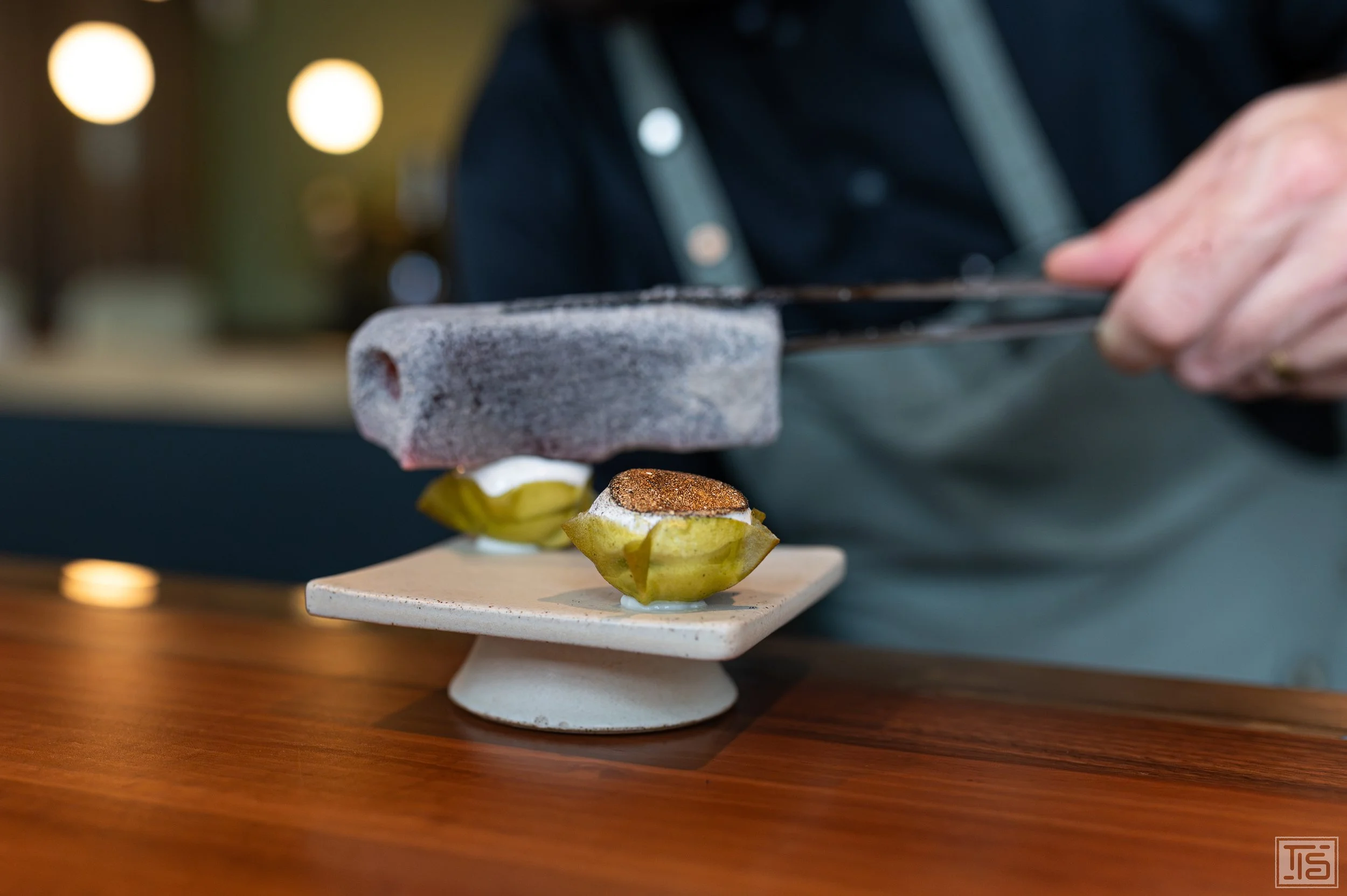
Right at the end, somewhat surprisingly, the grill comes into play once more. More precisely, it’s a chunk of binchotan charcoal that has just been used for grilling. The chef scrubs the glowing coal thoroughly under water with a wire brush. While Franziska Baumann briefly explains the delicate creation of apple, sorrel and yoghurt, Birlo sears the foam in a matter of a wink. A seductive scent of caramelised sugar rises, pairing superbly with the apple and yoghurt. A brilliant finale. Depending on the season, this tartlet also comes in a beetroot version, which I like even a touch better.
Since my last visit in April this year, the team has once again taken a significant leap forward. Never before has a menu at The Counter been so rigorously composed and, above all, executed, and that’s saying something. Cosmopolitan through and through, Birlo no longer needs to emphasise the influences in his cooking or sell them through contrived storytelling. Switzerland, France, Japan, Thailand, Italy, Spain: everything finds its place. Nothing feels forced or far-fetched. Each dish builds on the last, and they’re all interlinked. The menu flows seamlessly, is coherent in itself and bears an unmistakable signature.
Wine lovers are in the best of hands here, too. In Birlo’s wife Florentina, one of Switzerland’s most accomplished sommelières stands behind the counter. She is responsible for the consistently outstanding wine pairing and curates the constantly evolving wine list. The pairing always includes discoveries as well as rare and pricey bottles, such as Valentini’s Trebbiano d’Abruzzo this time.
Excellent food and exceptional wines, served by a team that engages with its guests. Together they create a relaxed, convivial atmosphere where the fun never falls short. Isn’t that what you really want from every restaurant visit? I choose the places I visit mainly for the food rather than anything else. Even so, when everything comes together like this, it’s simply magical, even after all these years. Because let’s be honest: however good the food is in many upscale restaurants, very few have what it takes to become a favourite restaurant you want to return to again and again. For me, The Counter belongs to this rare echelon.
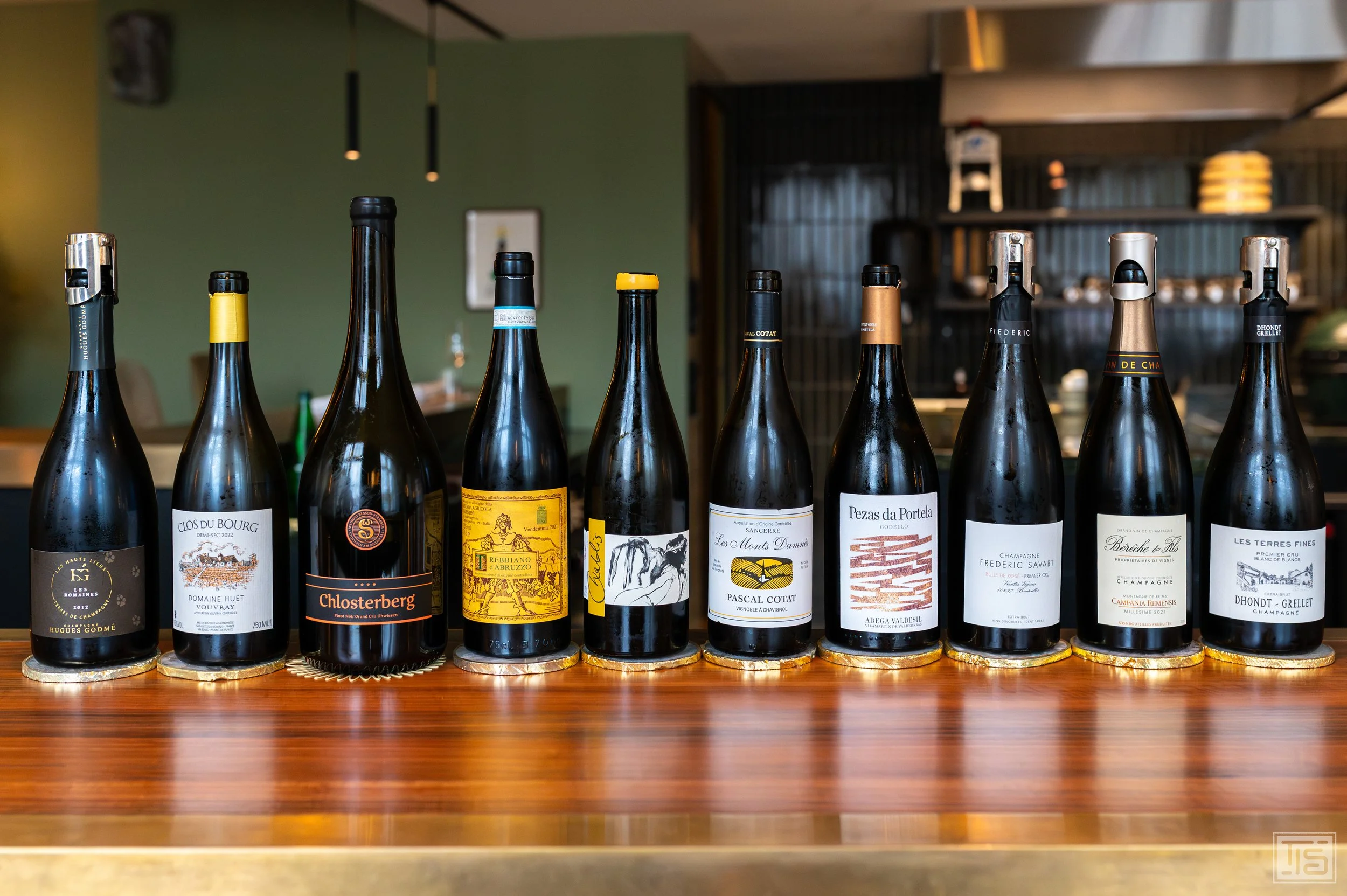
Wine pairing by Florentina Birlo:
Les Terres Fines, Premier Cru Blanc De Blancs, Dhondt-Grellet
Campania Remensis 2021, Champagne Rosé Extra Brut, Bérêche & Fils
Bulle de Rosé, 1er Cru Extra-Brut, Frédéric Savart
Pezas da Portela 2024, Valdeorras DO, Adega Valdesil
Les Monts Damnés 2024, Sancerre, Pascal Cotat
Vent d’Ange 2022, Chablis, Pattes Loup
Trebbiano d’Abruzzo 2021, Abruzzo DOC, Azienda Agricola Valentini
Chlosterberg 2020, Pinot Noir Grand Cru Uhwiesen, Weingut Besson-Strasser
Clos Du Bourg Demi-Sec 2022, Vouvray, Domaine Huet
Les Romaines 2012, Les Hauts Lieux, Champagne Hugues Godmé
The Counter
Bahnhofplatz 15
8001 Zurich
Switzerland
+41 44 244 32 16
Book a table - The Counter
Unser Besuch wurde vom Restaurant unterstützt. Informationen zu unserem Umgang mit Pressekonditionen findest du in den FAQ.
Titelbild: © Lukas Lienhard