L’Effervescence (Shinobu Namae) - Tokyo
L’Effervescence - The End of the Beginning
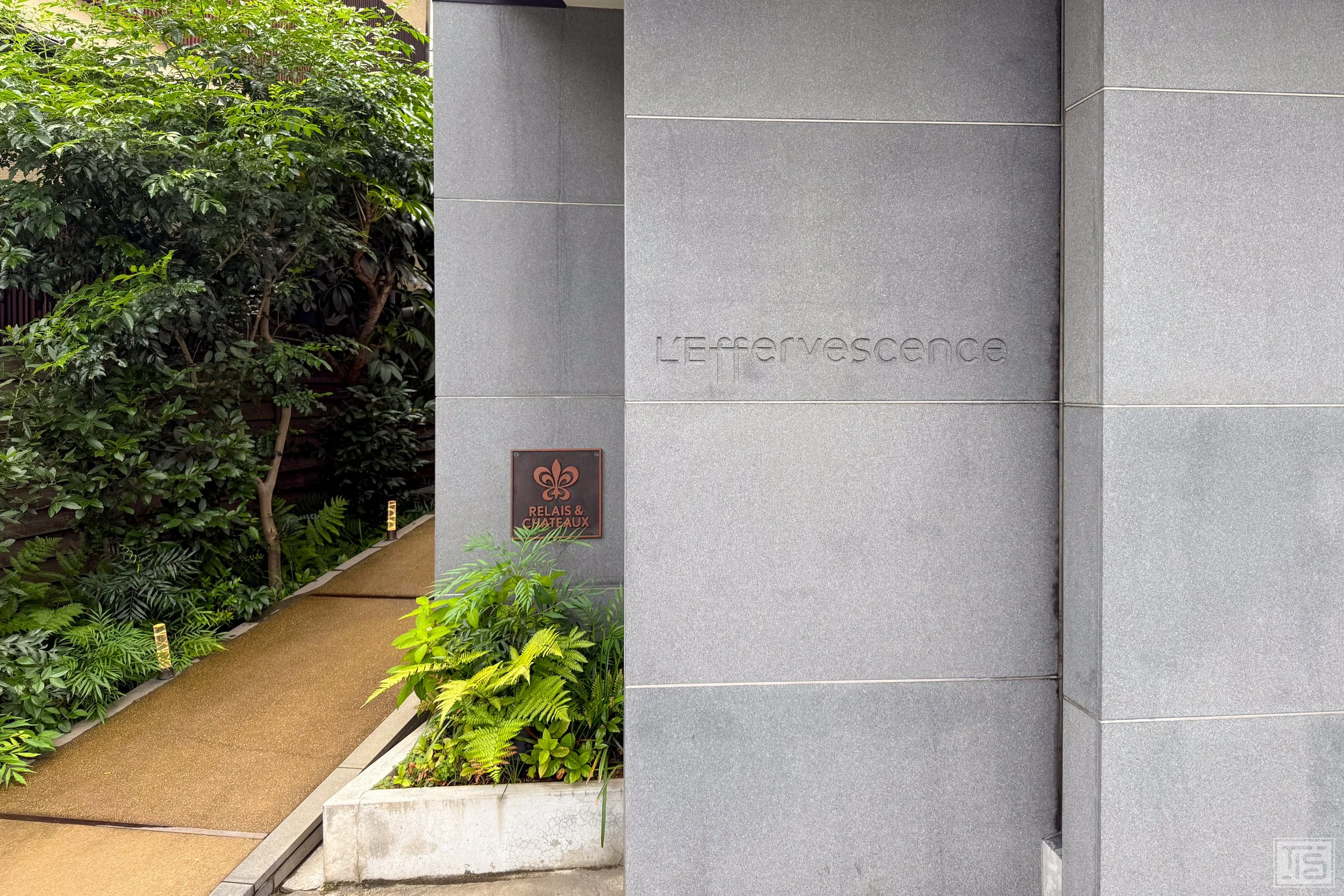
On the taxi ride from Hibiya to Minato City, a certain melancholy creeps into my anticipation of the lunch ahead with Shinobu Namae. I deliberately chose to make L'Effervescence the last three-starred stop of my six weeks in Japan. Go out with a bang. That, at least, was the hope. But that same hope also carries the unavoidable realisation that an unforgettable trip is about to end. As the taxi comes to a halt at the end of a street, I spot a temple to my left and am pulled out of my daydream by the now-familiar phrase 着きました (tsukimashita - we've arrived), the tail end of the customarily polite お待たせいたしました、着きました (thank you for your patience, we've arrived). I offer my own polite ありがとうございました (arigatou gozaimashita - thank you for what you've done) as the sliding door opens, and step out in front of plain concrete pillars into which the restaurant's name has been carefully engraved. A path lined with lushly shimmering greenery leads me through the sultry midday heat into the pleasantly, though not aggressively, air-conditioned restaurant.
The dining room is classic and understated, its immaculate white-clothed tables spaced generously apart. Dull, one might think. Yet an unusual atmosphere prevails. There's a view onto a manicured 坪庭 (tsuboniwa - a small, enclosed courtyard garden), meant to bring light, nature and a sense of fresh air into a confined architectural space. The mood is serene and faintly ceremonial, almost reverent, though there's no trace of artificial affectation anywhere. And if any deity is being worshipped here, it's probably Radiohead, whose music runs through the playlist. I feel well looked after and in capable hands before I've had a single sip or bite.
Shinobu Namae took an unconventional route into fine dining. After completing a degree in political science, he made a complete career U-turn. He first cooked under Michel Bras at the now-closed three-star Michel Bras Toya Japon in Hokkaido (as well as a stage at the original house in France), where he rose to sous-chef. From there he moved on to Heston Blumenthal's equally three-starred The Fat Duck. Back in Japan, Namae opened his own flagship restaurant, L'Effervescence, in Tokyo in 2010, which has likewise held three Michelin stars since December 2020.
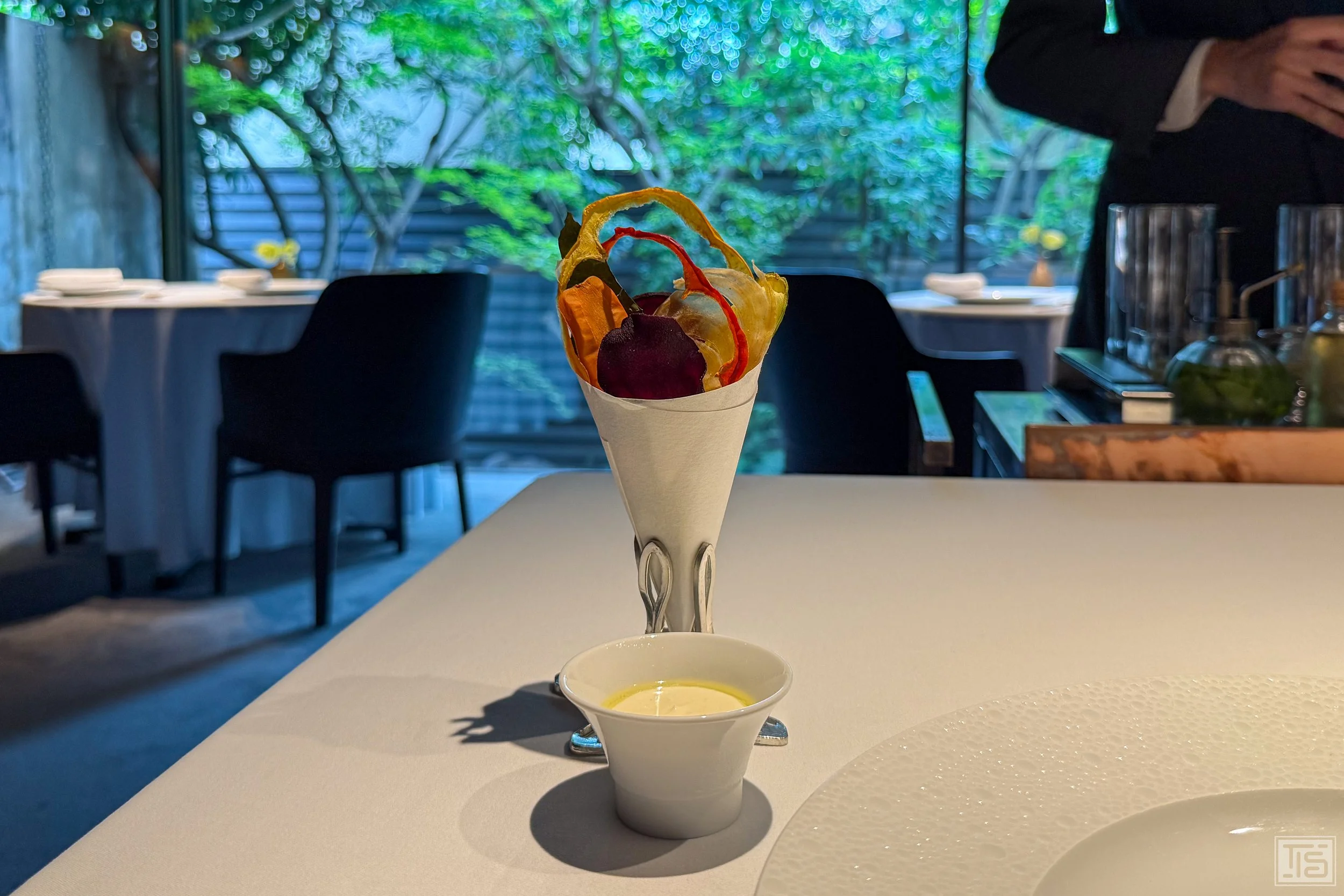
I'm welcomed with an omotenashi cocktail: a bouquet of crisp vegetables with a dip of tofu and sour cream. Omotenashi is a cornerstone of Japanese culture, loosely translating as anticipatory, respectful mindfulness. In the context of hospitality, it often means giving one's counterpart undivided attention without self-interest or the expectation of anything in return, tipping included. While the vegetables are technically and flavourwise faultless, it's the dip, surprisingly, that steals the show. Silky, full-bodied and carried by a finely calibrated acidity, it sets the vegetables off perfectly. Whatever the featherlight crisps don't manage to scoop up gets fished straight out of the little bowl with a finger.
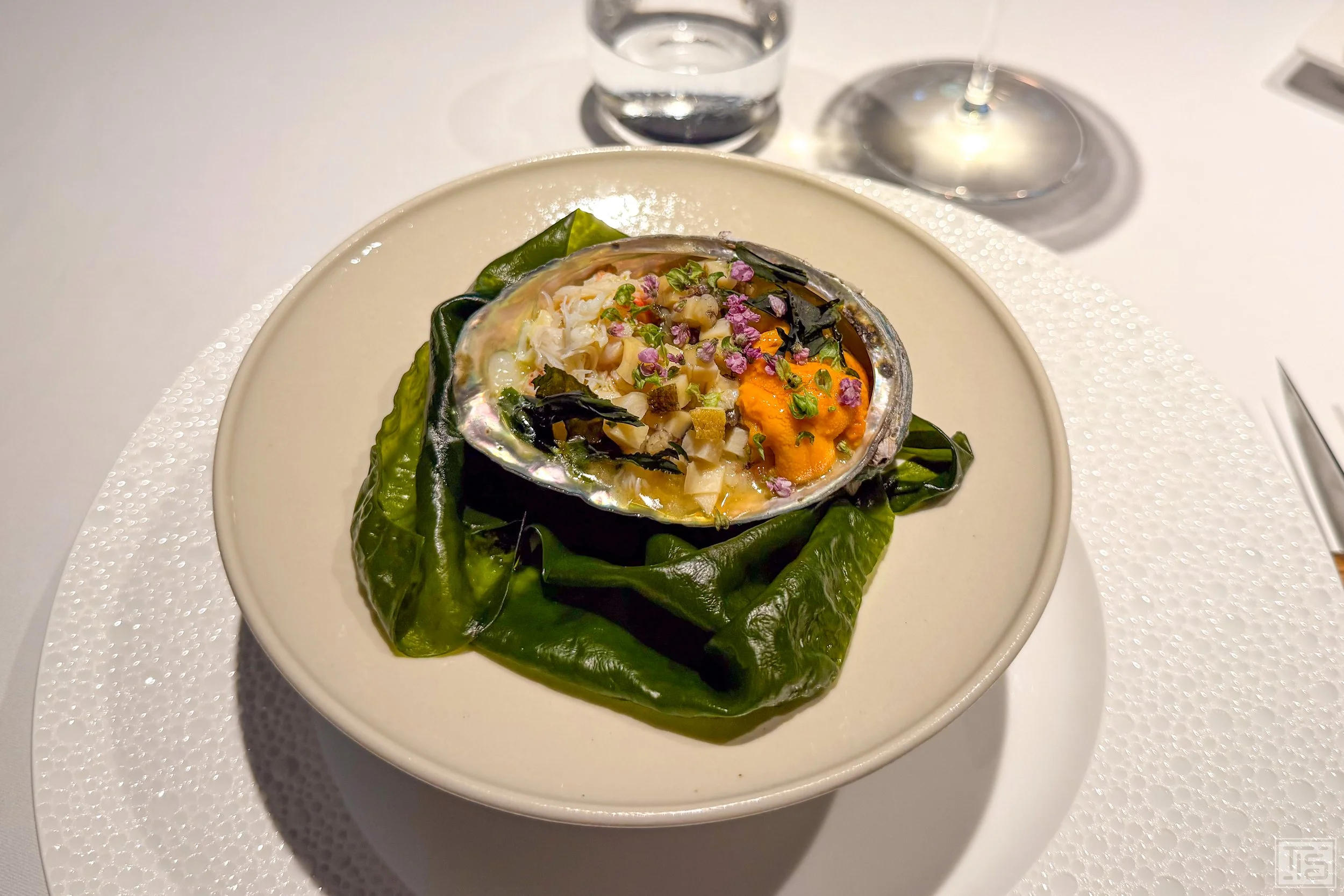
A creation titled Tricolore marks the true start of the menu. A pearlescent abalone shell is brought to the table on a steaming stone, then set onto a plate draped with seaweed that gives the shell the support it needs. Inside sits a piping-hot Sasanishiki risotto, topped with a generous portion of tricolore: sea urchin, abalone and horsehair crab. An intoxicating, almost dizzying aroma rises to meet me - marine sweetness, iodine, sea salt, buttery and lactic notes. The latter is curious, since neither butter nor cheese goes into the risotto; Namae-san instead relies on a robust seafood jus, an umami-rich dashi and sake. Because Sasanishiki rice, unlike classic risotto varieties such as Carnaroli, contains little starch, the creaminess comes almost entirely from the liquid. Every single grain is not only distinct and full of flavour but also cooked to perfect bite. The seafood is of incomparable quality. All of it sets the reference standard, and it's easily among the best I've ever tasted. A dense, intense medley of cool sea breeze, expansively sweet shellfish and intensely iodine-driven salinity. That density is cut through by a touch of kuromoji oil. The spicebush (a member of the laurel family) grows wild in Japan's mountain regions and is mainly used for tea and as a folk remedy. Its complex aroma of fresh citrus, floral notes and hints of wood provides a perfectly judged lift, giving the dish a spring-like, refreshing edge and balance. One of the best dishes I've ever eaten. Its place in my Hall of Fame is assured.
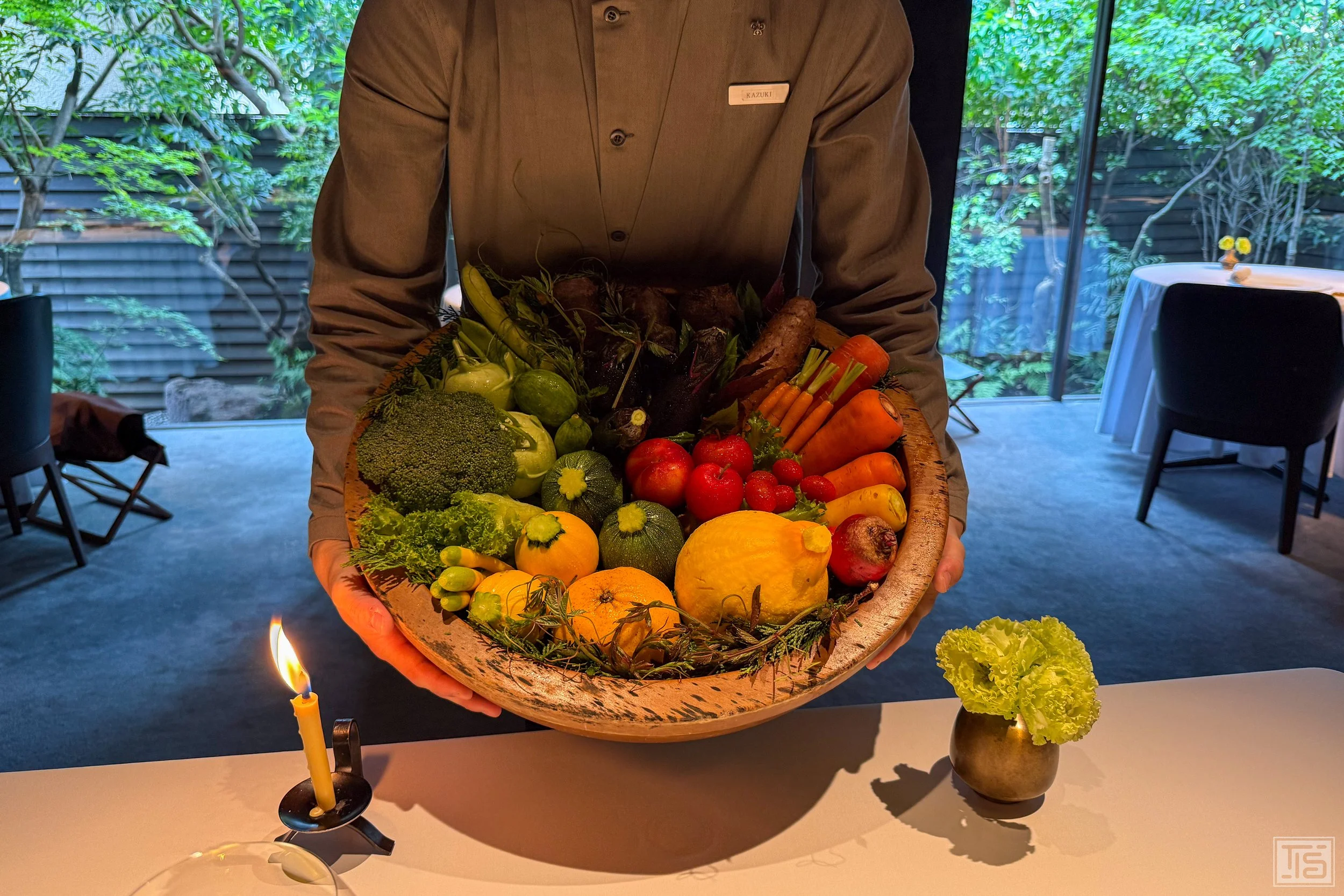
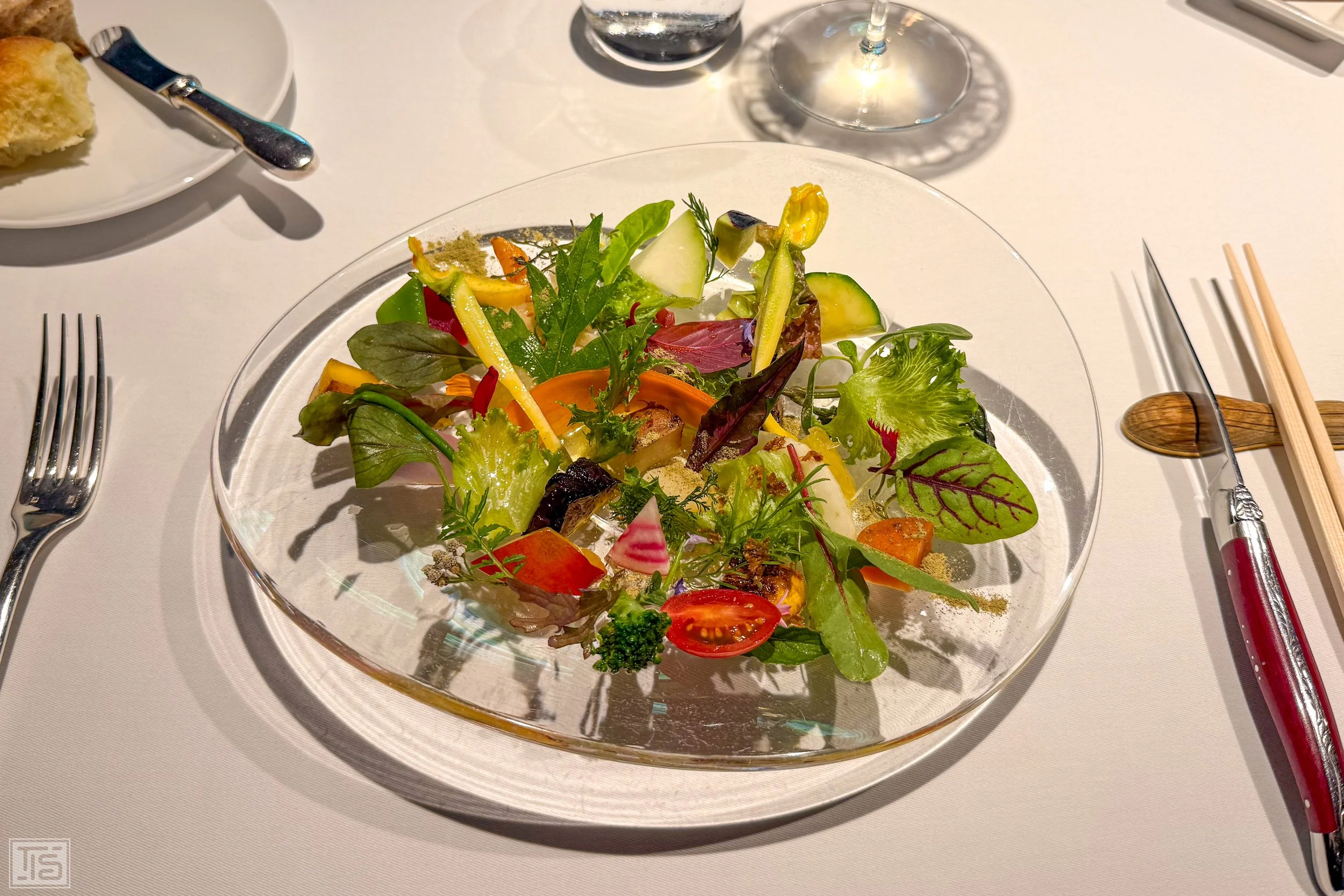
One of the house classics is Ars longa, vita brevis (life is short, art is long - a rendering of an aphorism attributed to Hippocrates). Behind the title hides a seasonal salad of artisanal vegetables. Alongside it comes a long list naming the producer, by name and location, behind every single ingredient on the menu today. Not just the ones sitting in front of me, but genuinely every single one (!) contributing to today's meal. Given the chef's résumé, it's hardly surprising that Michel Bras' Gargouillou served as the inspiration here. Namae uses around sixty products for this dish today (a full list follows below). Unlike the similarly conceived but rather disappointing Planet Earth at the equally three-starred Hajime, this ensemble convinces across the board. As with Hajime Yoneda, Namae forgoes a binding sauce. But here the vegetables and flowers present themselves consistently on an excellent, at times downright breathtaking, level, and feel more harmoniously tuned to one another. Not the wild grab-bag of a "best of what's available today," but something that, at its core, remains a genuinely outstanding salad.
The individual ingredients: Aiko cherry tomato, amaranth, baby Okinawa spinach, baby melon, calamint (Calamintha), broccoli, bush killer (an edible wild herb), Chinese eggplant, Chinese yarrow, Chinese yam, Chioggia beetroot, Colinky squash, dahlia, broad-leaved wood sorrel, sweet william, cornflower (Centaurea), Fujikururi radish, daisy, Gassan bamboo shoots, dried daikon strips, green lettuce ("Handsome Green Lettuce"), Hitomi carrot, Japanese mugwort, Kagabuto cucumber, chamomile leaves, small sorrel, kohlrabi, cosmos sprouts, curly lettuce, Kyoto Kurenai carrot, mike takana mustard greens, mini green beans, mizuna eggplant, Ooishiwase plum, orange lemon balm blossom, purple pak choi, bell pepper, pentas, beetroot, red lettuce, red lettuce ("Handsome Red Lettuce"), red mustard leaves, red sorrel, red mustard mizuna, red mizuna, rocket, round zucchini, yarrow blossom, mustard mizuna, sunflower sprouts, stick carrot, marigold (Tagetes), Summer King citrus, tatsoi, Tosa Buntan pomelo, Jerusalem artichoke, Yellow Harmony carrot, yubeshi, cylinder beetroot, lemon balm, zucchini "Zephyr."
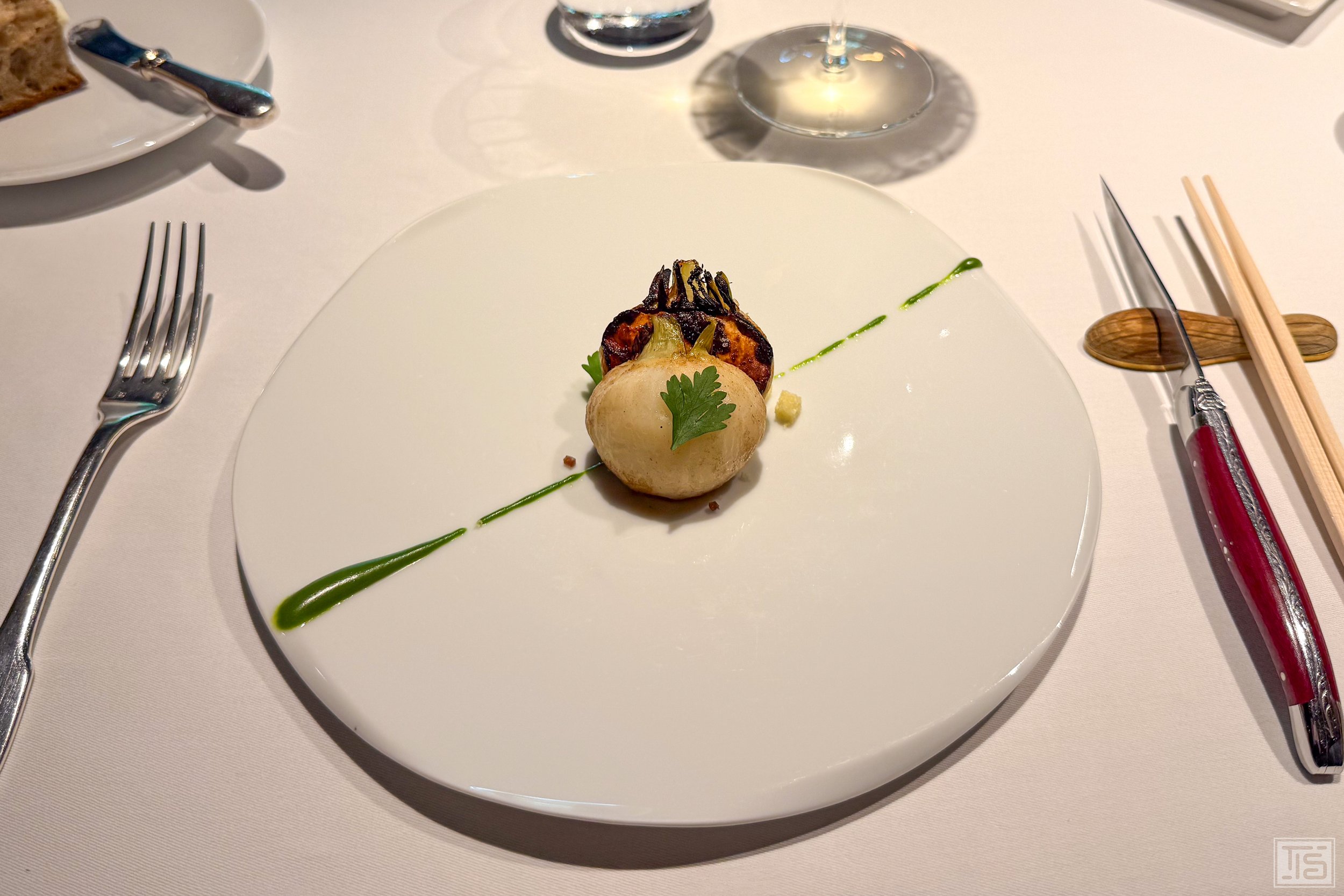
Fixed point is the fitting title for another house classic: the turnip. Subtitled "complexity and simplicity," it delivers exactly that. The journey to the plate is every bit as fascinating as the result itself. Each Tokyo turnip is trimmed to precisely 75 grams to guarantee identical heat resistance, then vacuum-sealed without salt or liquid and cooked sous-vide for four hours at a precise 66°C. That exact temperature activates enzymes that stabilise the cell walls: the turnip turns translucent while staying crisp, its juices sealed entirely inside. After an ice bath, it's halved and the cut side arrosé'd to a dark golden brown in foamed beurre noisette, then served with a robust parsley oil, crisp brioche croutons and paper-thin, salty Basque Kintoa ham. The waiter explains that this dish is served across the seasons: the recipe never changes, but the flavour shifts with nature. Because the turnip adapts its own chemistry to the weather, it tastes different throughout the year. In winter, the turnip is intensely sweet; in spring, it takes on a fresh, elegantly bitter note. Right now, in summer, it still carries that bitter undertone, along with a light heat and pepperiness besides. Biting in releases a wave of pure vegetable juice, threaded with a decidedly earthy note, while the intense roasting flavours add further depth. There's absolutely perfect harmony between the astonishingly complex turnip, the nutty butter note, the pointed herbal aromas, and the salty umami crunch of the ham and croutons. Simply sensational. Another little masterpiece that shows just how complex simplicity can be, and another entry in my Hall of Fame.
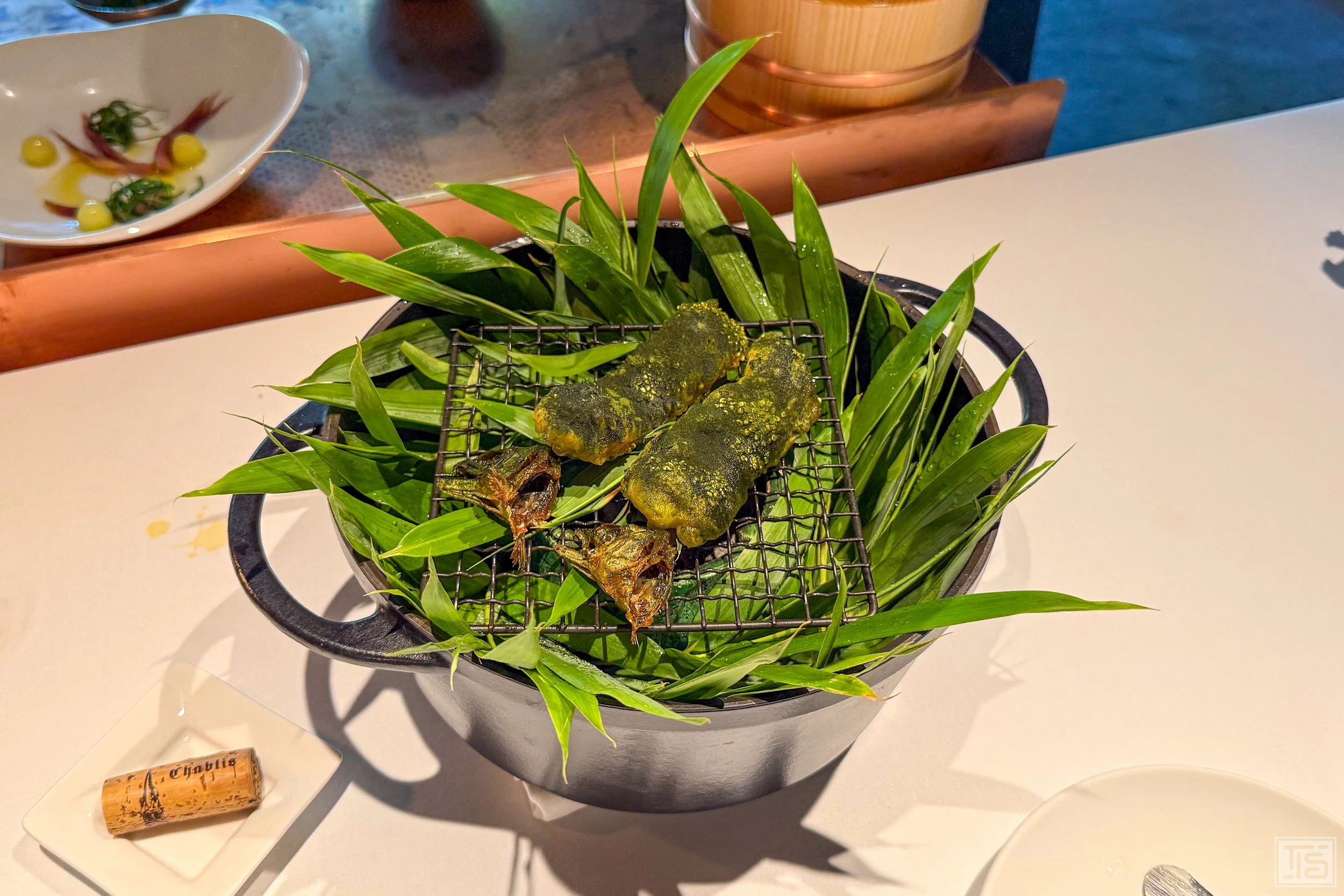
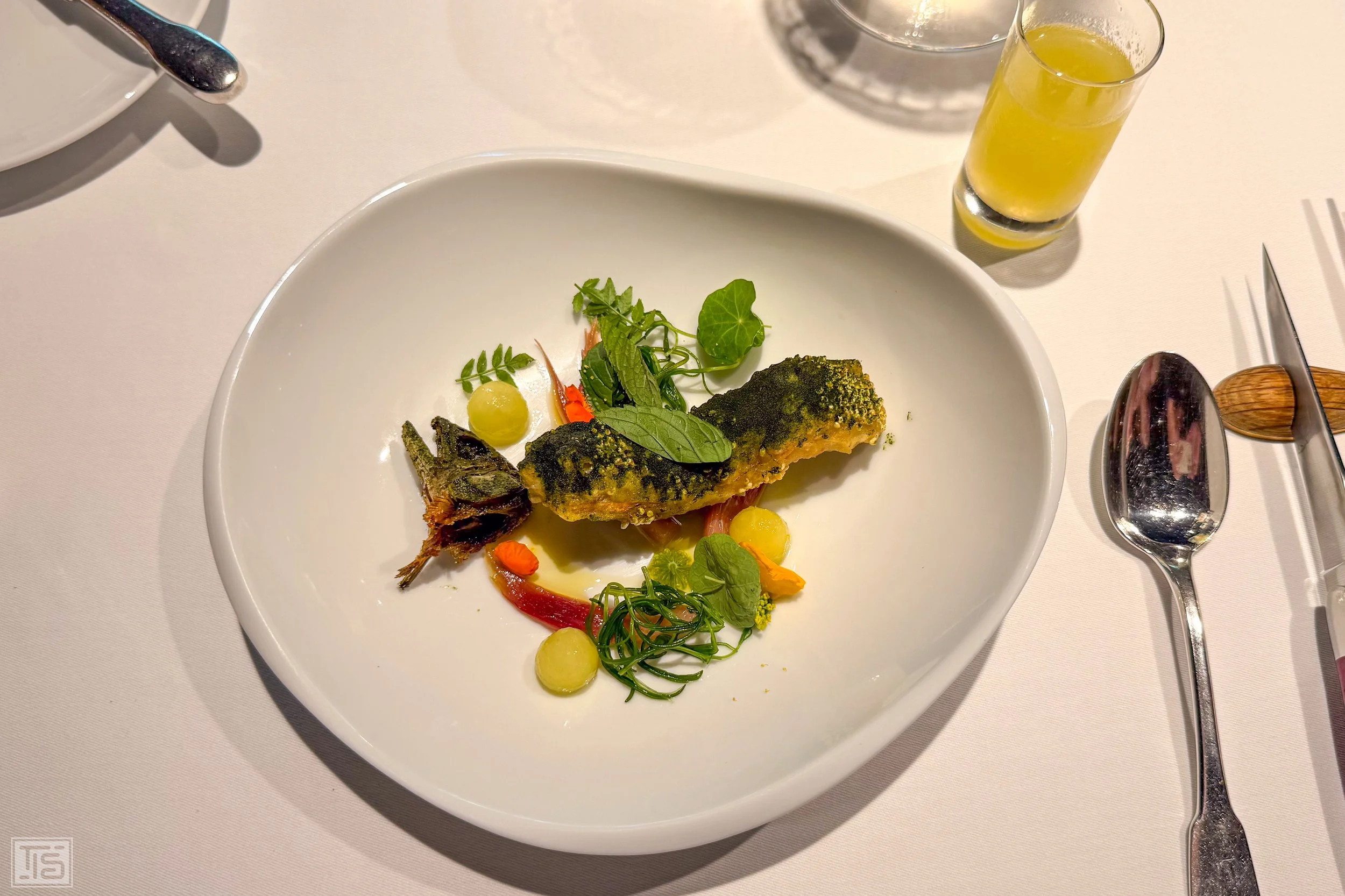
There's no escaping it in Japan in summer: ayu, sweetfish. Today, for the first time, it's served to me fried in batter, with the head served separately. The sweetfish is paired with tomato-melon gazpacho, myoga, Japanese saltwort and summery herbs and flowers. This dish doesn't work for me on any level. The delicately sweet fish is essentially buried under its batter coat, and the preparation also robs me of its bitter organs - part of what makes this rarity so appealing in the first place. The surrounding elements don't quite fit either; they’re far too sweet, which, combined with the generous batter, gives it an unnecessary heaviness. This is even more unfortunate, given that the little melon pearls, taken on their own, are dense, sweet and powerful enough that they could pass as a new benchmark in my book.
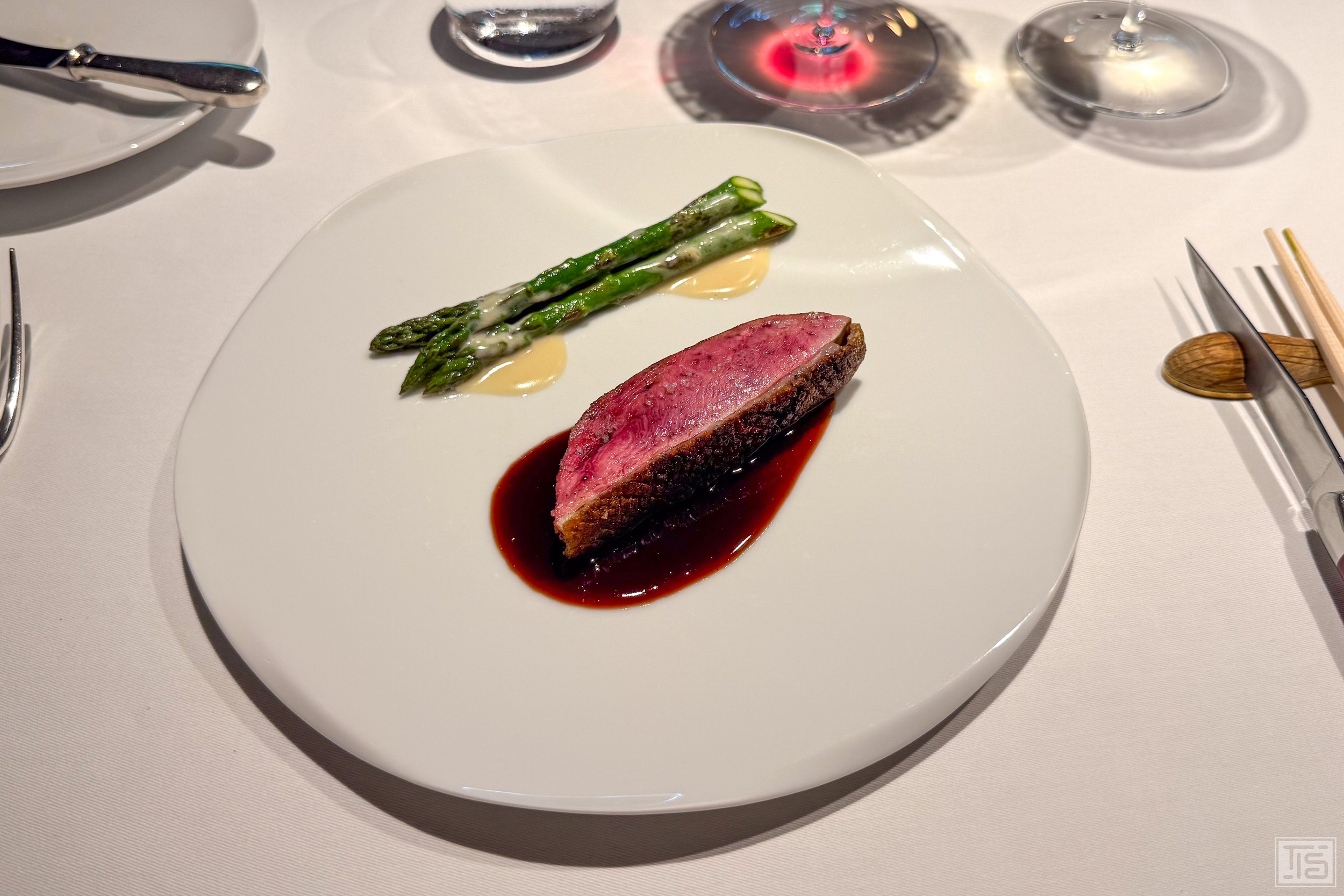
The main course goes by the name Gifts of the Forest, served in two parts. First comes a Nanatani duck breast, grilled over mizunara oak from Hinohara, sitting in a red wine sauce alongside three thin stalks of green asparagus with a beurre blanc. The meat from these free-range ducks, raised in Kameoka in Kyoto Prefecture, is stunning: meaty, full-bodied, juicy, with skin that's crackly-crisp and pleasantly salty. For my taste, though, the red wine sauce is reduced a touch too far - something many consider the height of saucier craft - and it's a tad too sweet. The excellent asparagus is precisely cooked, though the beurre blanc alongside it doesn't fully win me over either.
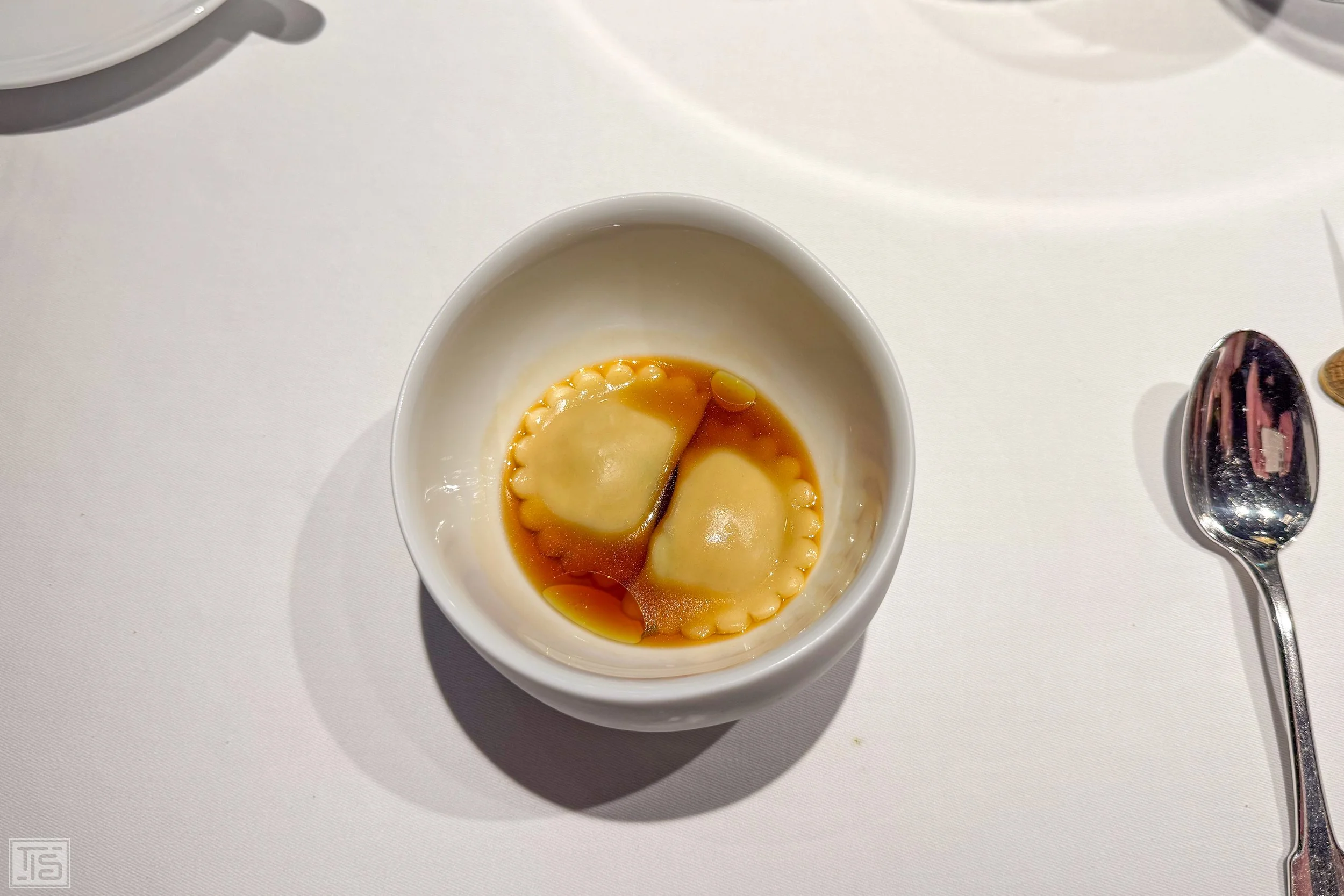
Part two of the Gifts of the Forest arrives in the form of ravioli filled with duck leg, spring onion, gyokuro (a shade-grown green tea) and duck consommé. The first bite settles the matter instantly: it doesn't get better than this - just different. Perfect dough thickness, a springy bite, a juicy and elegant filling, and flawless proportions define the pasta. Even more impressive is the consommé, crystal clear and, at the same time, enormously powerful, and needless to say, perfectly balanced. Little pieces of spring onion leave the impression that I've never actually tasted a truly good spring onion before. As French and Italian as all this may seem, Japan as its origin is unmistakable, reinforced by the tea, which breathes hearty umami and green, floral notes of freshly cut grass after rain. Simply wow. Naturally, straight into the Hall of Fame. My sheer bliss, paired with disbelieving wonder, is so obvious to the staff that I'm offered a second helping, which I accept with nothing but gratitude.
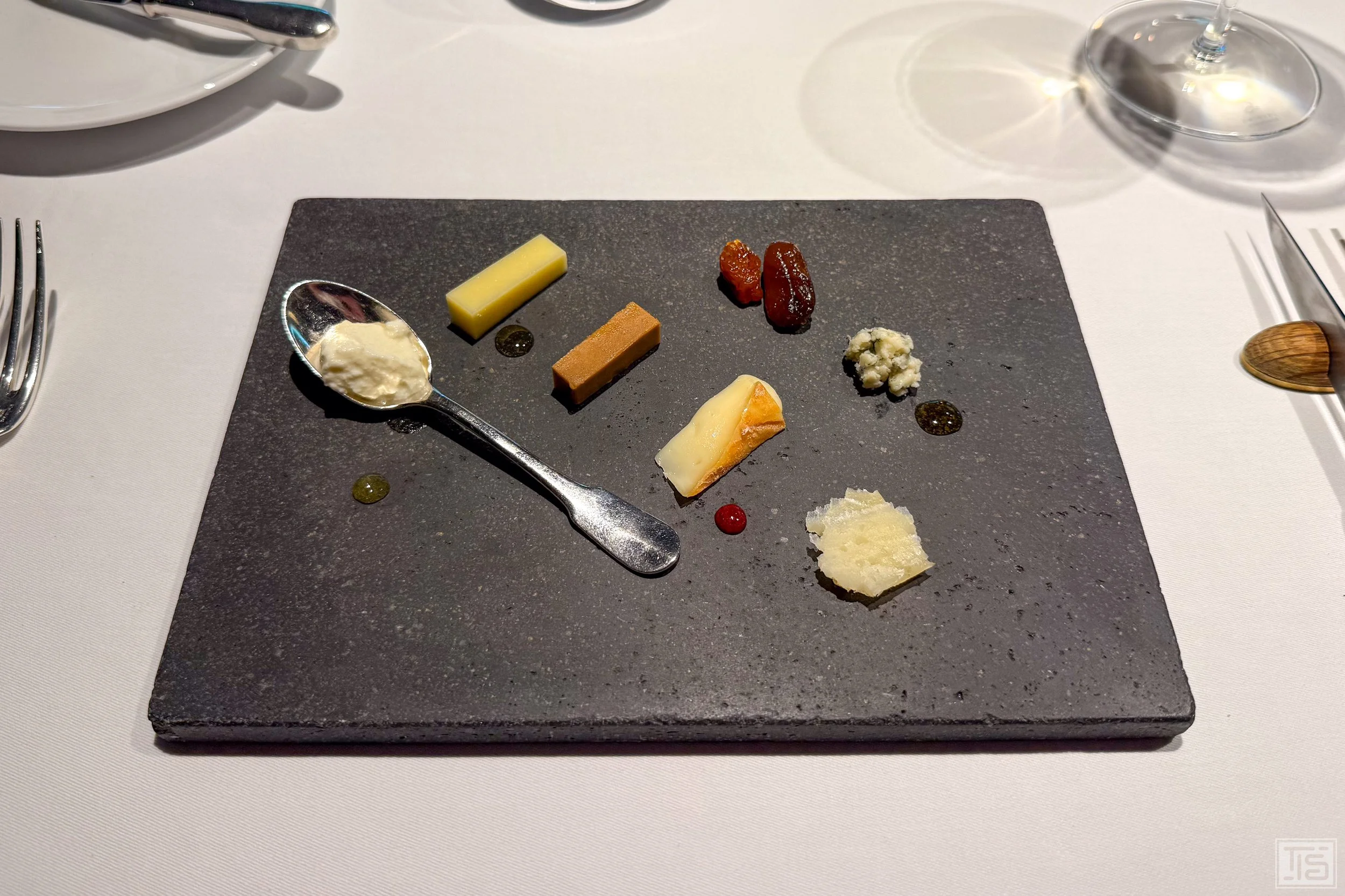
A Japanese cheese selection, whose composition I failed to note down, proves one thing: even in Japan, not everything can be better than everywhere else.
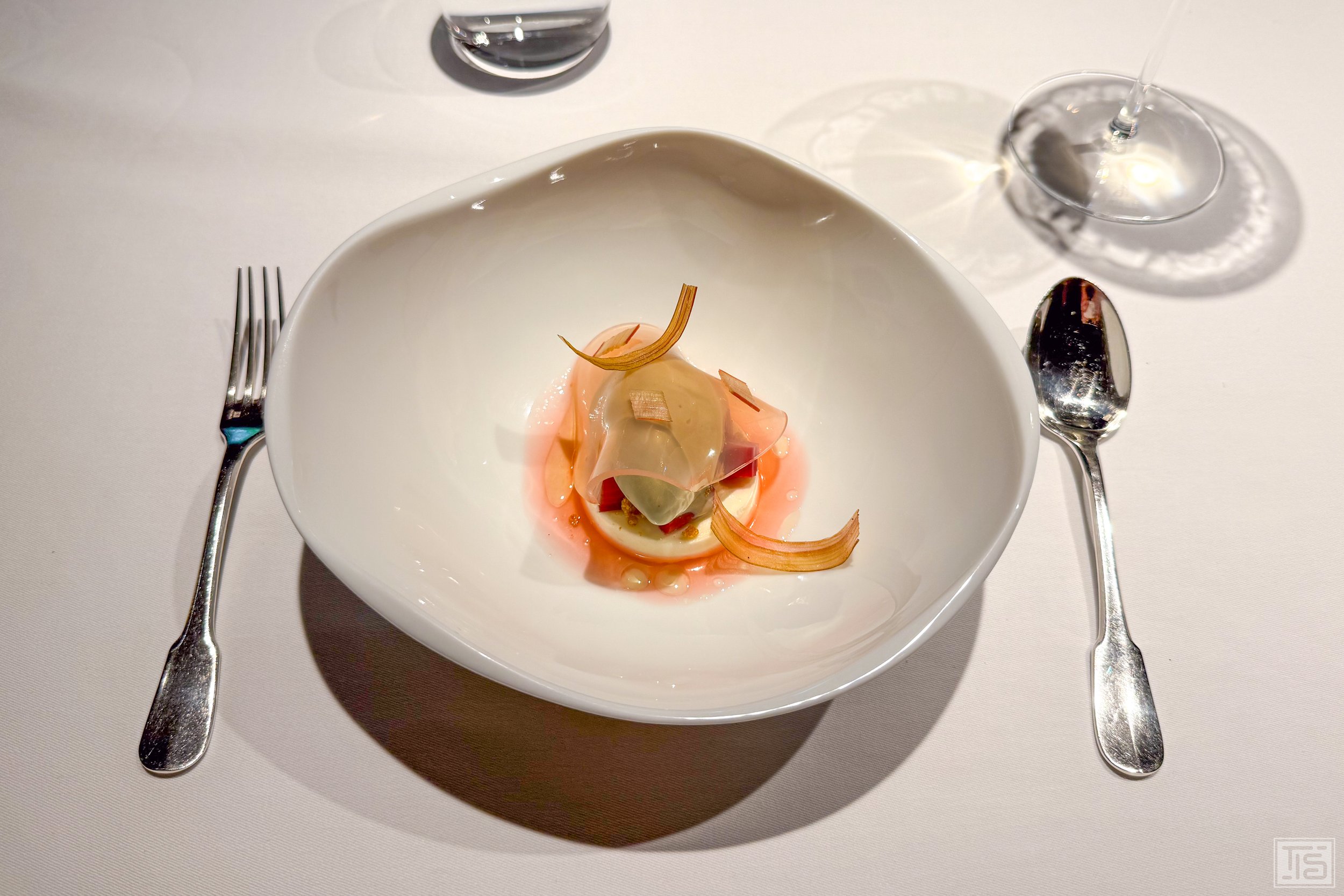
Savage bloom marks the lunch's single dessert. On the plate: fresh and poached rhubarb, Japanese mugwort ice cream, Chardonnay mousse, and oil from black locust blossom. Technically, it's all flawless, and yet the spark never quite catches. I trace the issue to the mousse, which carries a dull, sourish sweetness, and to the very potent ice cream, which is earthy, herbal and slightly bitter. I like a demanding dessert, but the fine-tuning doesn't quite land for me here, which results in a less-than-optimal balance and, thanks to the strong flavours of the components mentioned, a faintly artificial edge. That all sounds far worse than it is though. This creation is perfectly enjoyable, it just could have been a little bit better.
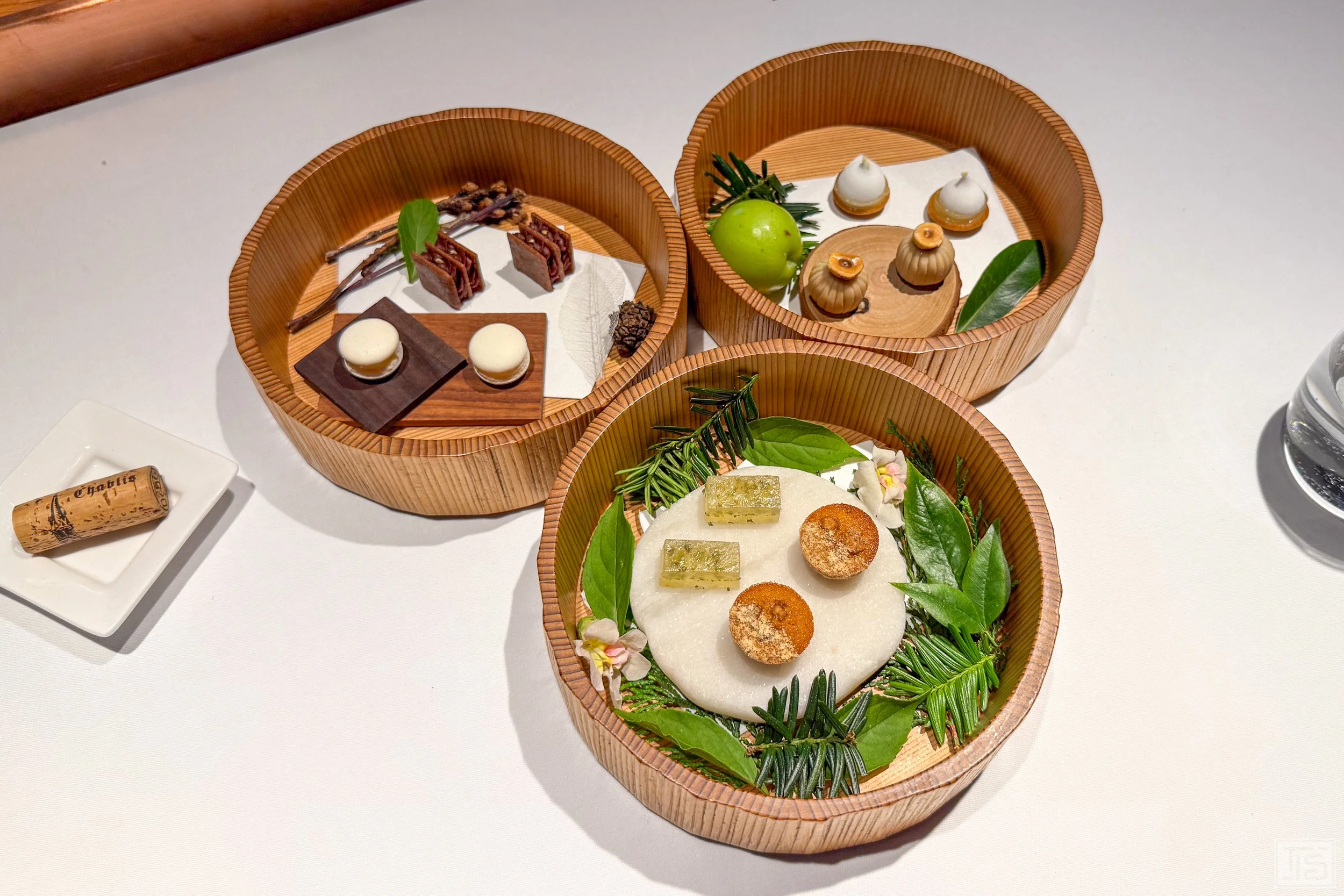
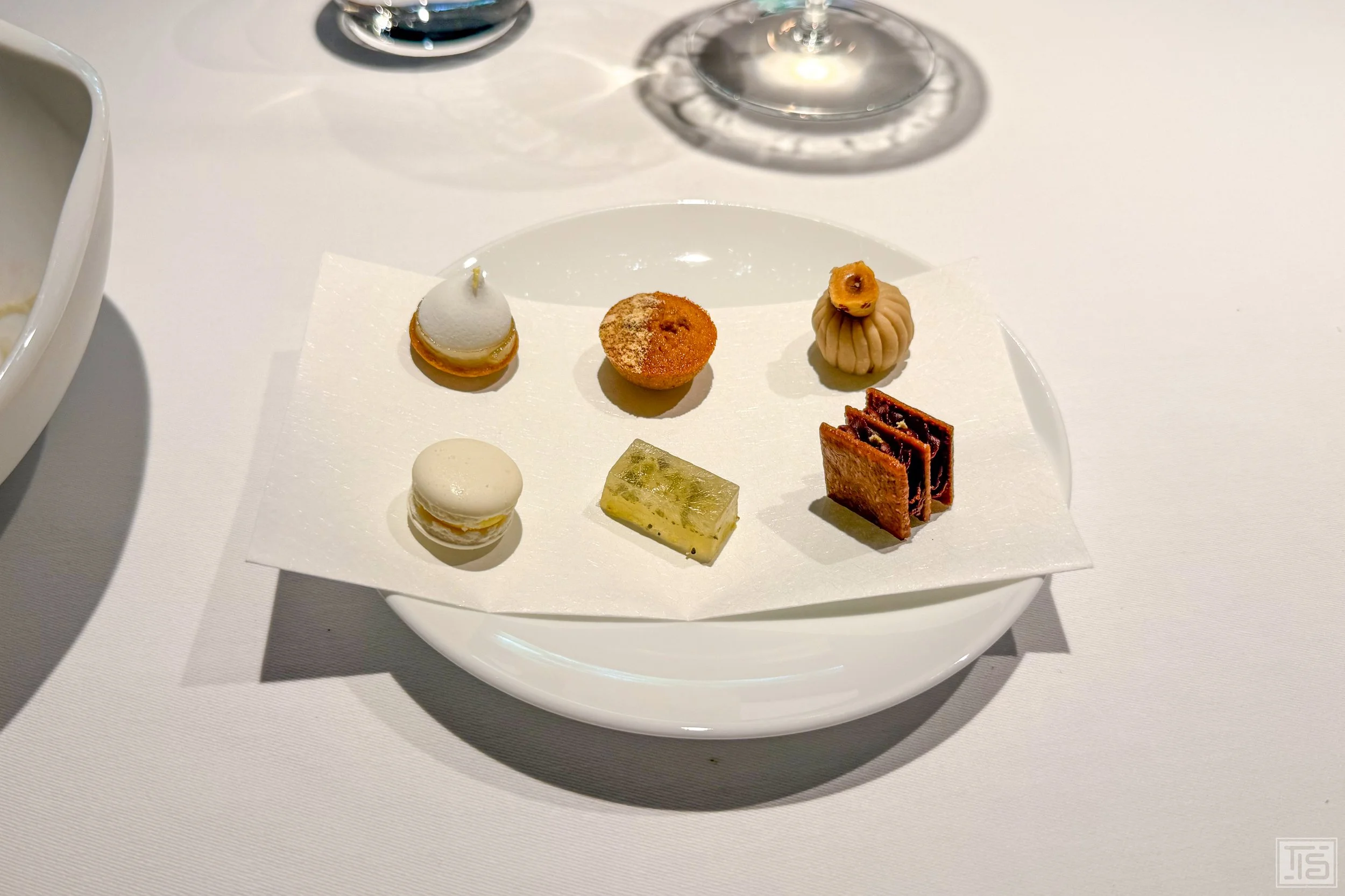
Wholly flawless, on the other hand, are the superb petits fours: bergamotte, black tea - peanut financier, hazelnut-kombu-nerikiri - rice flour, macaron - fig leaf, Kawachi Bankan crystal - chocolate, dried ginger - matcha.
Even though far from everything was perfect, Shinobu Namae's cooking leaves a lasting impression overall. I cannot recall being served three Hall of Fame dishes in any other restaurant. Despite a few creations that didn't quite land for me, the visit to L'Effervescence was a fitting close to my trip to Nippon. And, on balance, thanks to its highest highs, perhaps the strongest cooking I've experienced in Japan.
My slight melancholy from a few hours earlier has long since lifted completely. One thing is clear: this wasn't my last trip to the Land of the Rising Sun, and, hopefully, the first of many visits to Shinobu Namae at L'Effervescence.
L’Effervescence
2-26-4 Nishi-azabu
Minato-ku
Tokyo 106-0031
Japan
+81 (0)3-5766-9500
Book a table - L’Effervescence