Orsini (Dario Moresco) - Zürich
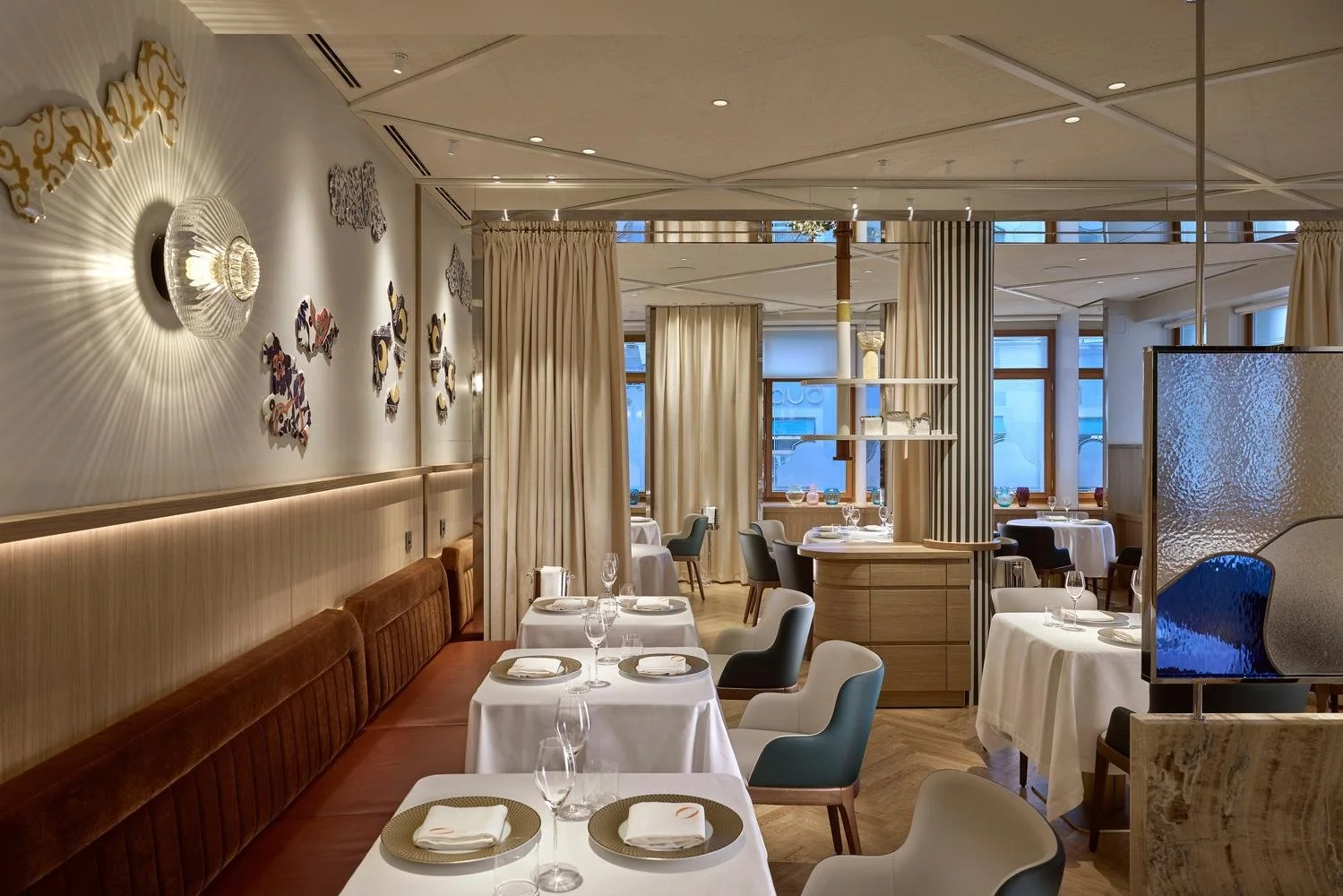
Orsini - An Italian Revolution in Zurich
In recent years, the Mandarin Oriental Hotel Group has pursued an ambitious course of expansion. By the end of the 2020s, the portfolio is expected to grow from just under 50 properties today to well over 100 hotels. One important thread connecting its houses in Hong Kong, Bangkok, Tokyo, Milan and Zurich: stars. I am speaking, of course, of the truly important stars awarded by a French tyre manufacturer. Where there is a Mandarin Oriental hotel, a Michelin star is rarely far away.
Over the years, the group has gathered a considerable amount of culinary talent within its own restaurant portfolio. And so Antonio Guida, who earned two stars at Seta inside the Mandarin Oriental in Milan, was entrusted with developing a concept for the Mandarin Oriental Savoy, reopened in 2024, to breathe new life into the legendary Orsini.
Orsini has a long history. The restaurant has carried its name since roughly the late 1850s; before that, the establishment was known as Gasthaus zum Meierli. The name most likely refers to Count Felice Orsini, who was executed in 1858 after a failed assassination attempt on Napoleon III. Sympathetic revolutionaries in Zurich who frequented the inn apparently hung a portrait of the count there, which in turn led to the change of name. A curious footnote in the story of this deeply traditional house.
But back to the present. Guida has installed Dario Moresco as his man on site, a chef who previously worked in his Milan brigade. There are two menus: one featuring classics from Seta, and a seasonal menu in which Moresco and his team are free to express themselves more fully. Today, I will be trying a mixture of both.
On an earlier visit, which I did not write about, Orsini’s cooking had already impressed me considerably. The first Michelin star did not take long to arrive. Even then, however, it seemed clear that one macaron would not remain the ceiling for long. They can do more. They want more. And yet the second star has so far failed to appear. I am therefore very curious to see what has changed in the year and a half since my last stop here.
The opening glass is Camillo from Gini, a producer from Veneto previously unknown to me: a sparkling wine made from Chardonnay, Garganega and Pinot Nero, produced according to the Metodo Tradizionale and aged for nine years on the lees.
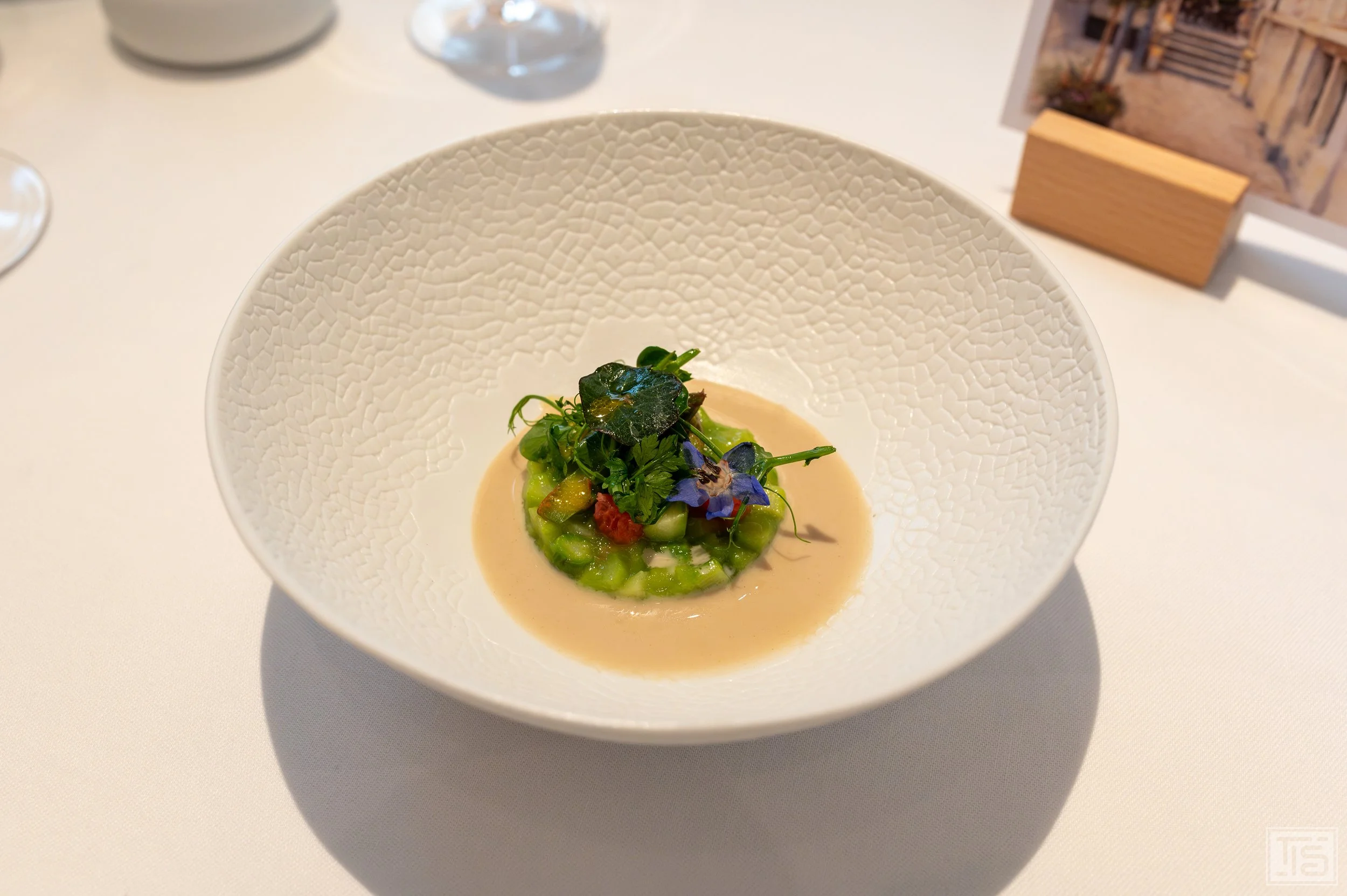
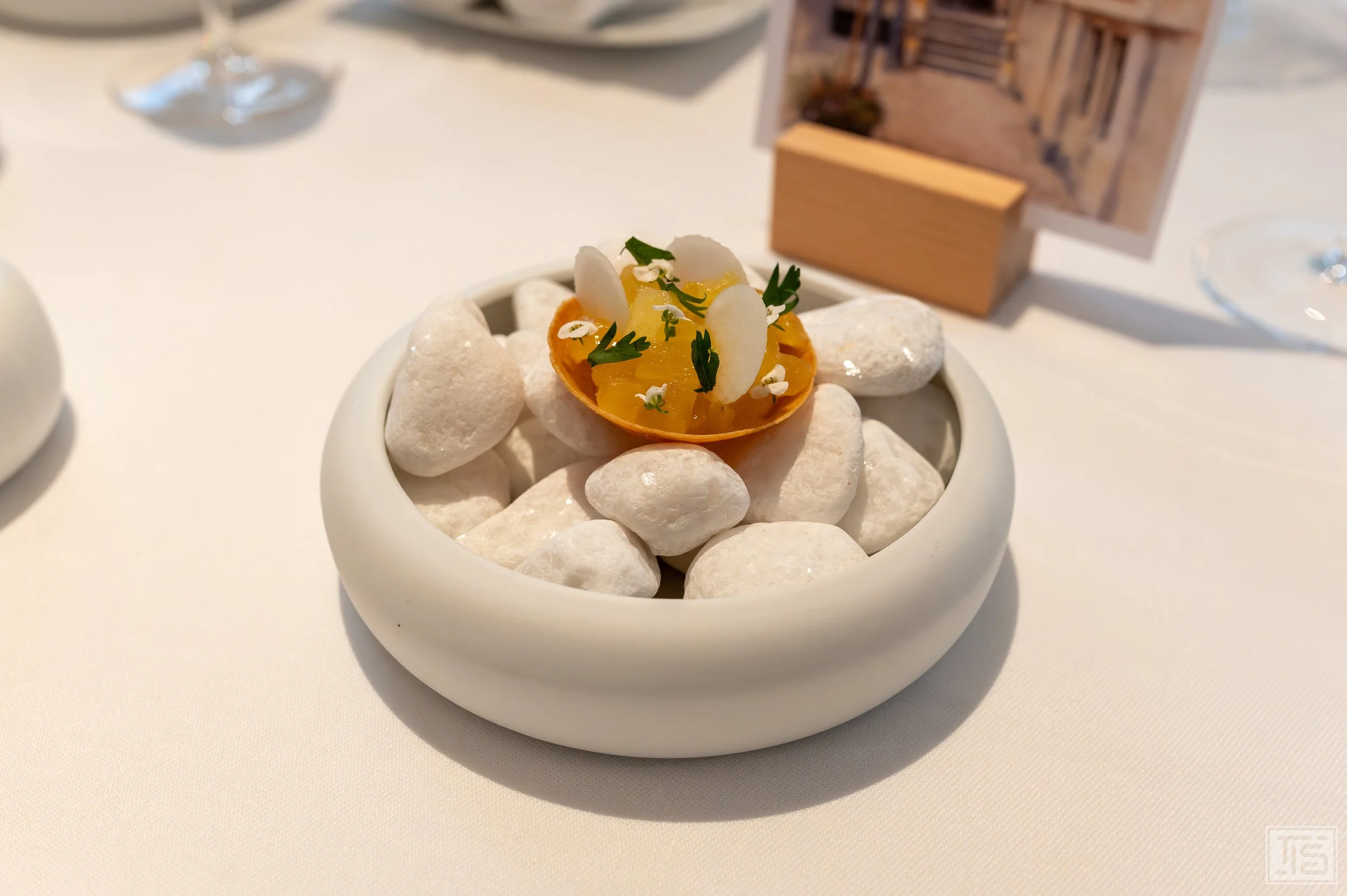
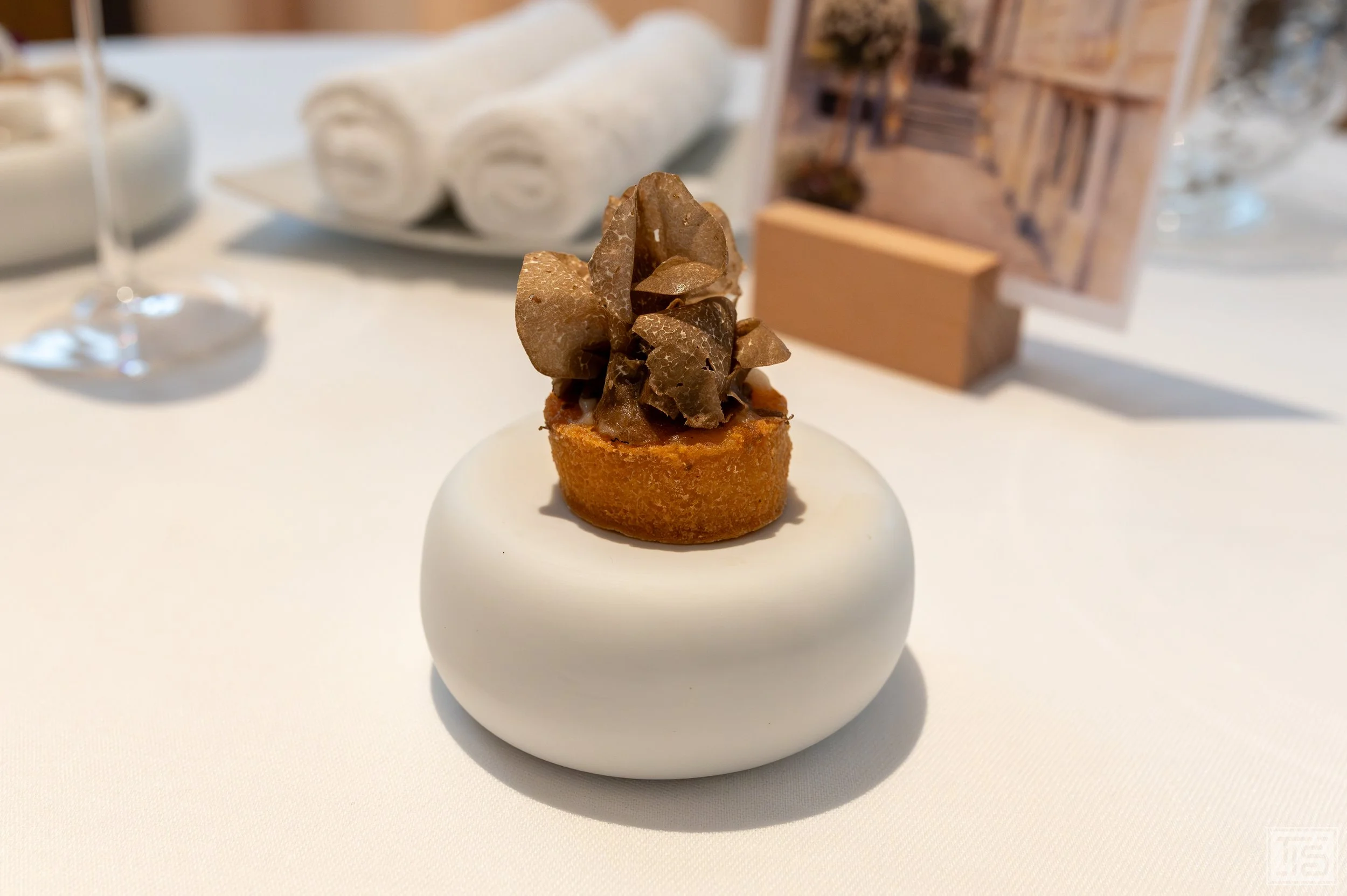
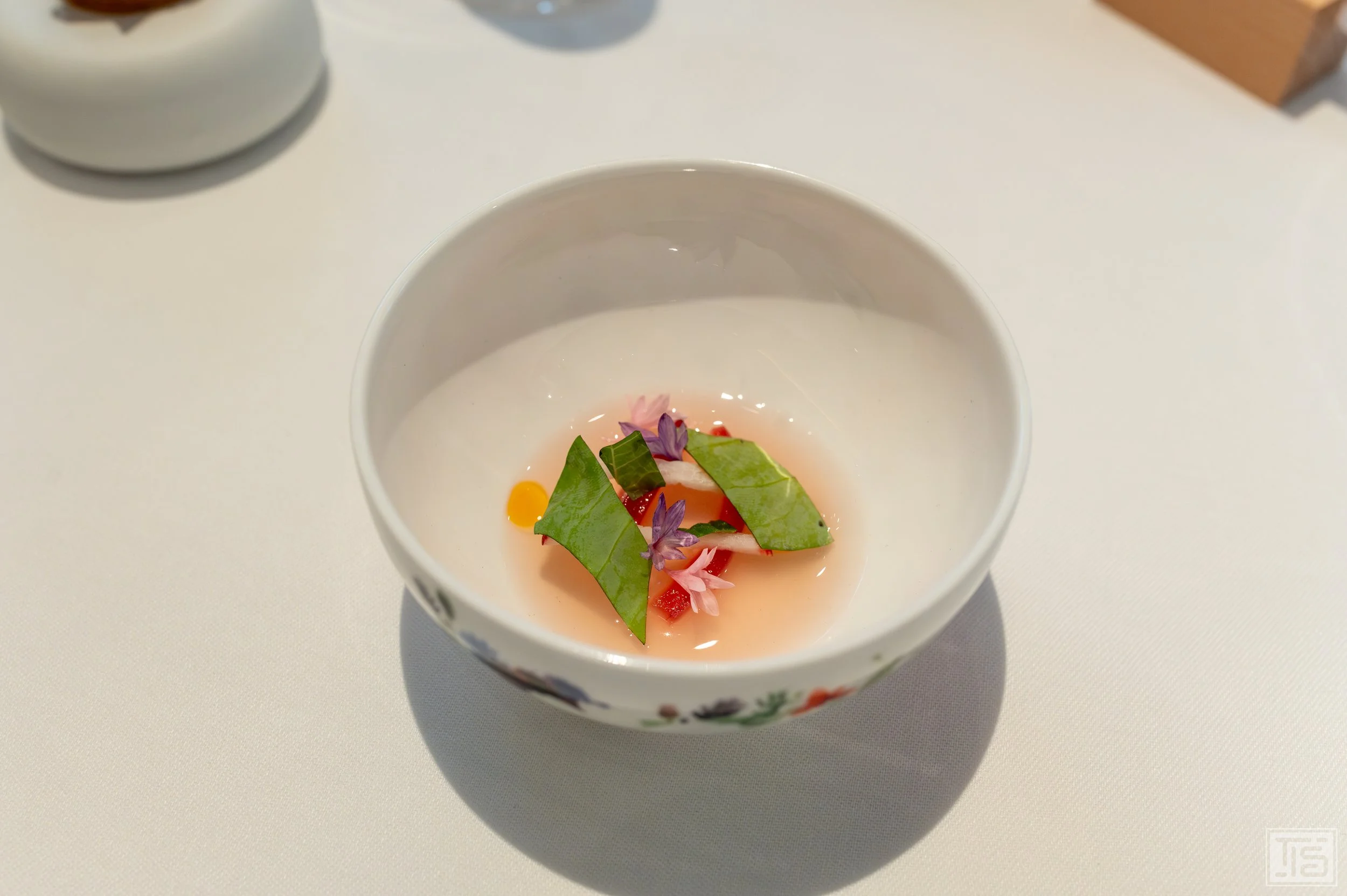
The meal begins with four canapés served at the same time. First, at the top left, asparagus salad, grapefruit and tiger nut milk. The latter is especially popular in Spain, where it is known as horchata de chufa. It is creamy and gently sweet, forming both a base and a contrast for the crisp asparagus and the bitter-acidic citrus fruit. In the tartlet with yellow kiwi, oyster and pike roe, the exotic fruit sweetness of the Italian berry is very much in the foreground. Even a forceful partner such as oyster is buried beneath it. One can nevertheless sense an unusual and intriguing combination. A little more refinement in the proportions would help.
Panissa with Pecorino, summer truffle and black lemon delivers exactly what it promises: uncomplicated savoury pleasure with depth. The carpione of seafood with pink prawns from Mazara and galangal vinegar initially leaves me with question marks, since I am not familiar with carpione. As I am told, it is a method of preserving fish by marinating it in vinegar with spices. Here it appears in a fine-dining version with the coveted prawns from western Sicily, wonderfully crisp and marked by maritime sweetness. The beautifully judged acidic frame works excellently as a contrast. The best bite is saved for last.
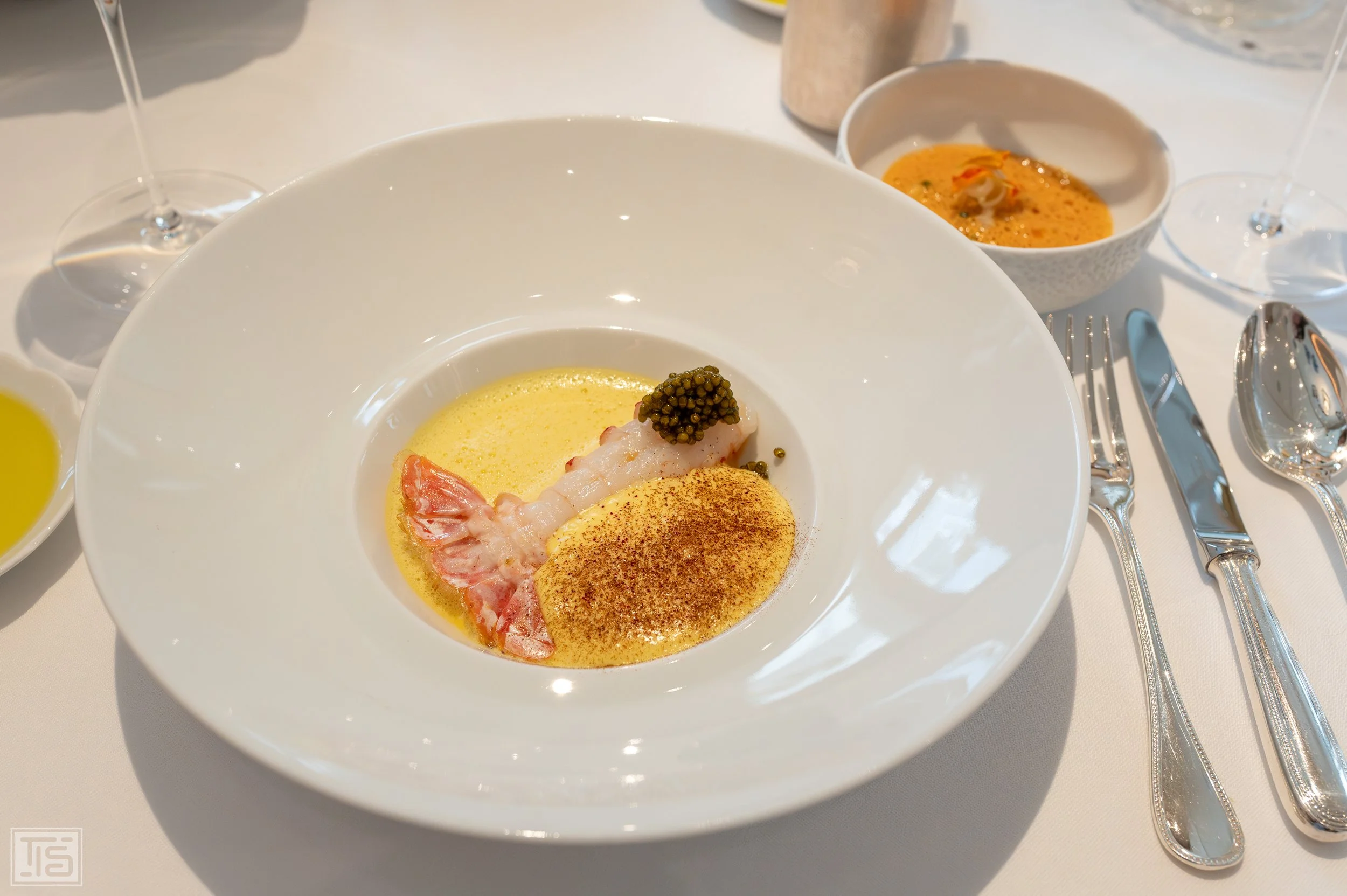
A house classic opens the menu: langoustine with savoury Marsala zabaglione and saffron sauce. Alongside it, in a small bowl, is a crustacean foam aromatised with ’nduja, concealing fregola sarda beneath. I already know this creation from an earlier visit, but this version is noticeably better. The scampo — in an Italian restaurant, one may say that — is merely kissed by the heat under the salamander: almost raw, yet warm. The two powerful sauces fuse beautifully, bringing bitter Oriental notes as well as opulent, nutty-sweet accents. Together with the crustacean, this is pure pleasure.
That pleasure is lifted further by the carefully measured caviar, which adds an iodine-saline dimension that in turn emphasises the langoustine’s own flavour. Following the service’s instruction, I alternate with bites from the small bowl. Such satellite components are often unnecessary, but this one is simply phenomenal. Through its gentle heat and grounded rusticity, it adds an entirely new chord to the main plate and brings additional depth. With the excellent bread served beforehand, I mop up every last drop of both sauces. A magnificent opening to the menu.
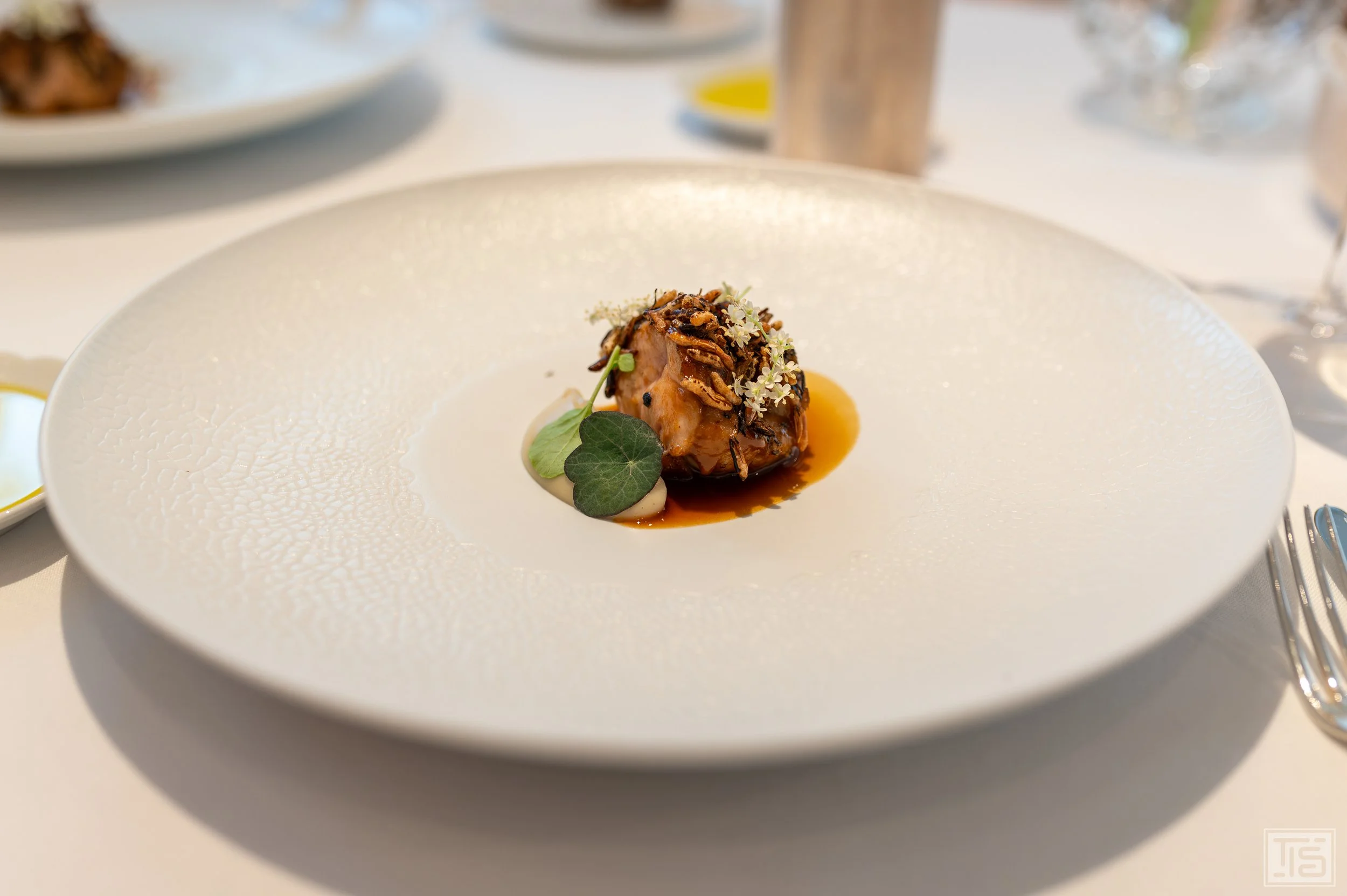
In the photograph it may not look like it, but this is probably the largest piece of veal sweetbread I have ever been served. Moresco cooks it on the grill and announces it under the moniker BBQ. Alongside come tonka bean, Jerusalem artichoke cream, Taggiasca olives and puffed wild rice. Firm in structure yet buttery-tender to the bite, the sweetbread is elegant and nutty, with seductive roasted aromas. Those also appear in the shatteringly crisp rice, which brings an added earthiness as well. That same earthiness reappears in the light-footed sauce, whose acidic peaks, together with the olives, balance both the sweetbread and the cream. A creation like this could hardly be better conceived or executed.
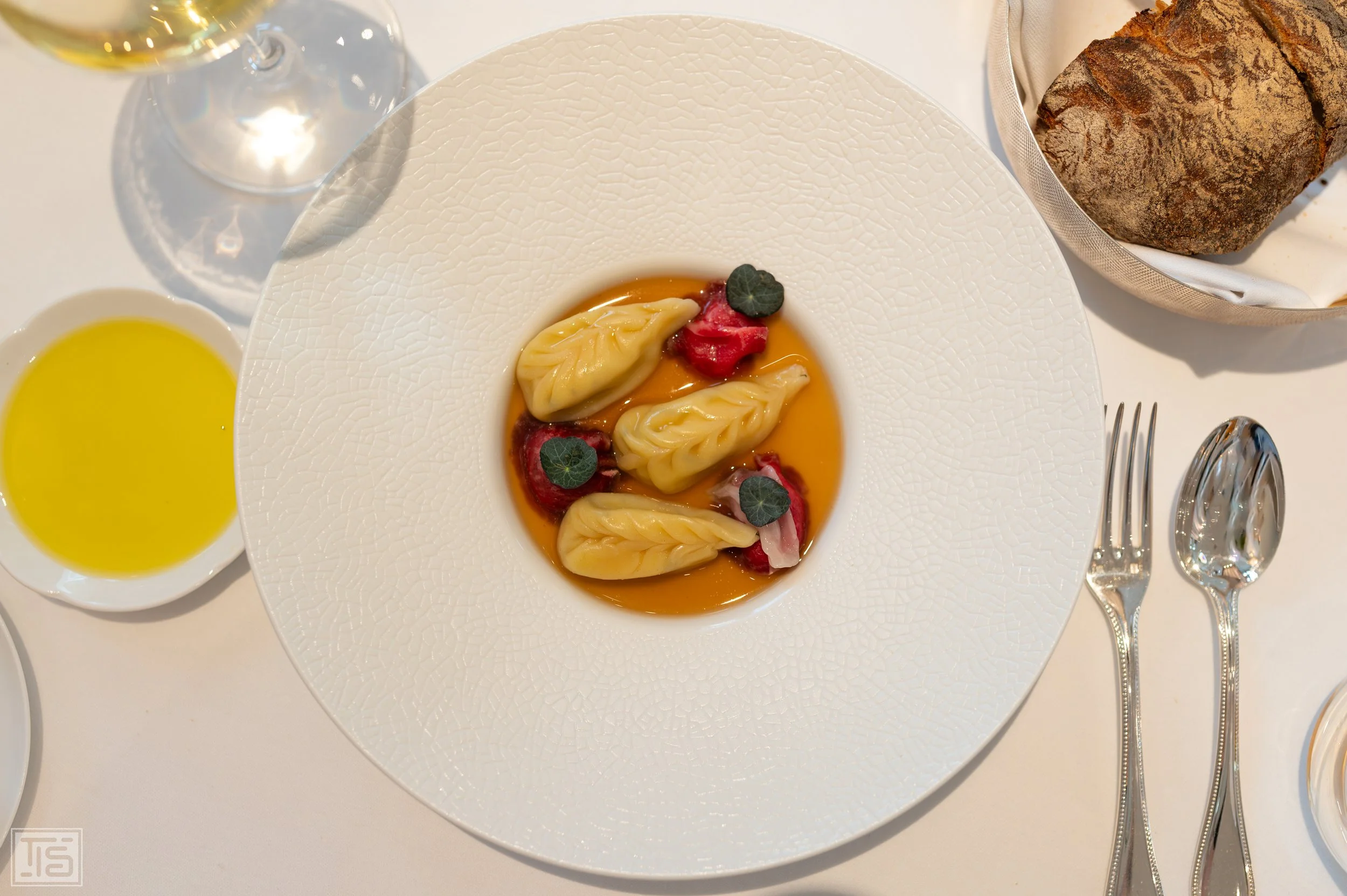
Culurgiones, a pasta shape especially common in Sardinia, has even achieved IGP status in the form of Culurgionis d’Ogliastra. Here in Zurich, the filling remains entirely traditional: potatoes, Pecorino, mint. On the plate are also a few raw slices of Swiss Wagyu, and at the table a guinea-fowl consommé is poured over. Because of the shape of the pasta, there is quite a bit of dough and therefore a little more chew. On the palate, this produces a ravishing mixture of velvety mashed potato, salty cheese and fresh mint, all carried by — naturally — excellent pasta.
Yet the secret star of this creation is the magnificent guinea-fowl consommé, sharpened with a few splashes of vinegar. It is the elegant, enlivening counterpoint to the rustic pasta. In its only superficial simplicity, the dish is deeply satisfying, yet endowed with so much depth that all one can do is smile with contentment. The Wagyu, delicious as it is, I eat separately after a first taste, simply so as not to alter this wonderful mélange.

The next pasta creation follows: nettle tagliolini with oysters, juniper and smoked bonito sauce with buttermilk. At the table, a generous spoonful of sea-fennel pesto is added on top. It sounds rather wild, although one can just about imagine that it might all go together. Somehow. The first forkful makes it clear that even remotely doubting the success of this combination borders on sacrilege. Every single ingredient is crystal clear. Together, they form a powerful, complex and deep whole. At the same time, the dish remains surprisingly light, fresh, unusual and yet accessible.
I briefly shake my head in disbelief. After all, I thought I had already arrived in pasta heaven with the previous course. But this plate moves in an entirely different sphere, even if the comparison is almost forbidden by their complete difference. Quite incidentally, these knee-bucklingly good tagliolini also disprove the myth that only dried pasta can have bite and fresh pasta cannot. Unbelievably good.
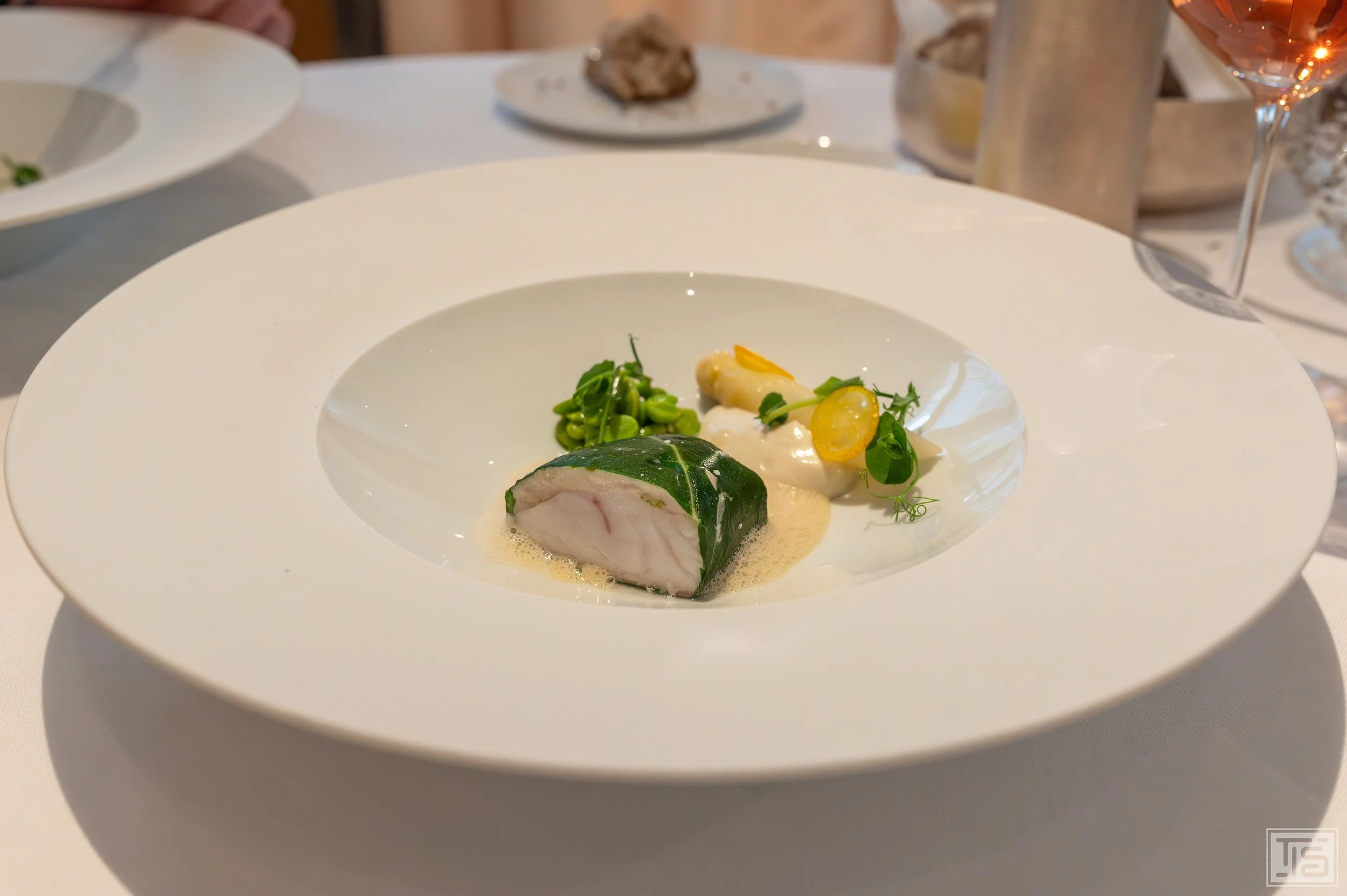
The counterpoint to the previous course comes in the form of sea bass with Avola almonds, asparagus and Vin Jaune sauce. On the one hand, it is a classic from patron Antonio Guida; on the other, everything sounds familiar and harmonious. Yet the fish itself already fails to please me. It was presumably steamed. Steaming fish is, for me, one of the most delicate tasks in the kitchen. It can quickly seem dry or develop mealy edges. This specimen is certainly not dry, but the mealiness has arrived. It creates a mouthfeel I find unpleasant. Nor does the ensemble quite click for me otherwise. Given the manageable number of ingredients, that may seem surprising, but it feels overloaded. The mushy-seeming fish together with the heavy almond foam — not even the good sauce and crisp vegetables can cut through it. A pity, certainly. But after the greatness that came before, it is bearable that one course should fail to keep pace.
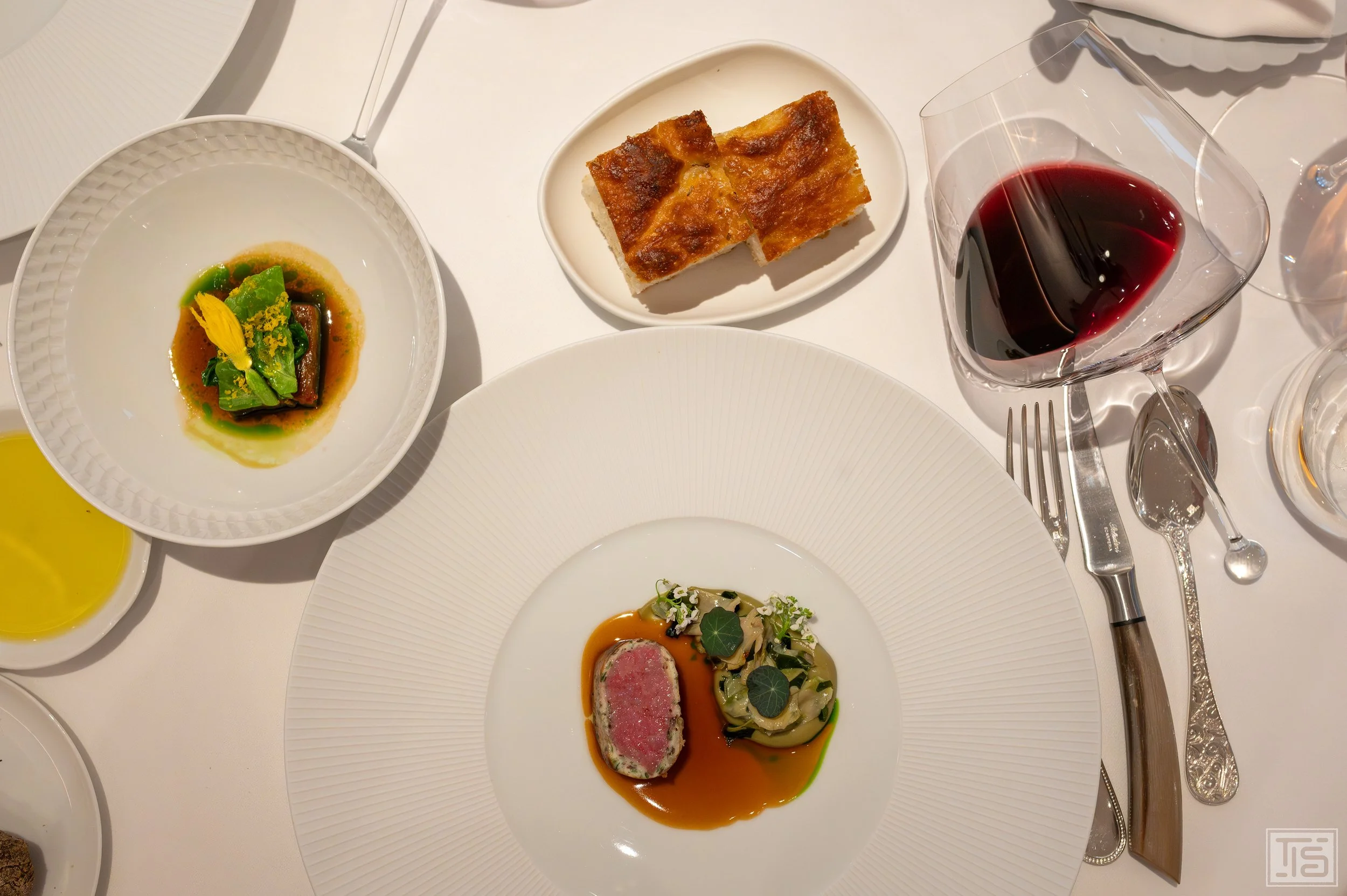
The main course that follows already compensates for the brief dip. Lamb is the theme. On the main plate: the saddle with artichokes, wild garlic and seaweed. In the small bowl: lamb belly with cucumber jus, mint and marinated egg yolk. The guiding idea here is agneau de pré-salé, salt-meadow lamb, raised along the coast of northwestern France and said to possess an inherent salinity and a delicate taste of the sea. That is exactly the flavour Moresco’s team achieves.
The meat is noticeably salty, but in no way unpleasant or oversalted; rather, it feels naturally powerful. The sea breeze is suggested above all by the perfectly measured seaweed, allowing for a brief mental excursion to the windswept Atlantic coast. The artichoke does the rest, making this Italian main course feel distinctly French. But there is more. Wonderfully tender, juicy belly, given an entirely different flavour profile by cucumber and mint. It is warmer, yet in a certain sense fresher. If one had to draw a comparison, this creation is clearly shaped by the Mediterranean.
What unites the two preparations are the phenomenal sauces. For the umpteenth time, it is clear that these elixirs possess considerable depth and complexity, while always remaining light and buoyant. They are not simply reduced bluntly until they become the sticky liquid so many seem to prize. With great sensitivity, summer is brought onto the plate. The kitchen clearly knows the quality of its sauces, because a focaccia baked specifically for this purpose is served, allowing one to mop up the final drops. Lamb can hardly be prepared better than this.
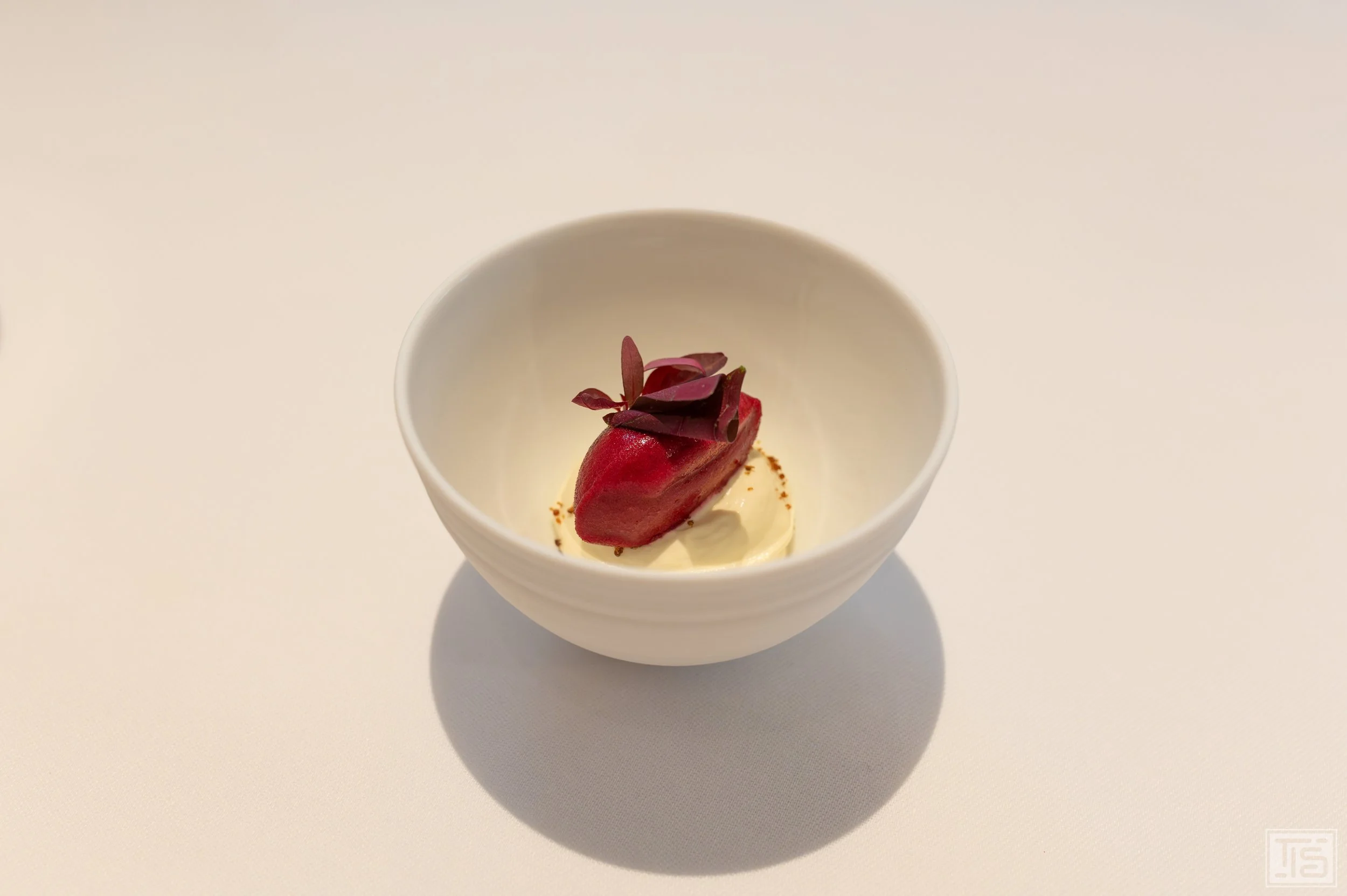
The pastry at Orsini is overseen by the master of sweets responsible for the entire Mandarin Oriental Savoy: Andy Vorbusch. Earlier in his career, he was responsible for the final act of the menu at Waldhotel Sonnora, Joachim Wissler’s Vendôme and Sven Wassmer’s Memories, among others. As a pre-dessert, he sends out an espuma of white chocolate and Gorgonzola. A cherry sorbet sits enthroned on top. Although the cheese is discernible, it integrates seamlessly into the whole and contributes more seasoning than the pungency for which it is often disliked. In doing so, it creates an intriguing counterpoint to the chocolate. More important, though, is the excellent ice cream, with its finely balanced sweet-and-sour play.
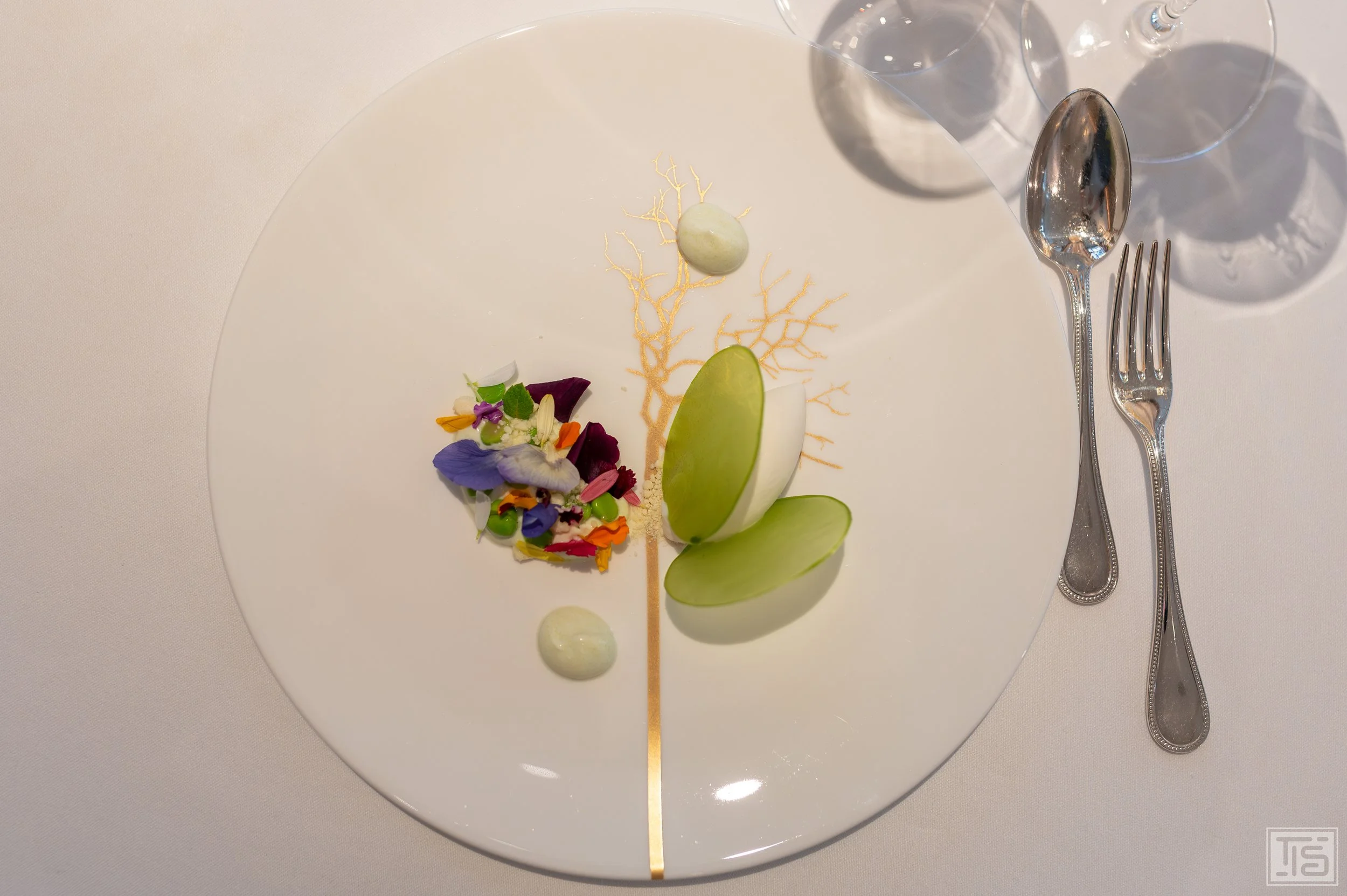
Coconut with wasabi, peas and flowers also presents itself far more gently than the ingredients — especially the wasabi — might suggest. As with the pre-dessert, the ice cream is the most important and best component. The way Vorbusch presents coconut in all its splendour without even a hint of dull heaviness is superb. The rest almost becomes mere accompaniment. While the flowers and vanilla peas, together with a little white chocolate, bring sweetly relaxed early summer to the plate, the cautiously dosed wasabi cream proves to be a well-integrated kick of freshness, stirring memories of the 2010s.
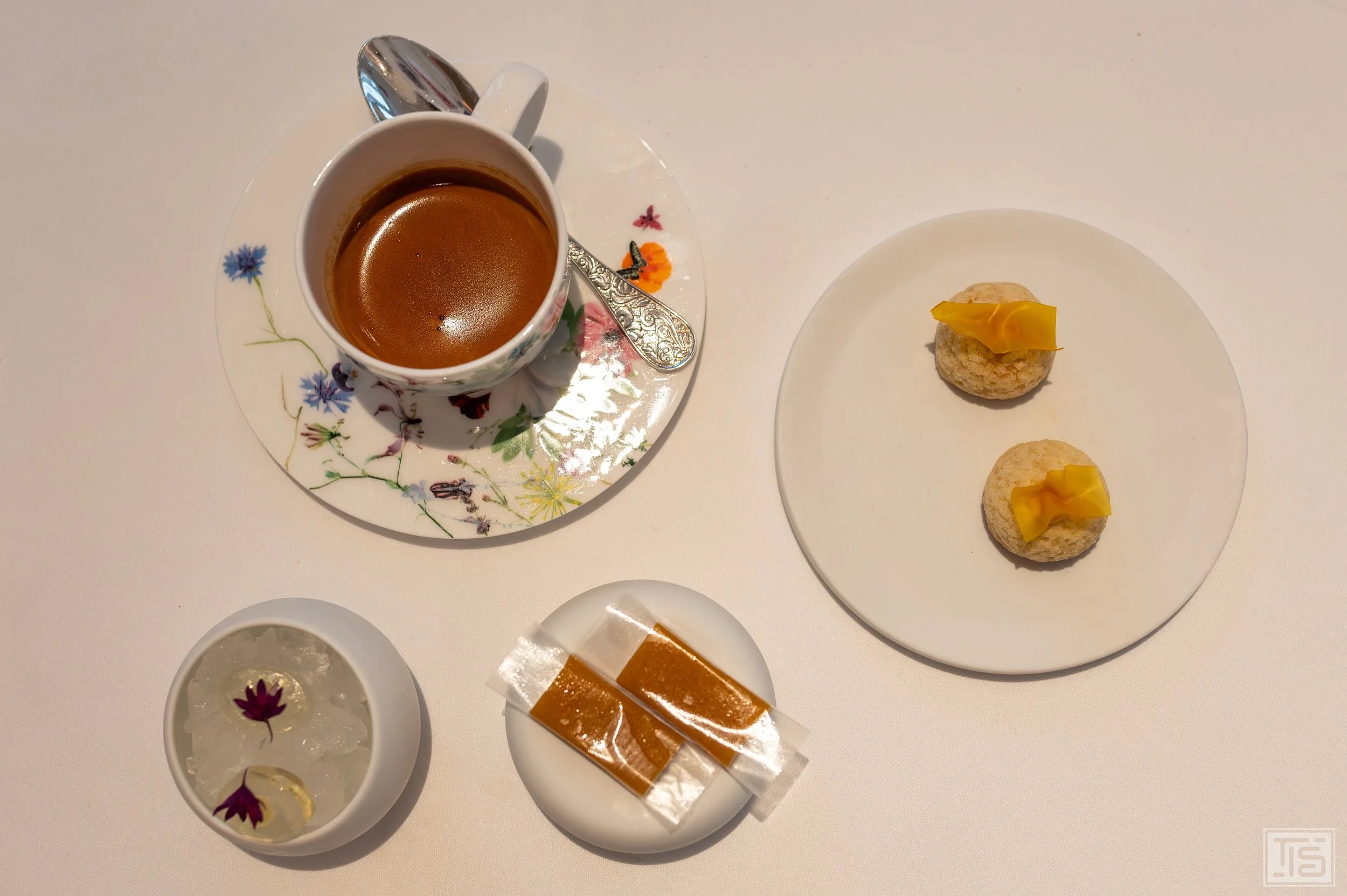
A pleasantly restrained number of friandises brings the lunch to a close.
Even if, on the surface, not much appears to have changed, the leap Dario Moresco and his crew have made since my last meal here is enormous. Orsini’s cooking is more precise, more focused and clearer. It is defined by largely impeccable craftsmanship and a distinct signature with lots of character, in which excellent products remain at the centre. At the same time, it superbly combines an Italianità that often feels slightly rustic at its core with the ambitions of haute cuisine.
On my first visit, the cooking impressed me. At today’s lunch, it thrilled me. And left a lasting impression. What Dario Moresco and his team are delivering is without question worth two stars.
Wine pairing by Matteo Cino:
Camillo 2018, Gini
Caracol dos Profetas 2024, Companhia de Vinhos dos Profetas e dos Villões
Arbois Savagnin Sous Voile, Domaine de la Touraize
Cuvée Gerontampelo 2020, Estate Argyros
Pewsey Vale 1961 Block Riesling Eden Valley 2019, Pewsey Vale Vineyard
Picaro del Aguila Clarete Rosado 2023, Dominio del Aguila
Schioppettino 2022, Tunella
Bukkuram 2021, Marco De Bartoli
Genroku Redux Sake, Konishi Shuzo
Sweetheart Sauvignon Blanc 2023, Oliver Zeter
Poiré Authentique, Eric Bordelet
Orsini
Waaggasse 7
8001 Zürich
Schweiz
+41 43 588 38 88
Book a Table - Orsini Zürich
Our visit was supported by the restaurant. Information on how we handle press conditions can be found in the FAQ.