Le Soir – Aiming High on Sun Mountain
In and around Lucerne, things have been stirring again on the culinary front in recent years. So it should come as no great surprise that a chef like Luca Haase has ended up in Kriens and brought a star to the Lucerne suburb. At first glance, at least. At second glance, perhaps it does.
For many years, Haase was sous-chef in Peter Knogl’s brigade at the three-star Cheval Blanc in Basel. Before that, among other stops around Europe, he cooked at Gion Sasaki in Kyoto, also decorated with three Michelin stars. This is where my Japanophile ears prick up. After all, it’s still fairly rare for a gaijin to work in one of Japan’s most highly decorated houses. In culinary terms, it’s a CV as exciting as it is promising.
Looking at that résumé, you would expect to find him in a grand hotel. And indeed, after leaving Basel, Haase briefly served as head chef at the Mandarin Oriental in Lucerne. He then moved on to the Sonnenberg in Kriens, first as a consultant to the hotel and restaurant, and eventually as head chef. It’s a small three-star hotel with a restaurant and a mini-golf course, dedicated to training hospitality staff. It’s not exactly where you’d expect fine dining or a chef of Haase’s calibre.
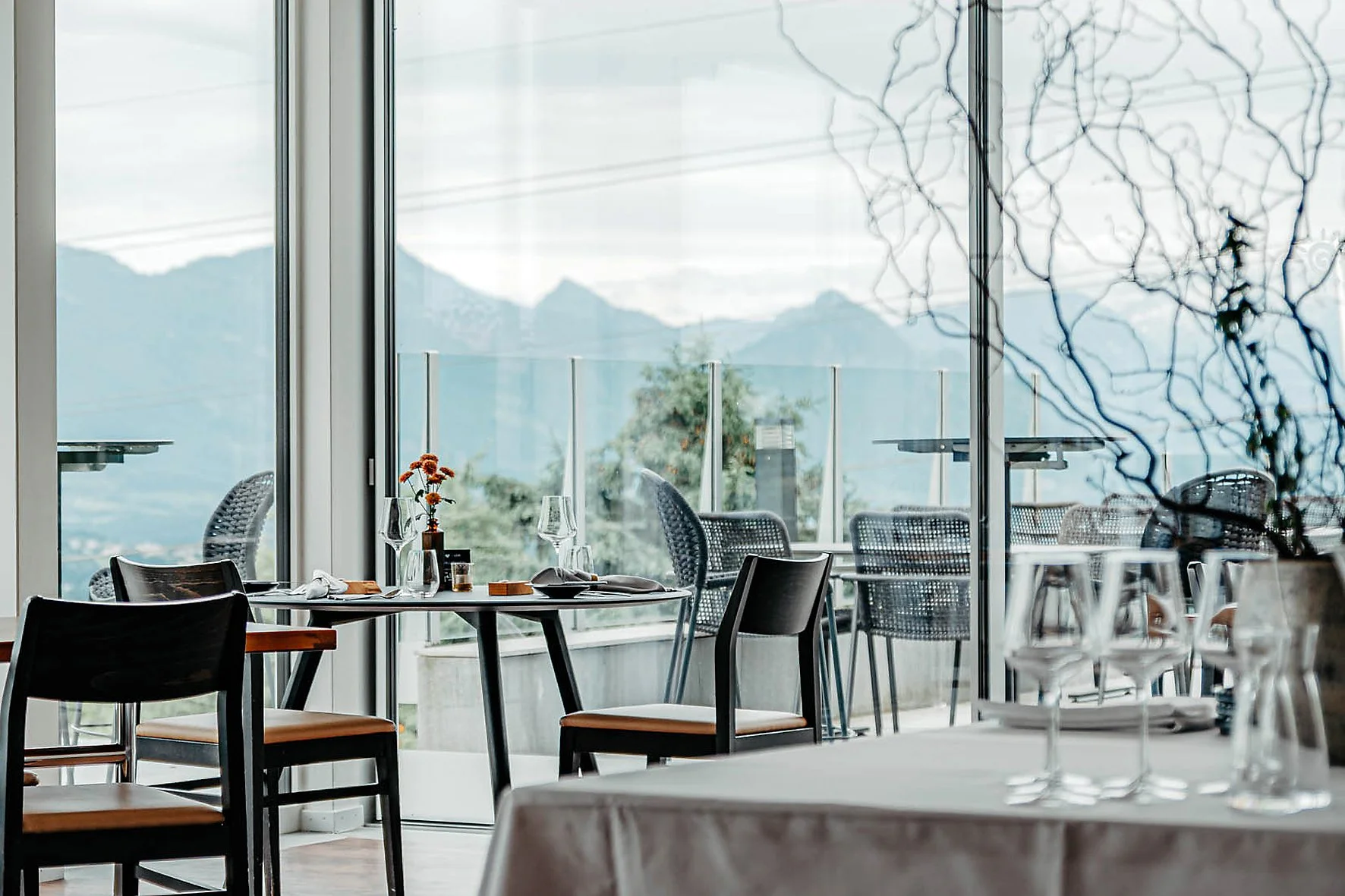
As the hotel’s name suggests (“sun mountain”), it enjoys a privileged position at around 700 metres above sea level, with a glorious panoramic view of the Rigi, Pilatus and Lake Lucerne. In perfect weather there’s still time for a beer on the terrace before dinner, to take in the view and the peace and quiet. Cows graze in a nearby pasture. It’s probably exactly how most tourists picture Switzerland.
A good hour later, I’m seated in the restaurant, where modern sobriety prevails. The lamp on the table suggests the room will grow dim as the evening goes on.
To my surprise, I find Moritz Dresing working front of house. He recently took over here as restaurant manager and sommelier. A few years ago, the Austrian won me over with an excellent wine pairing at Gilad Peled’s two-star Colonnade, at the Mandarin Oriental’s Lucerne outpost. So I’m curious to see what will end up in my glass tonight. Things kick off with Louis Roederer’s Collection 246. I rarely drink Champagne from the big houses, really only when it’s part of a wine pairing. But Roederer has noticeably evolved in recent years, and even this entry-level cuvée is genuinely pleasing. Shortly afterwards, the first snacks arrive.
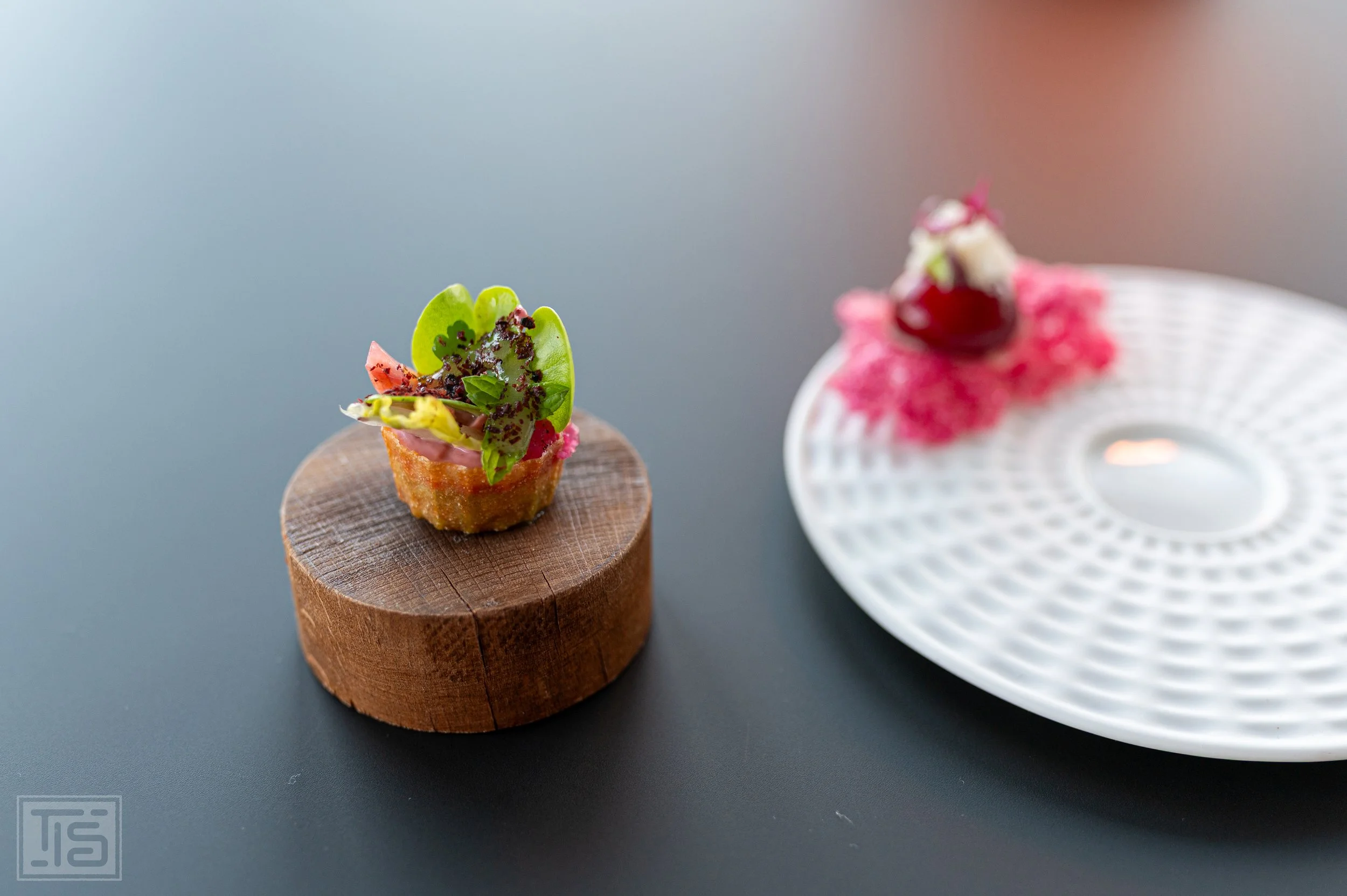
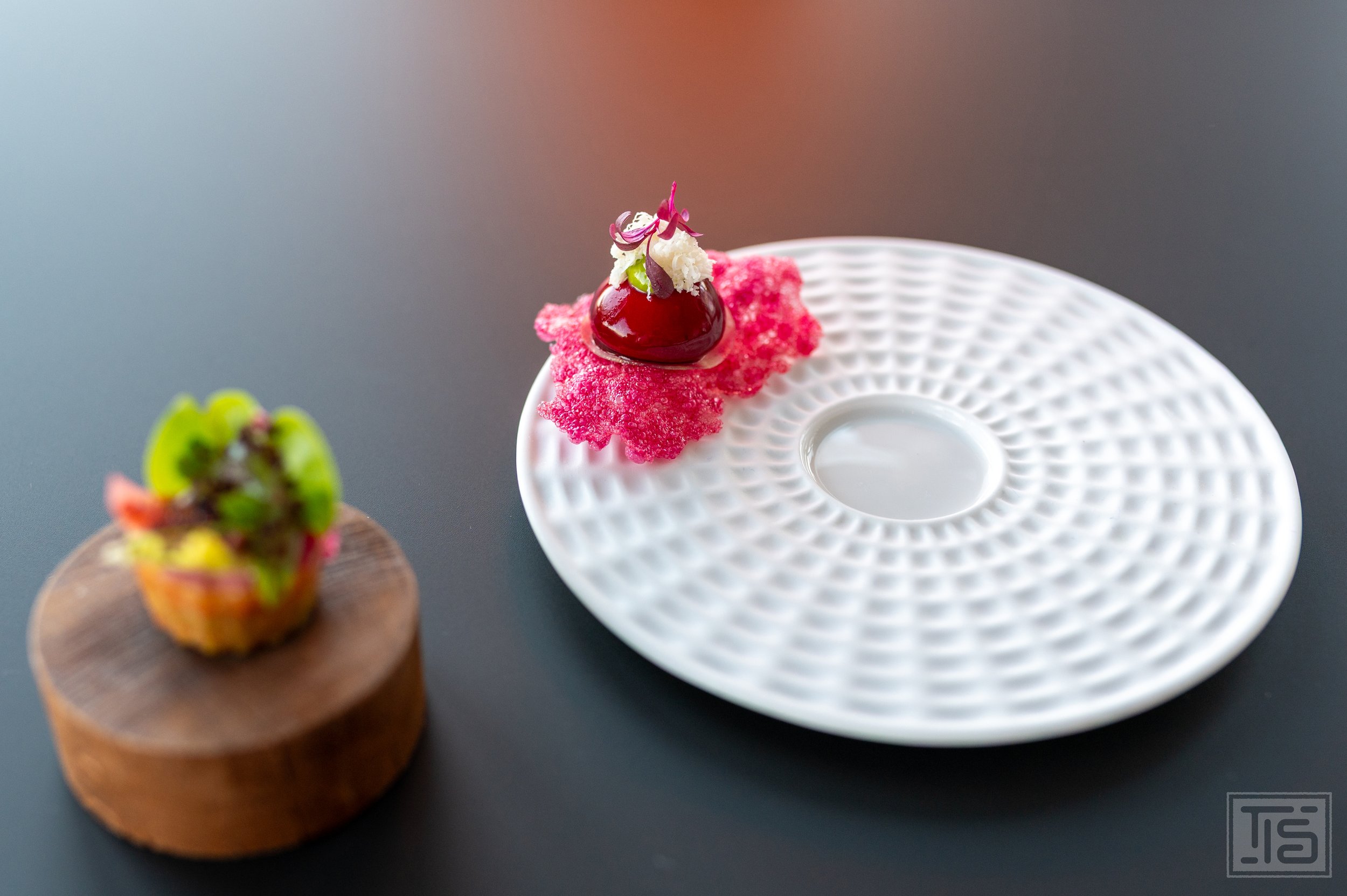
First up is fattoush. The Levantine bread salad is served with baqleh (purslane), pomegranate molasses and sumac. For me, fattoush needs plenty of herbaceous freshness and summer vegetables. Here, the bread is too dominant, so that even assertive flavours like sumac can’t really come to the fore. The beetroot-tapioca sphere with horseradish, dill and Chioggia beet, on the other hand, is outstanding. The craftsmanship is flawless, with a strikingly thin membrane. It’s boldly seasoned, with a proper kick of heat and plenty of freshness.
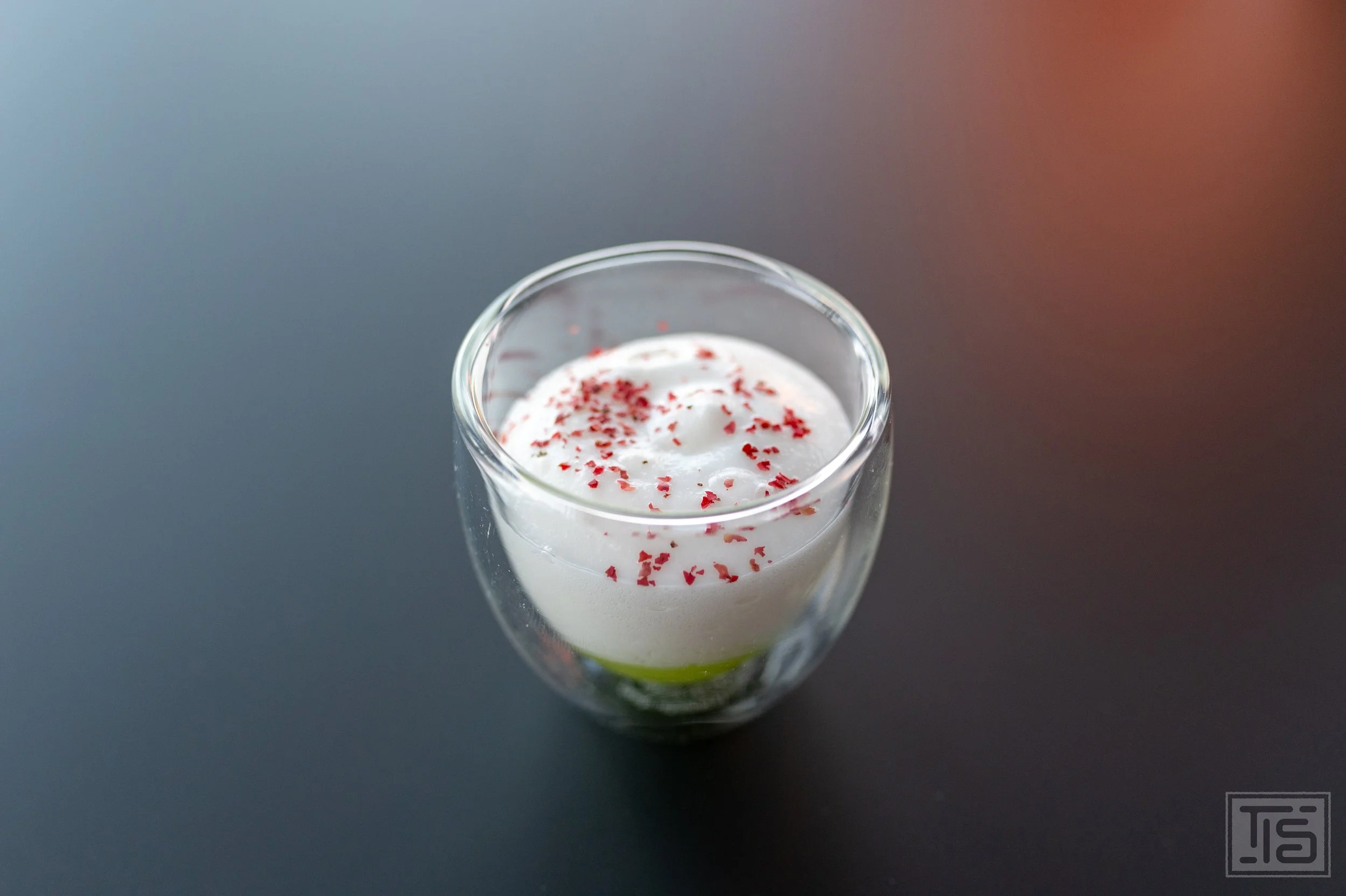
The excellent “Gin & Tonic” strikes a similar chord. Flavoured with bergamot and red pepper, it once again shows a stimulating heat and an appealing play of complex bitter notes. Set against this is crisp, juicy cucumber, which lightens things up and brings soothing coolness.
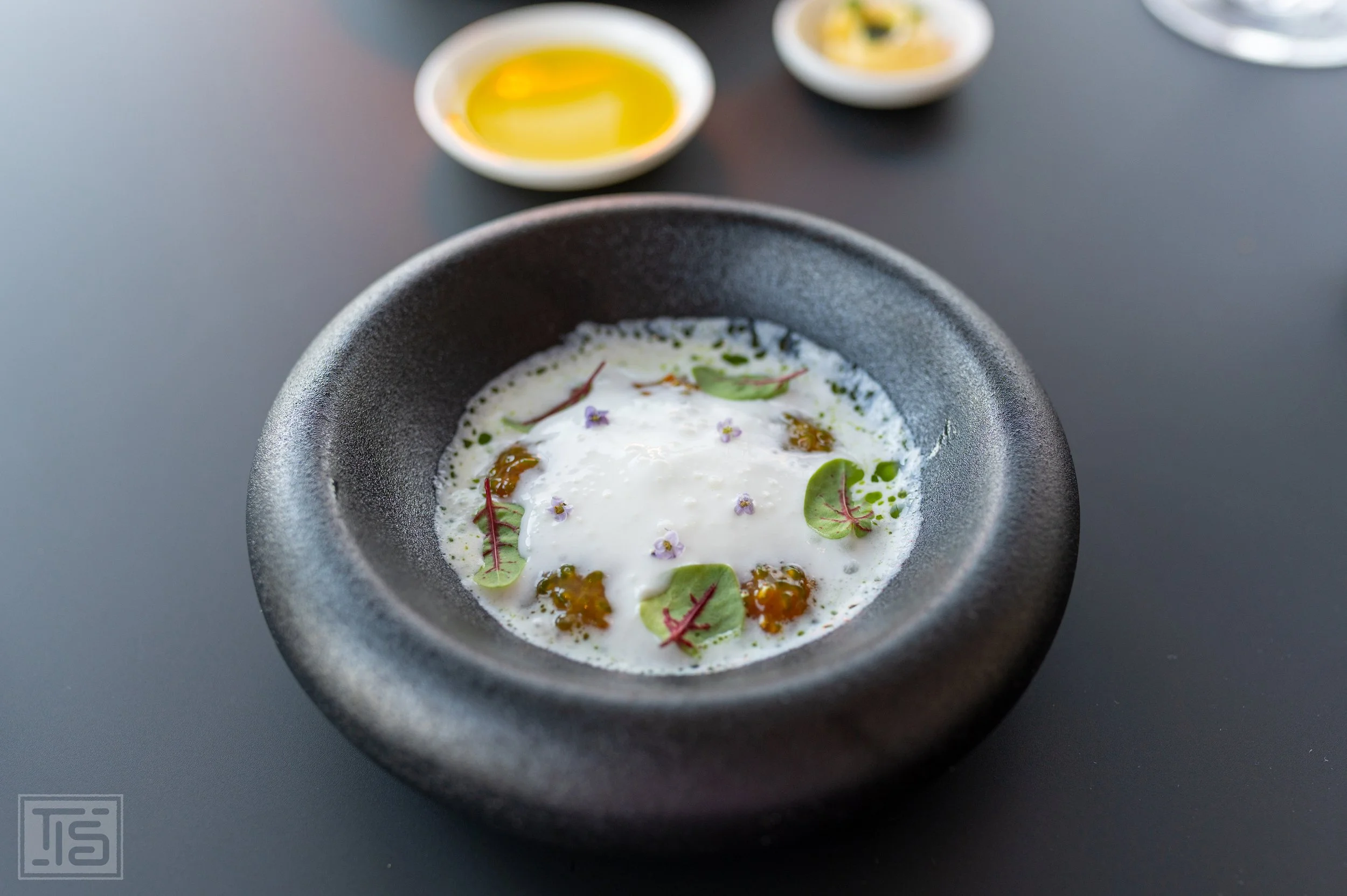
Haase slips in a course from the vegetarian menu as a starter: tomato salad, buttermilk, kaffir lime. This unusual-sounding combination thrills from the first bite. The chef also shows why you should always use the seed cavities of tomatoes, since that’s where so much depth and power lies. With further bites, though, the initial excitement gives way to the realisation that the whole becomes too sweet. The acidity is undoubtedly present in all the components and could have been brought out more to provide balance.
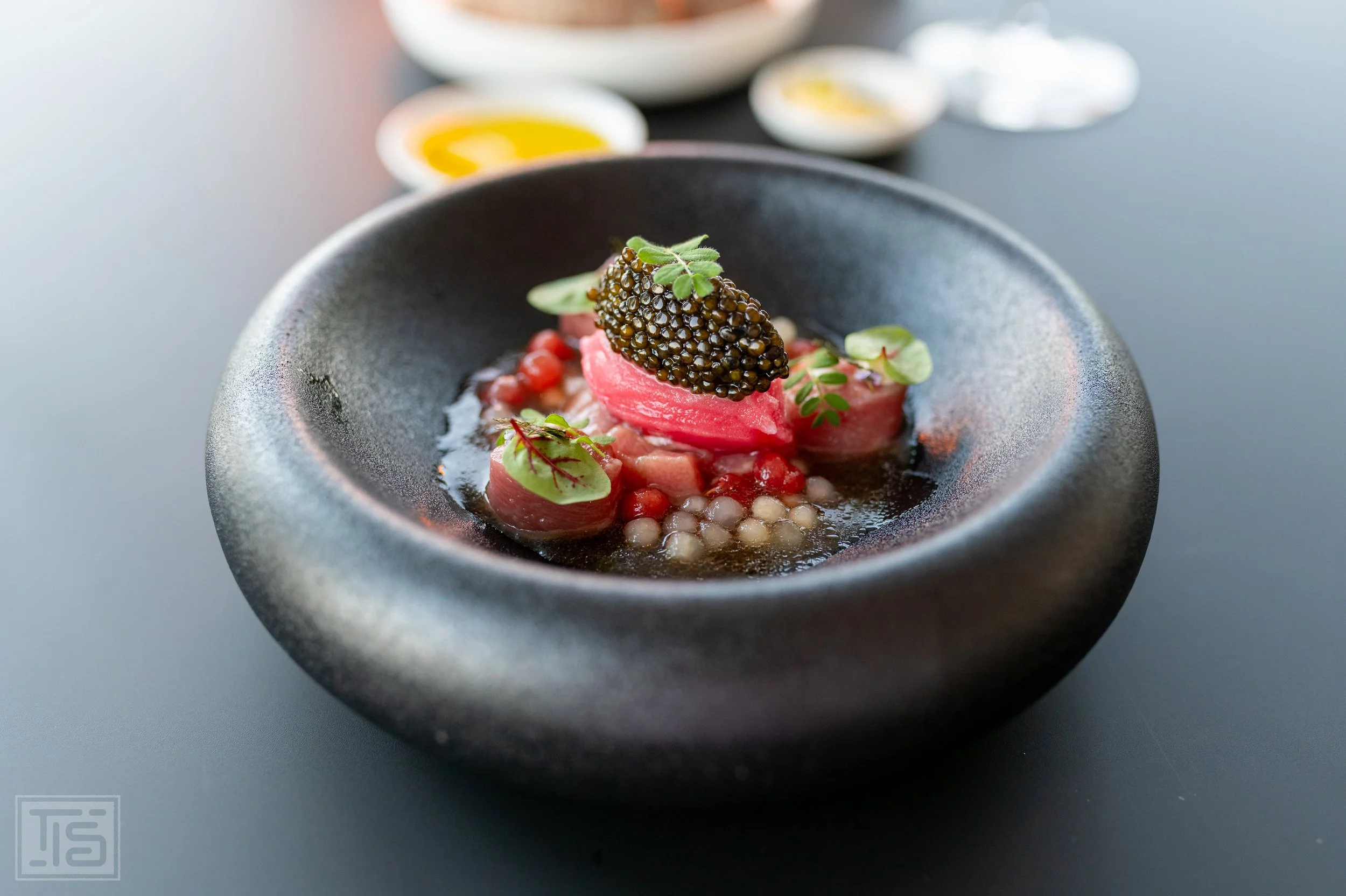
The first course is tuna, specifically otoro and akami of Atlantic bluefin from the Spanish producer Balfegó, with sanbaizu, watermelon and daikon. In this dark bowl, Haase’s past and his love of Japan show clearly for the first time. He uses the fatty belly (otoro) and the lean back meat (akami). The sanbaizu (literally “three-cup vinegar”) is classically Japanese. Here it’s a lightly gelled sauce, traditionally made from rice vinegar (komezu), soy sauce (shoyu) and mirin (sweet rice wine).
The plate is served decidedly too cold. Beyond that, it shows what I see as the problem with using (overly) sweet fruit in savoury dishes. Because of the cold, neither the fish nor the sauce can show themselves at their best. That gives the already very potent melon even more room to unfold. In other words, every bite tastes sweetish and (too) distinctly of melon. I wait a little, hoping the mild evening air will work in the dish’s favour. With the last forkful or two, it does: the sauce reveals its umami more fully and the fish comes through a little more. Yet the fruit is still too pushy, and once again some acidity is missing.
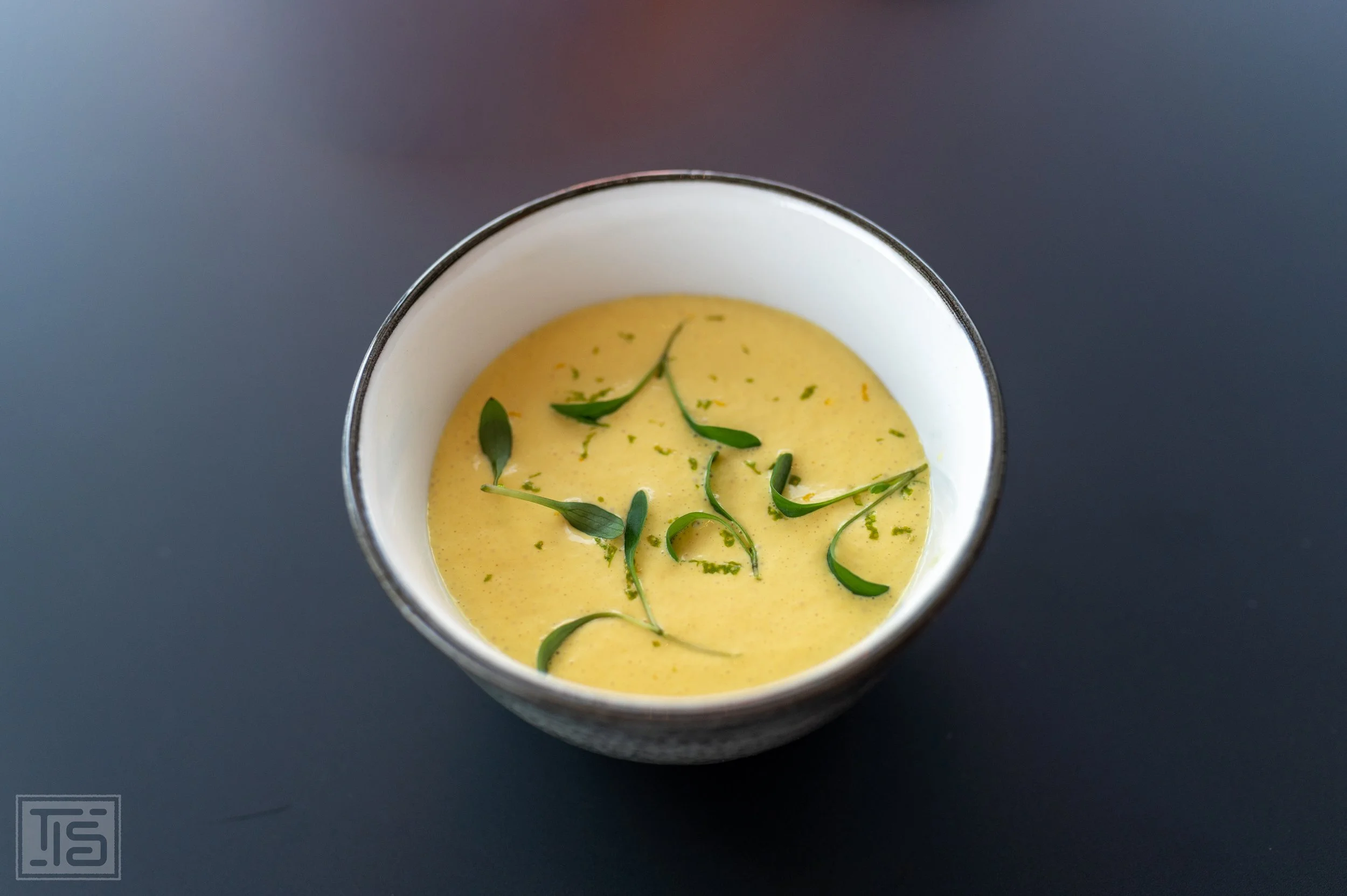
Next comes an espuma of ají amarillo, Peru’s bright yellow-orange national chilli, with gambero rosso, leche de tigre and papaya underneath. Moritz Dresing tells me to plunge the spoon right to the bottom so that all the components land in the mouth at once, and of course I oblige. Unfortunately, this dish initially suffers from the same problem as the tuna before it: it’s too cold. Thankfully, things improve noticeably after a short wait. Still, the spark doesn’t quite fly, as the proportions aren’t entirely right.
Once I finally find the ideal spoonful, the dish’s full potential emerges. Haase handles heat and acidity boldly, and the very good prawns take it in their stride. Their maritime sweetness and fresh snap are nicely contrasted by the chilli, the distinctive, sharp and tangy leche de tigre and the dish’s general punch. The papaya tones things down a little and adds a touch of the exotic. Serve it slightly less chilled and dial back the foam a bit, and this would be a winner all round.
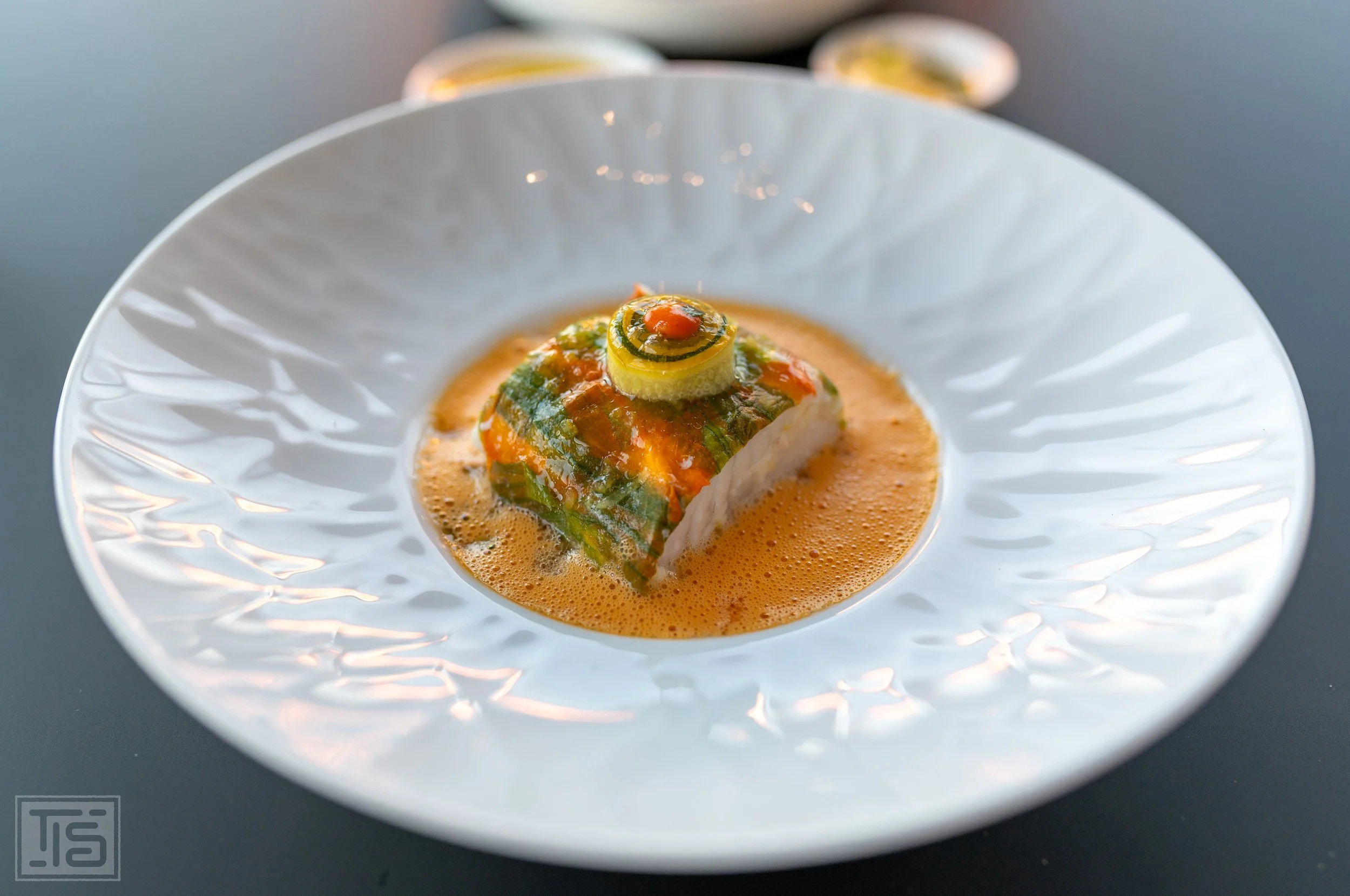
Much to my delight, chilli stays on the agenda in the next course. The smoky-sweet, mild pimiento del piquillo from the northern Spanish region of Navarra plays a central role in the Atlantic turbot with courgette, langoustine and preserved lemon. It may seem unusual, but the pepper takes up an essential place here. Its smoky notes give the whole dish a distinctly dark, savoury character. The preserved lemon could be given more weight to balance the plate more finely. Overall, though, the robust setting suits the turbot well, even if the fish is cooked a touch too long. The result is an unusual, successful and varied composition.
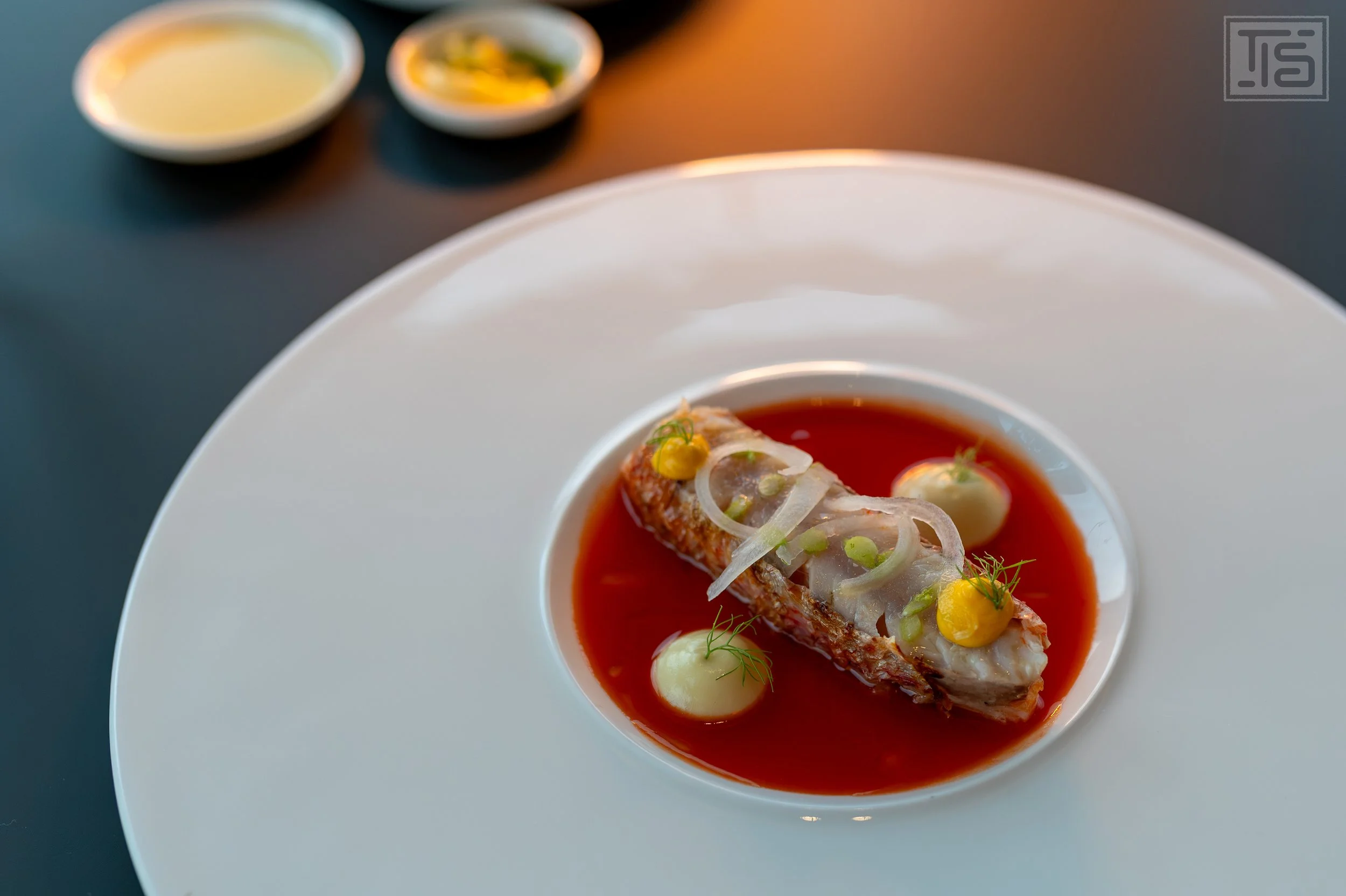
Next comes a second bonus course of red mullet, fennel, saffron and tomato. Classic, warm Provençal and Mediterranean flavours set the tone. They meet a fish that is first cured, then grilled over binchotan charcoal, giving it very pronounced grill notes that are a tad too strong. Once again, a lively play of acidity is missing. The tomatoes are at the height of their season, and their intensity makes them seem almost compote-like and very dominant. Fennel and saffron also lean towards sweetness, which amplifies the force of the tomato rather than adding variety and complexity.
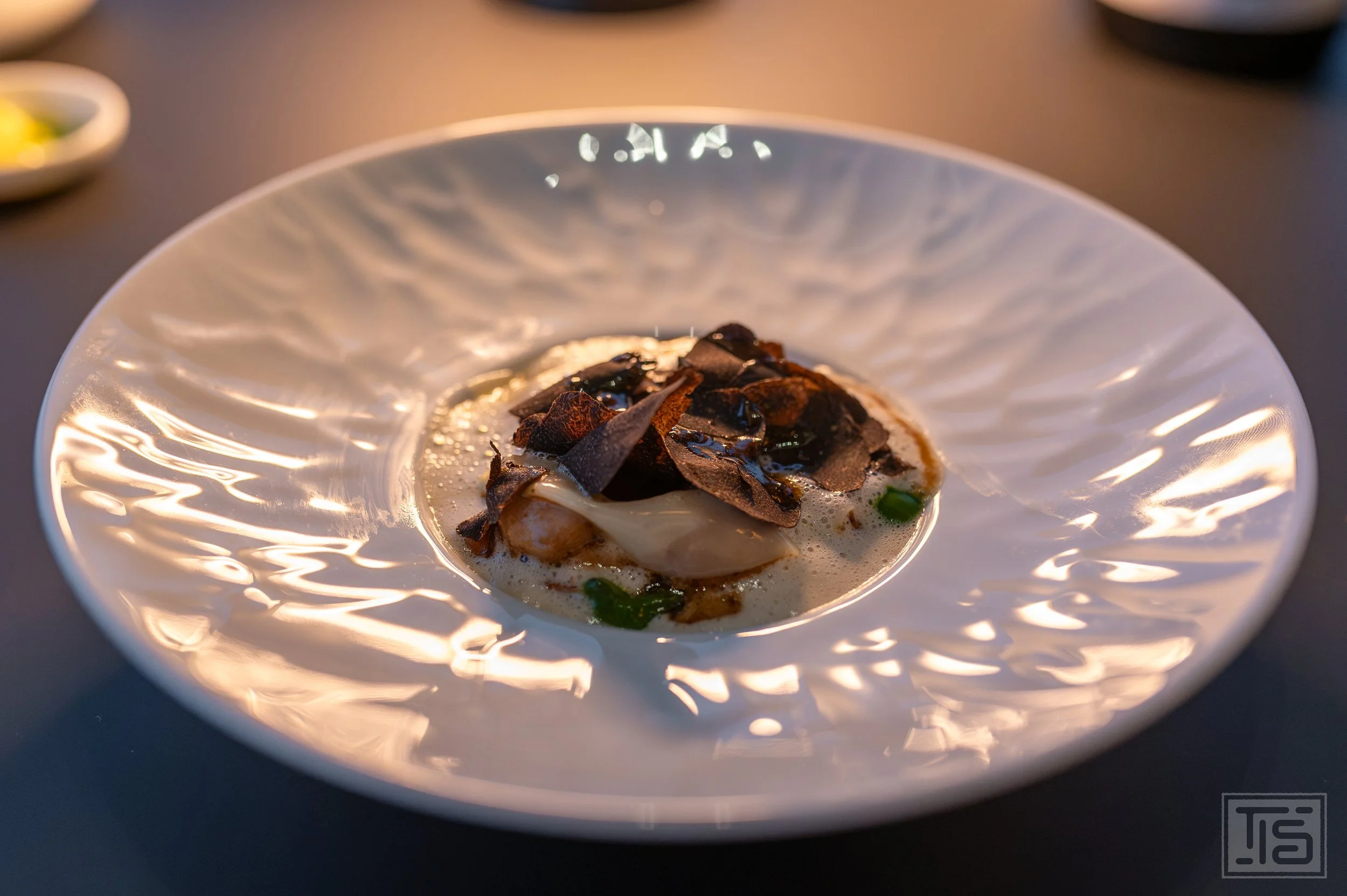
I’ve been especially looking forward to the sot-l’y-laisse lasagne with chanterelles, Périgord truffles and spinach since reading the menu. It’s interpreted as a kind of open lasagne with a relatively small proportion of pasta, exactly the right choice for an extensive menu. The course stands out for its balance and accessibility. You don’t need to worry about composing the perfect forkful or fire up your synapses excessively. You feel and taste straight away how good this is. The juicy chicken oysters have a pleasant, gently springy bite, which lets every element shine. Savoury umami defines the plate, while the excellent light sauce and the slightly bitter green of the spinach balance everything superbly. The pasta has bite and contributes a hint of sweetness. The earthy Périgord truffles from Chile, with their delicate scent of forest floor, add depth and luxury; they’re the best I’ve tasted from the South American country so far. A contented “Mmm …” inevitably escapes your throat.
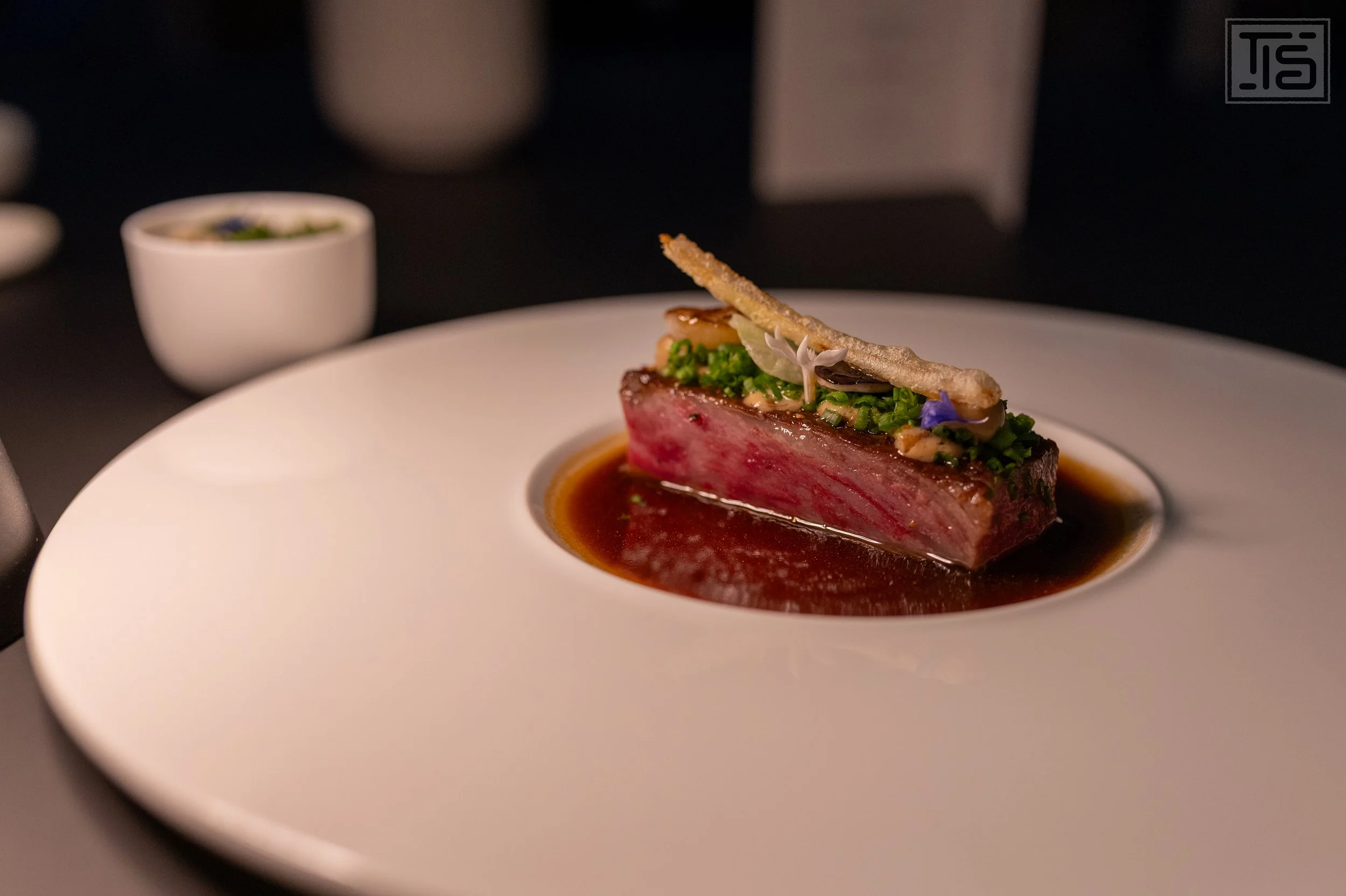
Haase’s Japanese past is most evident in the main course: Kagoshima wagyu entrecôte, gari gari, young leek, shiitake and sushi rice. The beef comes from the prefecture of the same name on Kyushu, the third-largest of the archipelago’s four main islands, at its south-western tip. At A5, it carries the highest quality grade.
Japanese beef now pops up in Europe almost inflationarily. Experience sadly shows, time and again, that many chefs see this premium, high-priced wagyu as nothing more than an expensive substitute for local produce, or simply an upsell, and don’t really know how to handle it. Haase, on the other hand, knows exactly what the lavishly marbled, ultra-tender rib eye needs: careful heat management. After a hard sear for an appetising crust, the meat is allowed only the briefest rest, since the fat can start to melt at temperatures around 30 degrees. The fat is, after all, where the pleasure lies, so as much of it as possible should be preserved rather than vanishing into thin air in the pan or while resting.
Such beef doesn’t need strong, highly aromatic companions, but ingredients that support it. Haase strikes a near-perfect balance of restrained freshness, gentle heat, umami-rich seasoning and delicate sweetness. Simply amazing.
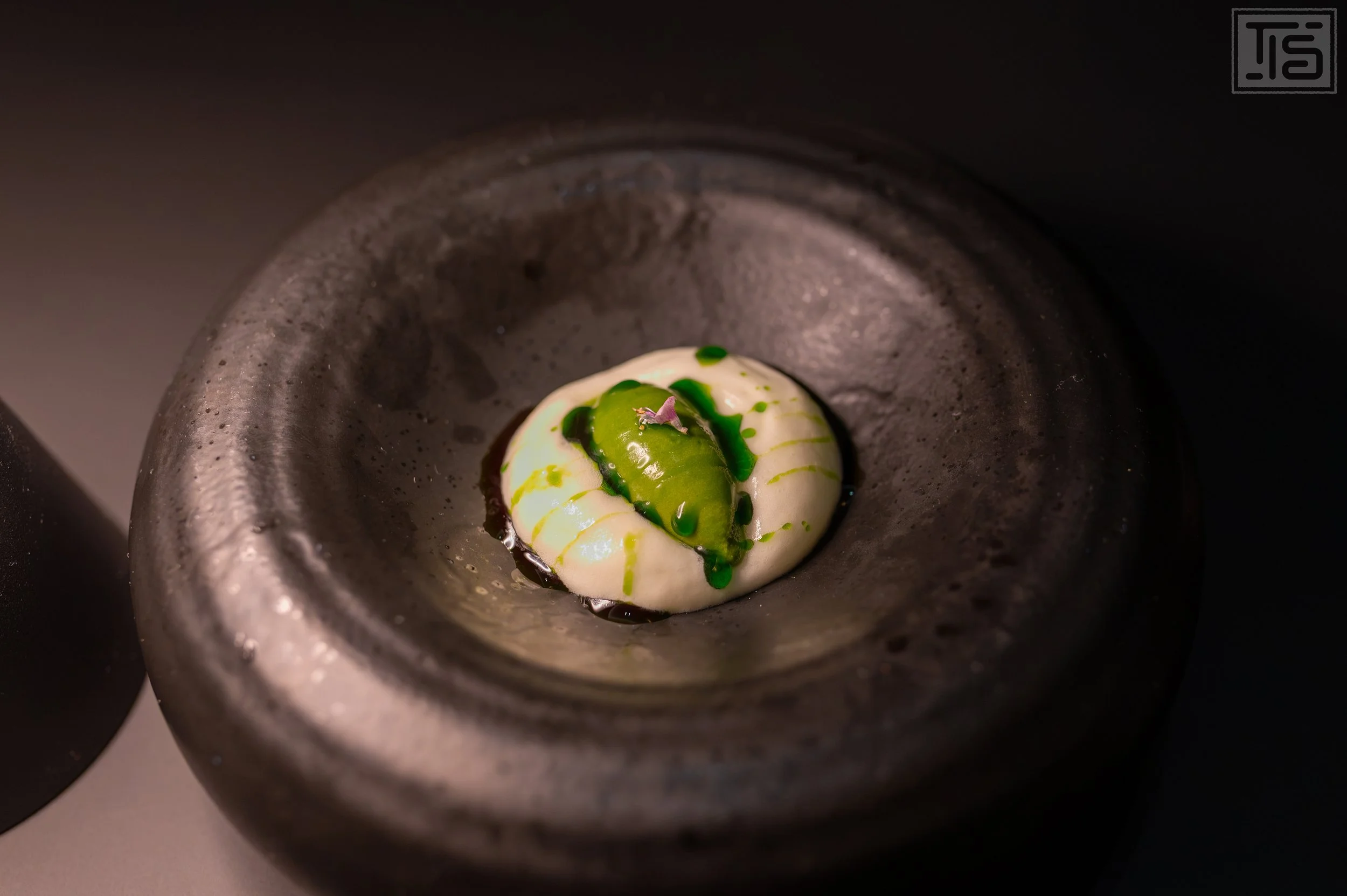
Basil and calamansi should have a refreshing effect and cleanse the palate. Which they do in part. But after a decidedly generous menu with two bonus courses so far, though, my level of fullness is starting to take its toll. At moments like this, I no longer fancy frothed sauces or foams, and there have already been quite a few of those today.
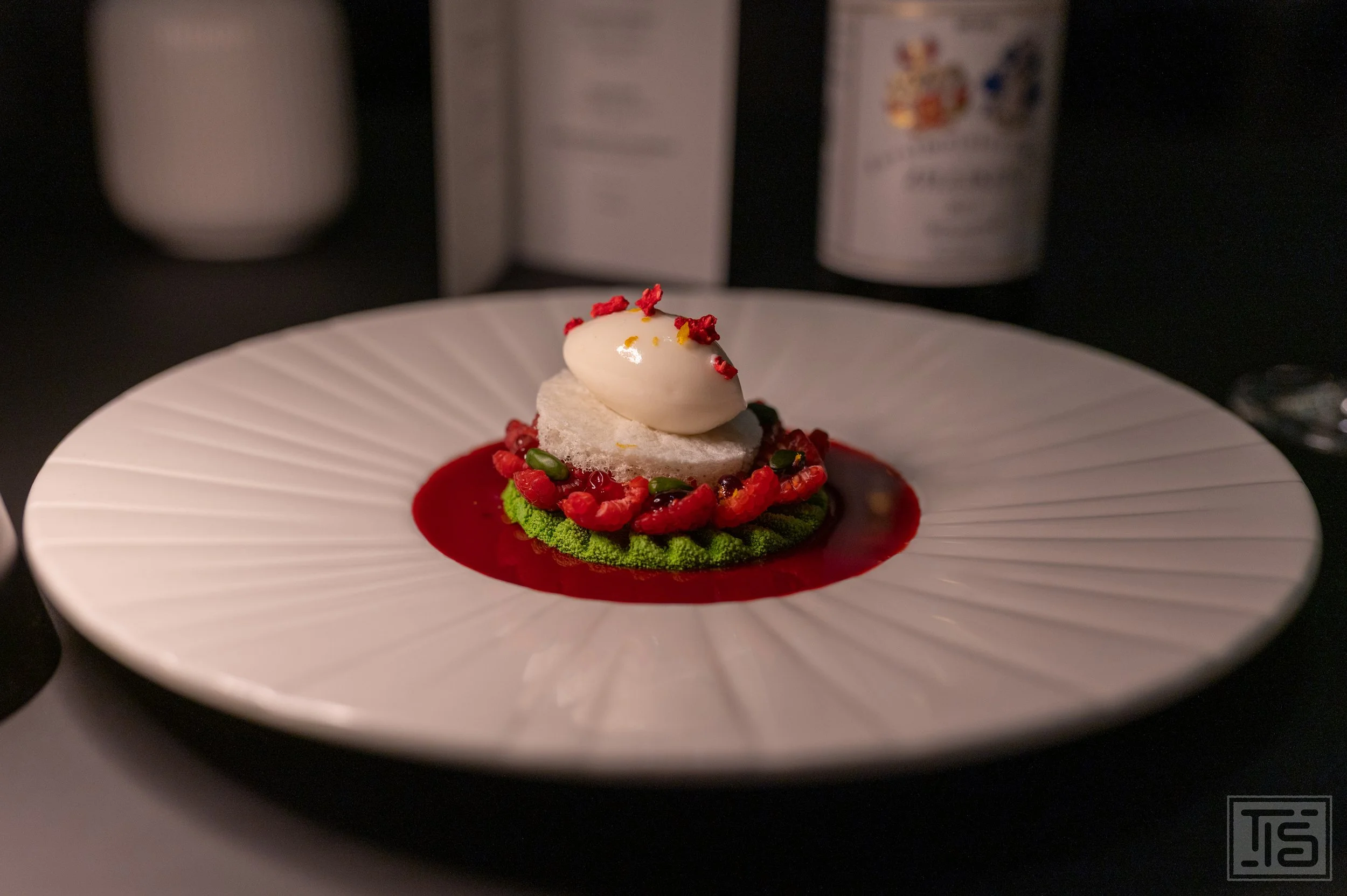
Raspberry with pistachio, milk and yuzu kosho marks the actual dessert of the regular menu. Afterwards, I’m also served the alternative from its vegetarian counterpart. I’m already struggling. This combination is very pleasing, even if you can tell the raspberry season is drawing to a close: the acidity now overshadows the fruit, so the last ounce of harmony fails to materialise. Yuzu kosho is a fermented Japanese condiment of yuzu zest, chilli and salt, and it promised a more modern take on the classic trio of fruit, nut and milk. However, it’s dosed so sparingly that it barely registers. The building blocks for a thoroughly convincing dessert are there, but for the reasons mentioned it remains merely very good, when there’s more to be had.
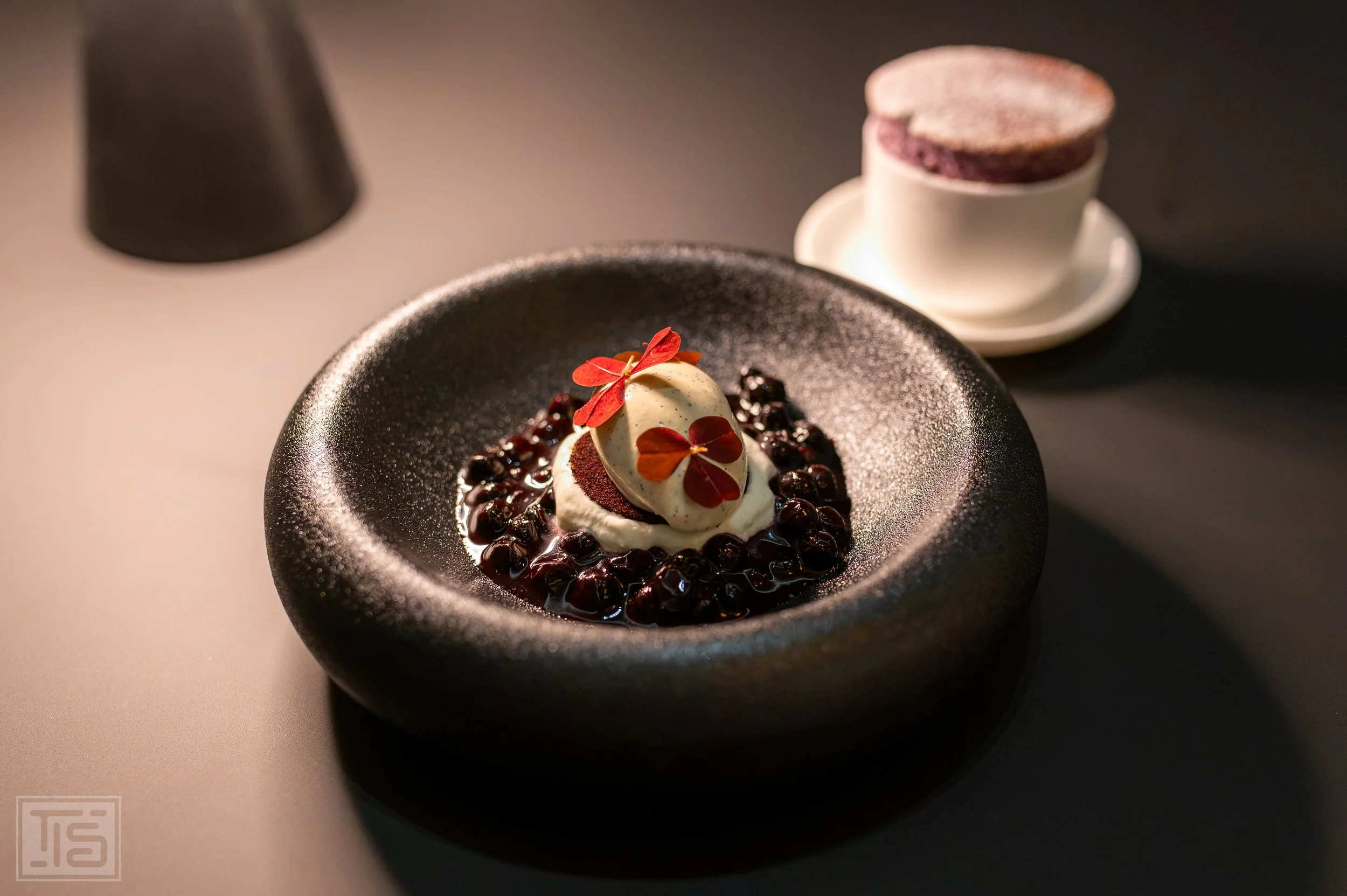
The aforementioned counterpart does better: wild blueberries from the Gotthard with vanilla ice cream and mascarpone. According to the chef, the ice cream is made to a recipe by the late former three-star chef Heinz Winkler, which makes sense in the context of this thoroughly classic dessert. It’s a comfortingly cosy creation, simple and accessible in the best sense, which I’d polish off in no time. If only I weren’t completely stuffed by now.
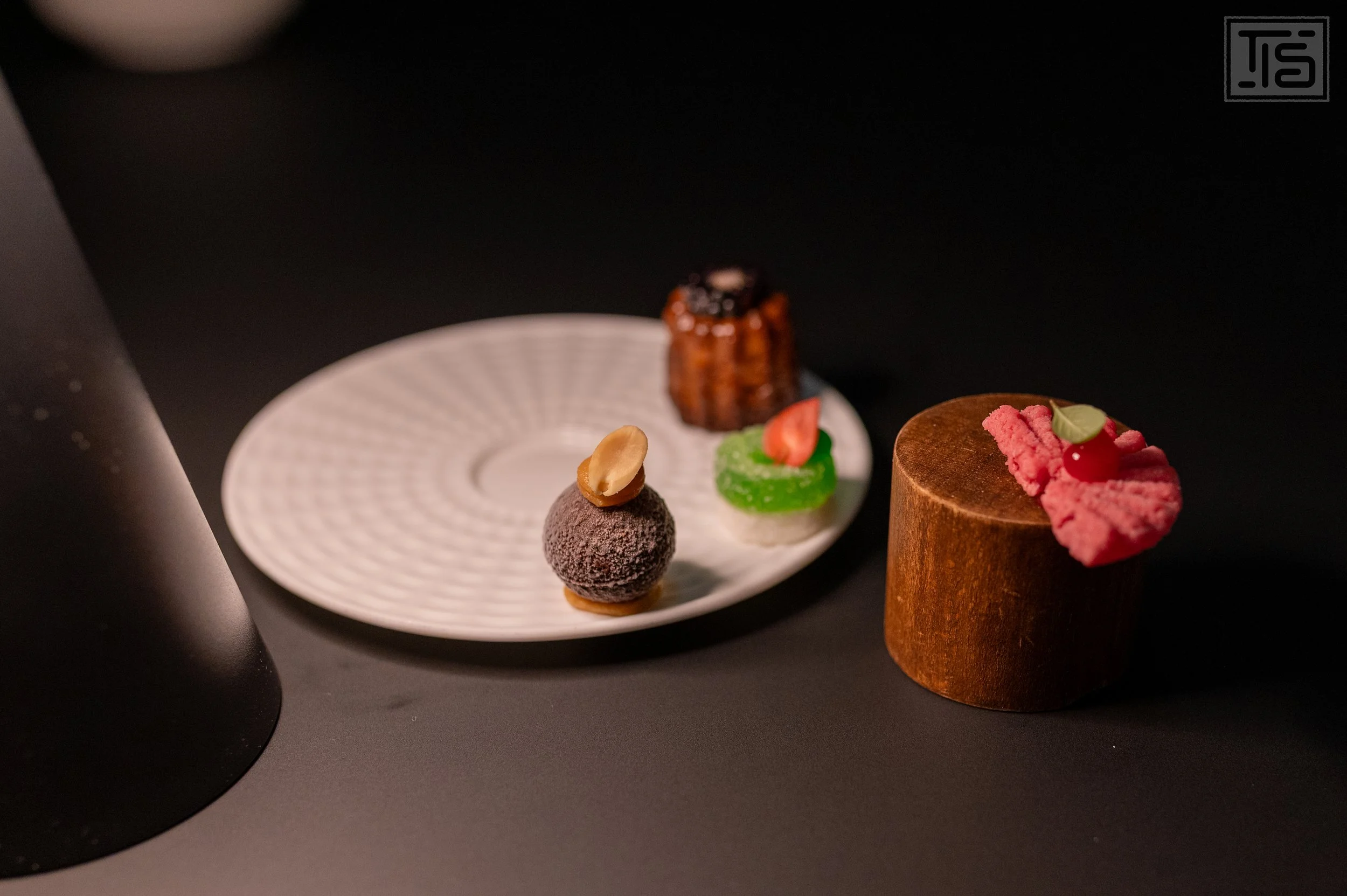
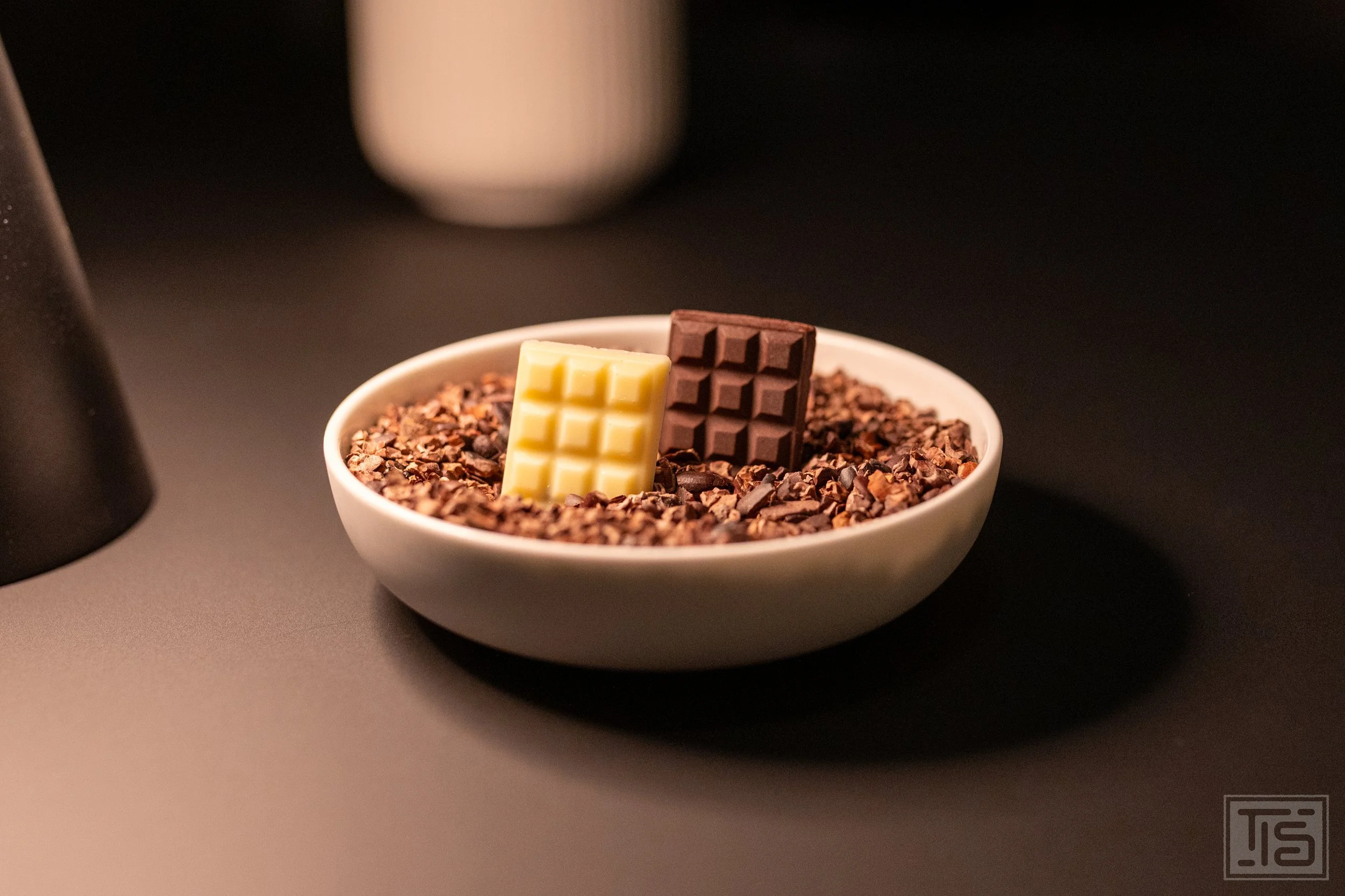
To finish, there are friandises and chocolate. Haase explains that he has too often been served interchangeable petits fours himself, which is why he makes his more varied. They revolve around the classic tastes of sweet, sour, salty and bitter, and they work very well both conceptually and in flavour. To send guests off with a familiar taste, two little squares of chocolate come right at the end. They’re fine, but in my view it would be more consistent to skip this generic final note after the explanation of the petits fours.
The ambitions on the Sonnenberg are unmistakably high. The quickly won first star is meant to be just a milestone, which is hardly surprising given Haase’s CV. He undoubtedly has the necessary tools, as the sot-l’y-laisse lasagne and the Kagoshima wagyu impressively show. Before the next step on the proverbial path to the summit, though, there are still a few adjustments to make.
Strikingly, it’s the most accessible plates that excite the most. Others seem more fully thought through on paper than on the plate, as if the head rather than the gut had decided when they were finished. The many layers, and the complexity they aim for, don’t always lead to the best possible result. Temperatures and proportions aren’t yet consistently right either. Across the menu, a little more acidity would also have done several courses good. As a result, the evening feels somewhat heavier than necessary towards the end, even if the three bonus courses played their part.
The recurring foams and frothed sauces fit the same picture and inevitably recall Haase’s former boss, Peter Knogl. The process of breaking away is clearly still under way, which is perfectly normal. Other protégés of great chefs have also sharpened their profile only over time and found their own culinary language. In Switzerland, Caminada alumni Marco Campanella and Silvio Germann spring to mind. The greatest lever now lies in paying even closer attention to how the many layers on the plate actually unfold. With a focus on fine-tuning, the finesse needed for the next step should follow. A planned renovation could provide an extra boost. It’s intended to give the restaurant its own kitchen, position it even more strongly as a flagship and give Haase more freedom.
All of this is, of course, criticism of a kitchen that already operates at a high level. Anyone looking for classically grounded, internationally minded haute cuisine, studded with luxury produce from around the world, is in exactly the right place at Le Soir. Along the way, you’ll experience a chef who is still fairly early in his career as head chef and is likely to make a name for himself well beyond the region. The potential is unmistakable, and it will be exciting to see where the path on the Sonnenberg leads.
Wine pairing by Moritz Dresing:
Collection 246, Louis Roederer
Radikal, Carmen and Herbert Zillinger
Clos de la Bergerie 2021, Nicolas Joly
Meursault Les Perchots 2024, Antoine Lepetit de la Bigne
Le Bouquet des Garrigues 2022, Le Clos du Caillou
Gevrey-Chambertin La Justice 2019, Domaine de la Vougeraie
Rausch Auslese 2011, Forstmeister Geltz-Zilliken
Le Soir
at Hotel-Restaurant Sonnenberg
Zumhofstrasse 258
6010 Kriens
Switzerland
+41 41 320 66 44
Book a table – Le Soir
Our visit was supported by the restaurant. You can find information on how we handle press arrangements in our FAQ.
Cover image: © Felix Zeiffer