Sushisai Wakichi (Mitusaki Tamura) - Sapporo
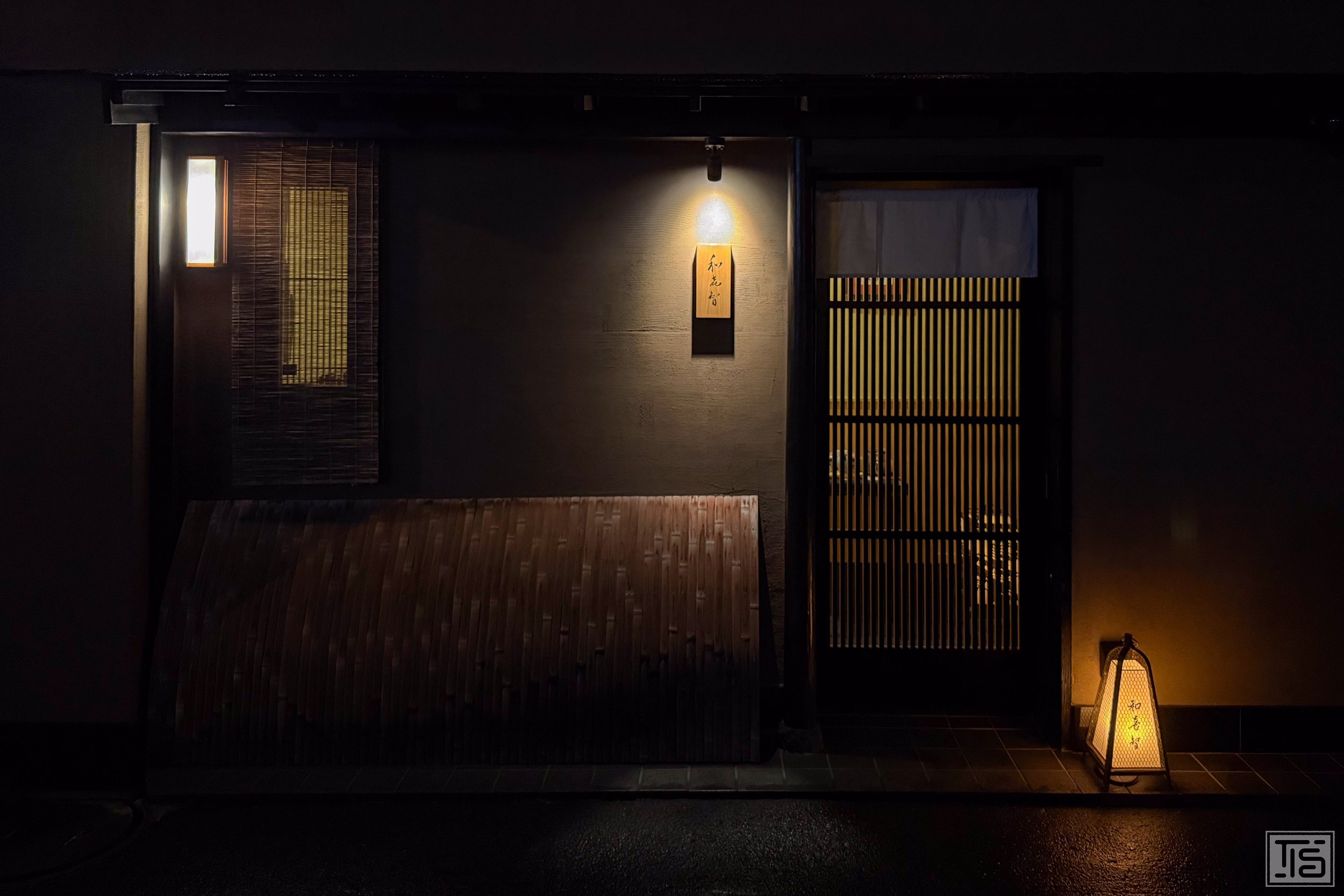
Sushisai Wakichi - Hokkaido’s Treasure Chamber
When the Michelin Guide for Hokkaido was last published in 2017, Sushi Miyakawa in Sapporo ascended into the three-star Olympus. Naturally, during my stay in Sapporo, I was determined to eat there. Unfortunately, the tiny sushiya, with just eight seats, was fully booked throughout. When firmly planned reservations fall through, one always needs a backup plan. And so, at short notice, I manage to secure the second-to-last available seat at Mitsuaki Tamura’s counter. His restaurant, Sushisai Wakichi, was awarded two stars in the last edition of the Michelin Guide. At the time of my reservation, it holds a score of 4.30 out of 5 on Tabelog, making it the second-highest-rated sushiya in all of Hokkaido. A more than worthy Plan B, hopefully.
Unlike many sushi chefs, Tamura does not come from a restaurant family. He found his way into the kitchen relatively late, and by a rather windy route. He left university without graduating in order to help a friend build a business in Tokyo. The business collapsed, and Tamura, who comes from Sapporo, had to take whatever job he could find to stay afloat. An ordinary sushi shop offered him work, but it was only a visit to a renowned sushiya that awakened in him the desire to make sushi his long-term career. After a seven-year apprenticeship at Sushikyu in Tokyo, he eventually returned to his hometown and opened his own restaurant, Sushisai Wakichi.
At his counter restaurant in the Maruyama district, he loves to serve the treasures of the waters around Hokkaido, regarded by many well-travelled food obsessives as among the very finest of their kind anywhere in the world. The lion’s share of his products comes from the Sapporo Central Wholesale Market, Hokkaido’s equivalent of Tokyo’s Toyosu Market. Whether eating fish and seafood from Japan’s far north at the source truly is a revelation is something I will find out for myself tonight.
With the name of his restaurant, Tamura also dispels the prejudice that sushi masters are simply buyers of fish and wielders of knives. Sushisai Wakichi 鮨 菜和喜智 - The sushi 鮨 is presumably self-explanatory. The sai 菜 stands both for vegetables and for dishes. And the Wakichi 和喜智 refers to the fish known as kinki キンキ, or kichiji 喜知次, the broadbanded thornyhead. Tamura sees himself as a cook, and with the name of his restaurant he refutes the misconception, widespread not only in the West, that sushi masters are not chefs.
Unlike many restaurants in Japan, Sushisai Wakichi is relatively easy to recognise from the outside. Discreet lighting, an evidently inviting sliding door, a small sign bearing the restaurant’s name. When I enter cautiously, I am briefly greeted and led to the right into an empty room. There is a counter here, though it looks more like a bar than a sushi counter. After a short wait, I am asked to follow a woman back across the corridor into another room. Although I had to wait, I am ten minutes early — and yet already the last guest of the second seating at the imposing L-shaped hinoki counter with eight seats. Tamura nods politely in greeting.
A glance at the very concise wine list leads me to choose a bottle of 2018 Saint-Aubin 1er Cru Le Charmois from Pascal Clément. White Burgundy and sushi generally get along well. And tonight I am not in the mood for sake or beer.
The chef is focused on his preparations. Directly in front of me, he grates the wasabi on a classic samegawa-oroshi 鮫皮卸, the grater traditionally covered with ray skin or shark skin. To my surprise, he then pushes the freshly grated wasabi from the board straight onto my porcelain dish with his index finger. That is one way to do it.
Since no English is spoken here, the main ingredients for each course are communicated via cards. Alongside the traditional kanji, each card shows an English translation and a hand-painted image of the product. A kind gesture for guests like me, who do not speak Japanese. The first card already lies in front of me and shows an octopus. Since Tamura is already busy slicing it, things begin shortly afterwards.
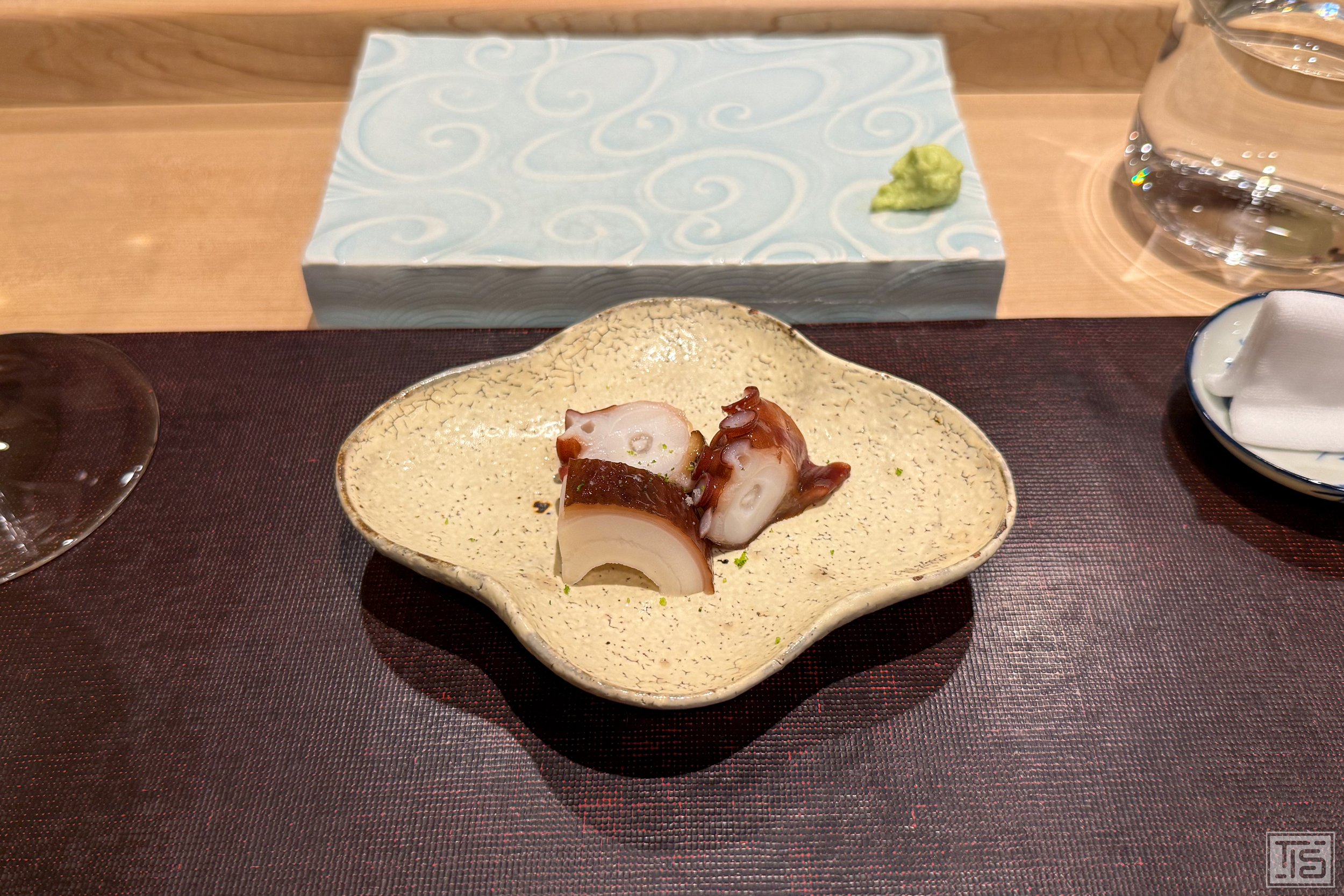
The sashimi of tako (octopus) is seasoned with a little sudachi zest. If one wishes, the small pieces can also be dipped into the freshly grated wasabi. I refrain from doing so, wanting to taste the meat pure. With this sea creature, many consider tenderness the highest virtue. Though what many probably mean by that is “melting on the palate”. As I have written elsewhere, the Western understanding of tenderness is not only often boring, but can actively diminish pleasure. In many Asian countries, layered and varied textures are regarded as an integral part of the eating experience. Quite rightly, as this example once again demonstrates impressively. For my taste, the octopus is tender, yes, but rather waxy-soft, with a certain chewiness, instead of simply disintegrating on the palate. Alongside the flavour, which is absolutely superb - the octopus was cooked in dashi and is therefore even more umami-rich and meaty - the fascination lies precisely in this unusual mouthfeel. Enriching, and simply magnificent. Just like the seemingly negligible touch of citrus fruit, which releases an utterly beguiling aroma, gently contrasting the cephalopod without ever overpowering it. What an opening.
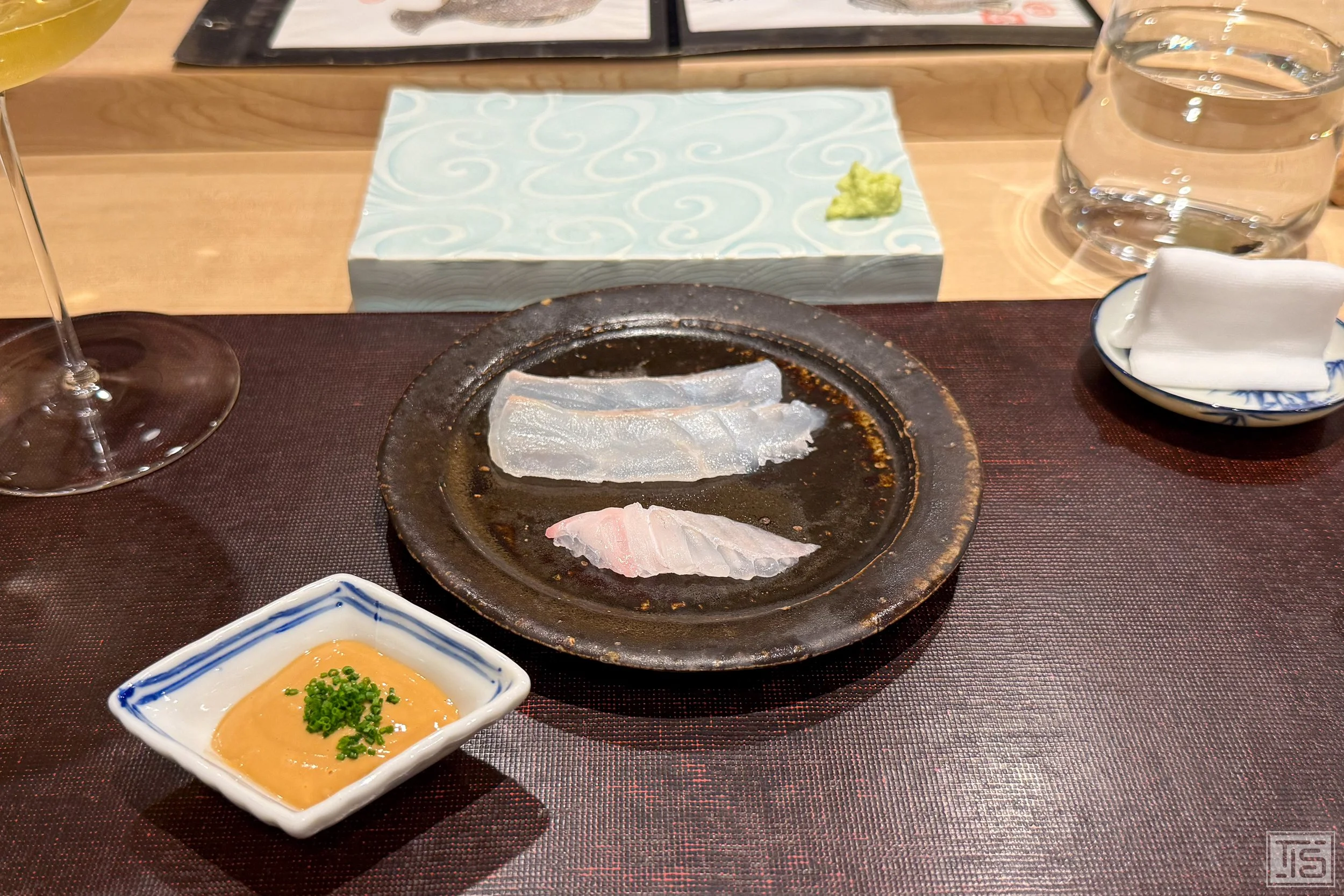
The second course features a fairly rare fish, one that even many high-end sushiyas on Tokyo won’t be able to serve: Matsukawa garei (Japanese flounder). The sashimi arrives with a sauce of ankimo (monkfish liver) and a little Japanese chives on top. Alongside two wafer-thin, almost translucent fillets lies a piece of engawa. This is the fin muscle of the flounder. It is said that each flatfish yields no more than four portions of engawa, which makes this cut particularly rare and therefore highly prized. It is distinguished by an unusual, almost crisp texture and a high collagen content. This precious piece is incomparably delicious, and I eat it without sauce. I also eat the first of the two pieces of sashimi without accompaniment, to properly grasp the fish. Purist pleasure of the highest order. But the sauce is what truly crowns the dish after all. In general, I am not a great admirer of monkfish liver, often described as the foie gras of the sea. I often find it too metallic and animalistic. Yet worked into this stunning sauce, it is creamy, gently sweet, rich, umami-laden and clearly reminiscent of both foie gras and the sea. Delicious on its own, but also a fitting complement to the fish.
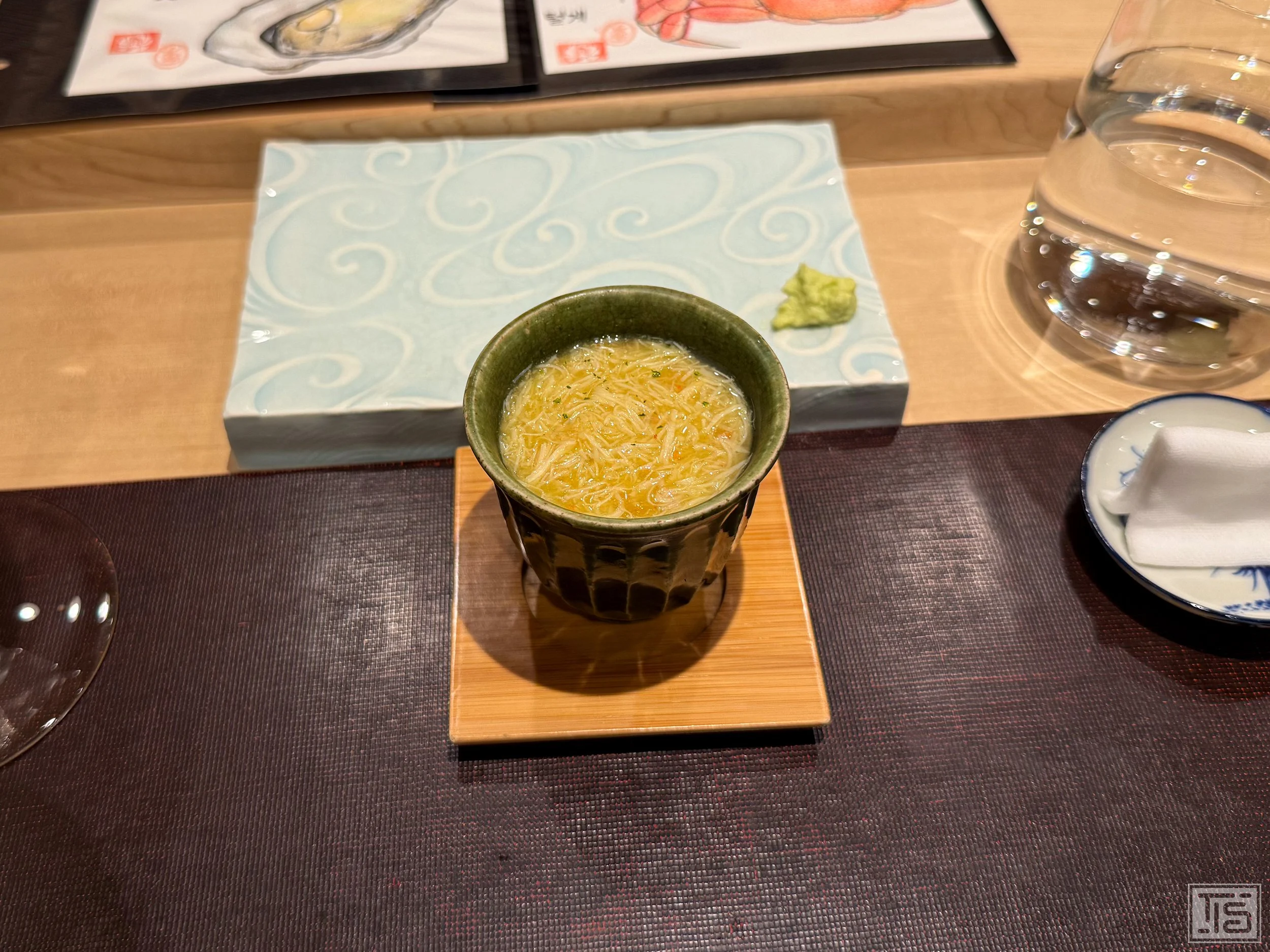
Chawanmushi is indispensable in an omakase menu. Tamura serves a deluxe version with kaki (oyster) and kegani (Hokkaido hairy crab). The broth does not look it, but it is boiling hot. Through my own carelessness, I almost burn both lips and tongue. A brief warning from the service would have been helpful. Fortunately, the momentary shock has no lasting negative consequences, allowing me to fully enjoy this decidedly iodic, rich umami bomb. Both the bite-sized oyster and the crab meat, which recalls angel hair pasta, are of eye-watering quality. The soup, oscillating perfectly between rich opulence and restrained elegance, does the rest. One can even forgive the one or two fragments of crab shell that unnecessarily torment the teeth.
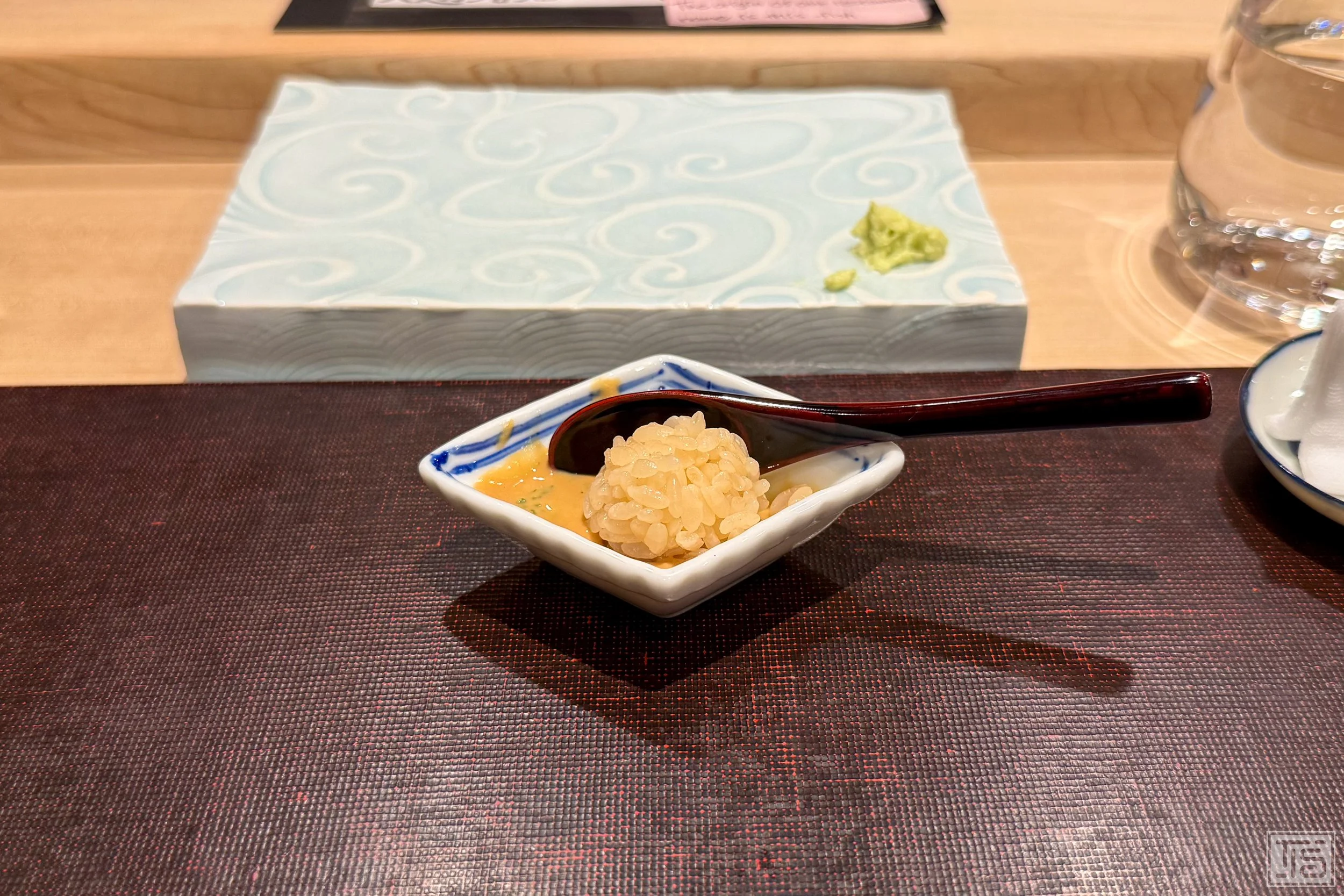
The ankimo sauce from earlier, still sitting before me on the counter, now brings a supporting actor into the spotlight. With a conspicuous grin, Tamura places a small quenelle of rice onto the sauce and lays a lacquered wooden spoon beside it. But there is more…
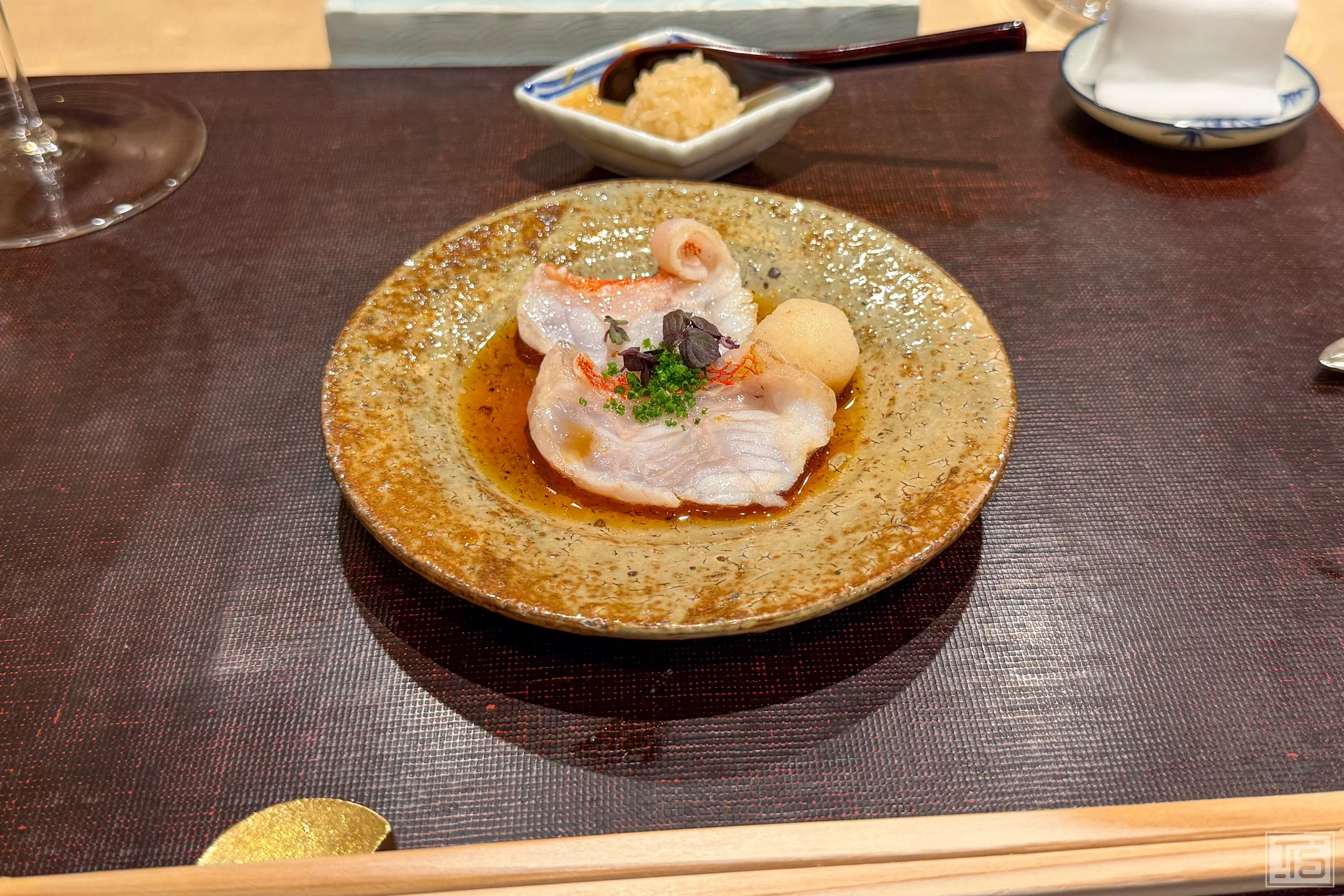
As mentioned at the beginning, sushi masters are not cooks limited merely to slicing fish and cooking rice. Though that would already be quite enough. After all, the training required to master just those two kitchen practices takes longer than many university degrees. In Japan, at least, almost every high-class sushiya also has a hibachi grill filled with binchotan charcoal. Tamura grills kichiji, broadbanded thornyhead, also known as kinki and the fish after which the restaurant is named, while fanning the coals to intensify the heat. The skin curls slightly at the edges, the flesh remains translucent. Appetising roasted notes accompany the fish, which is served with ponzu, daikon and a small herb garnish that also contains the irresistible menegi (Japanese chives). Kinki is not a fish one often encounters outside Japan. My experience with it is therefore limited. That is something that must change. Its flesh is rich, almost buttery, delicately sweet, umami-laden and melts on the palate in the most literal sense. A level of pleasure almost impossible to put into words, and one that alone would justify any journey. But there is more. The beguiling campfire aroma, together with the sour-salty sauce, creates an absolutely overwhelming experience. This is easily one of the best pieces of grilled fish I have ever tasted.
Then there is the rice. To my surprise, it is pleasantly warm, which makes the phenomenal sauce shine even more brightly than it did with the fish. These two bites blow apart pretty much every dimension of rice-with-sauce pleasure I had previously thought possible. Unbelievably delicious, deeply satisfying. Tamura sees the bliss written on my face and flashes that mischievous grin again. A brief nod follows, suggesting an unspoken: “I know…”
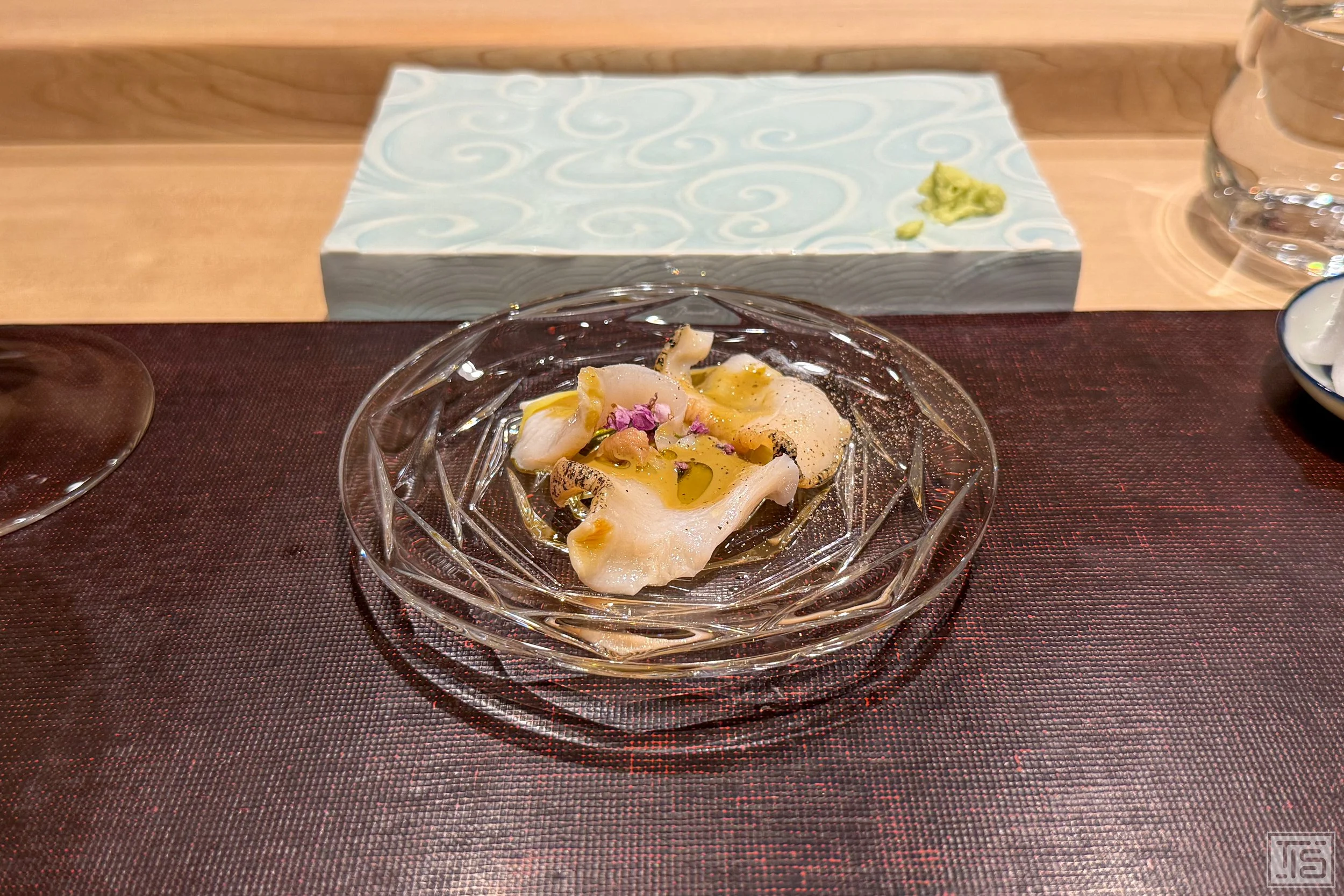
When portioning the tsubugai (whelk) even a sushi master of Tamura’s long experience requires more than the sharpness of his imposing knife. He has to apply serious force to cut slices of the desired thickness. On the glass plate, he eventually arranges three pieces and drizzles them with olive oil and a sauce of abalone liver. It’s not exactly a physical challenge to chew, but anyone expecting a product that is tender by Western standards is in for a surprise. At first, it feels fairly firm, almost a little tough, and has a pronounced crunch that seems highly unusual in a seafood context. The sea snail, related to abalone, is faintly sweet, mildly salty, a little umami-rich and tastes above all of the sea. Aromatically, the excellent, powerful oil and the rich, creamy, deeply savoury sauce are more important. And it is precisely the texture of the whelk that allows them to fully come into their own. Through the increased need to chew, everything mingles on the palate into a profound whole, given an unusual character by the bitter olive oil. Demanding in a certain way, but exceedingly delicious.
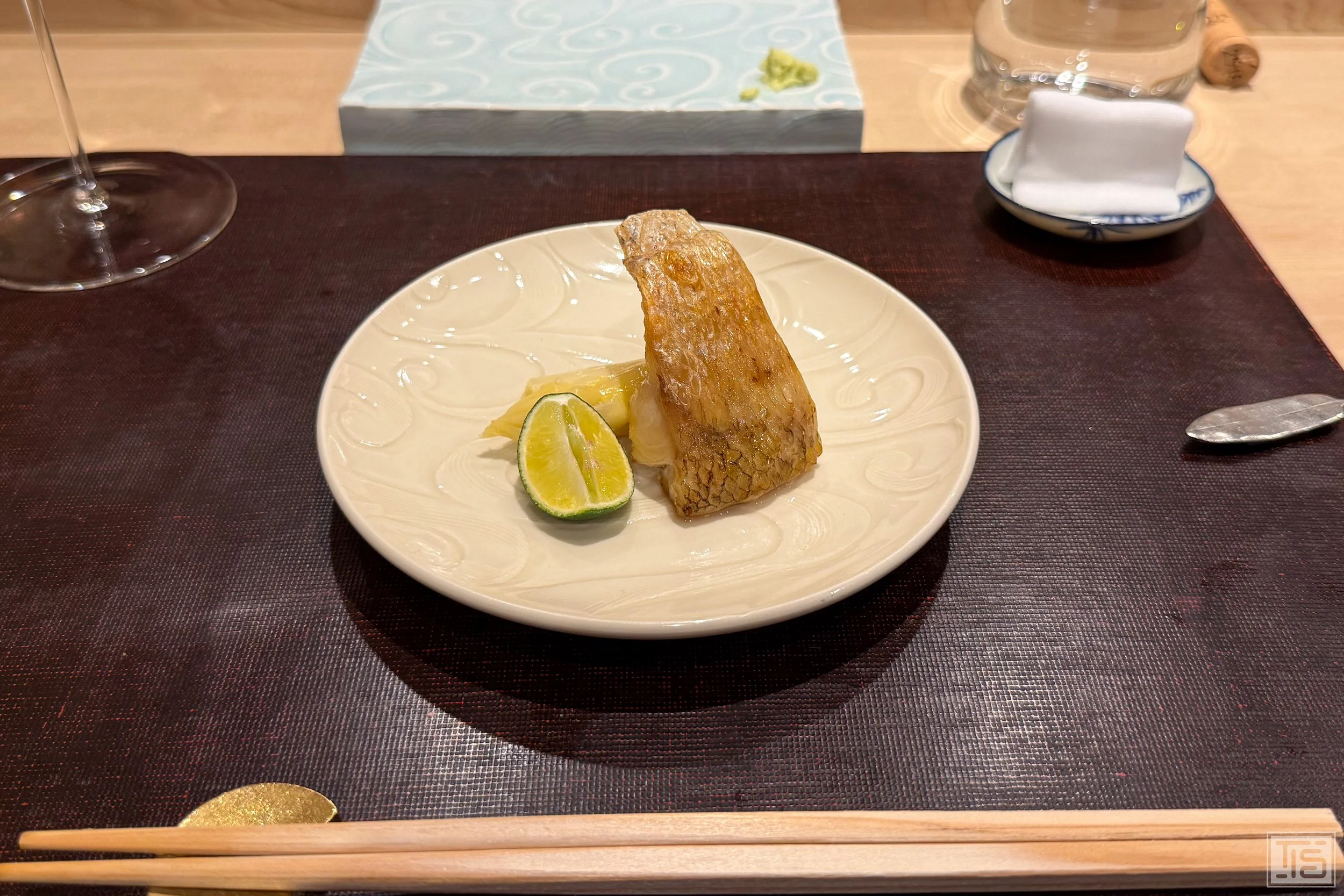
Nodoguro, blackthroat seaperch, is another rarity one is only very seldom served. This fried version impresses with perfectly crisp skin throughout and extremely juicy, almost buttery flesh that seems to melt in the mouth, evoking associations with otoro, and also with the kichiji before it. Alongside come crisp-cooked white asparagus from Hokkaido, oscillating between gently invigorating bitterness and vegetal early-summer sweetness. A few generous splashes of intoxicating sudachi complete the dish and positively wake it up. A superb display of ingredients, and an enormously tasty ensemble.
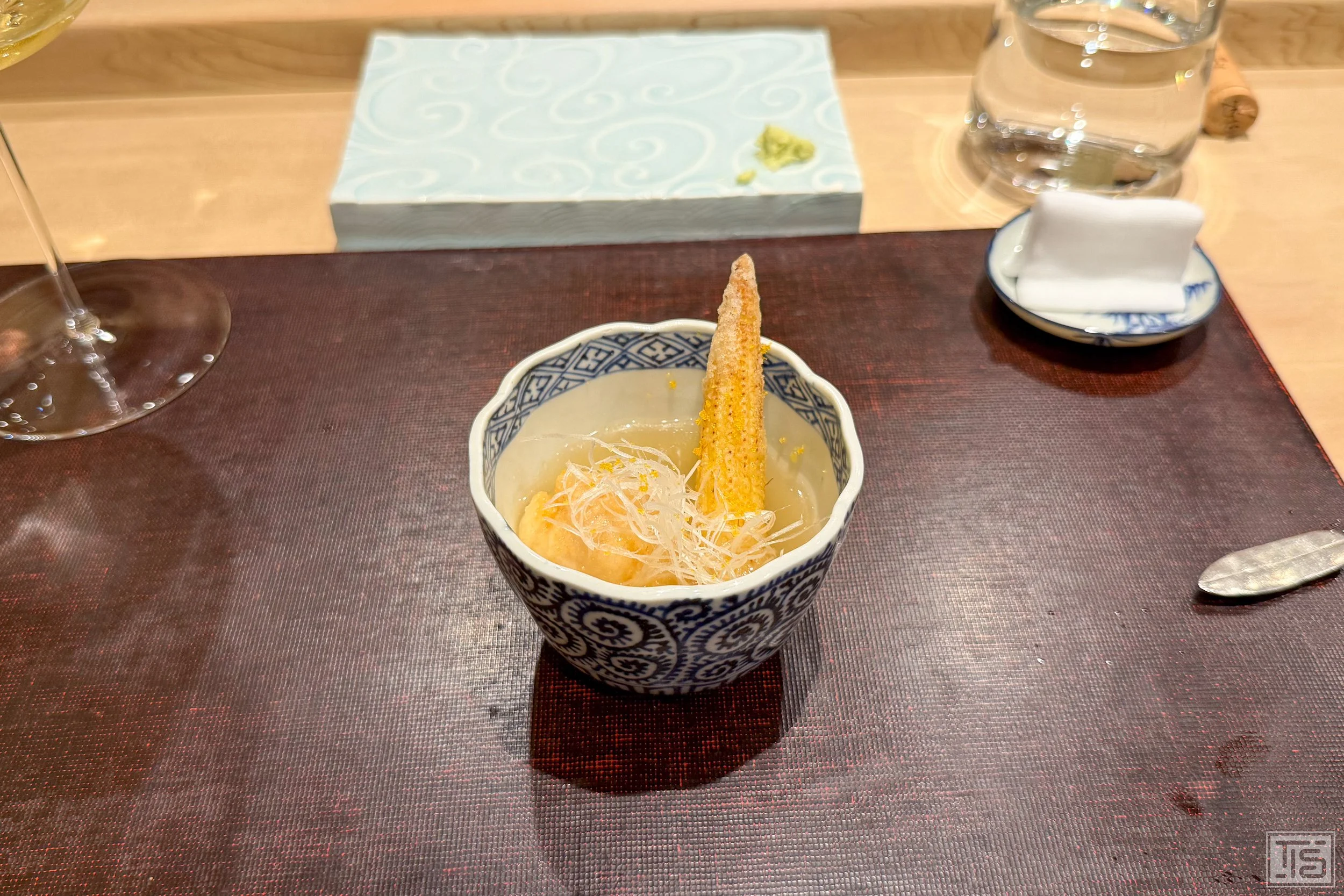
Kasube (spotted ray) and karasumi (salted and sun-dried mullet roe) lie in a clear dashi. Grilled yangukōn (baby corn) joins them. Hokkaido is Japan’s granary and the country’s largest producer of agricultural products. Alongside milk, corn is especially famous. After tasting this unassuming specimen, it is easy to see why: extremely intense aroma, very sweet, but not cloying like some European sweetcorn varieties, expansively nutty and wonderfully crisp. It relegates the other ingredients to supporting roles. Which is why I eat the corn first and then the soup with the remaining garnishes. For me, the composition as a whole is not entirely coherent, but the corn is unbelievably good.
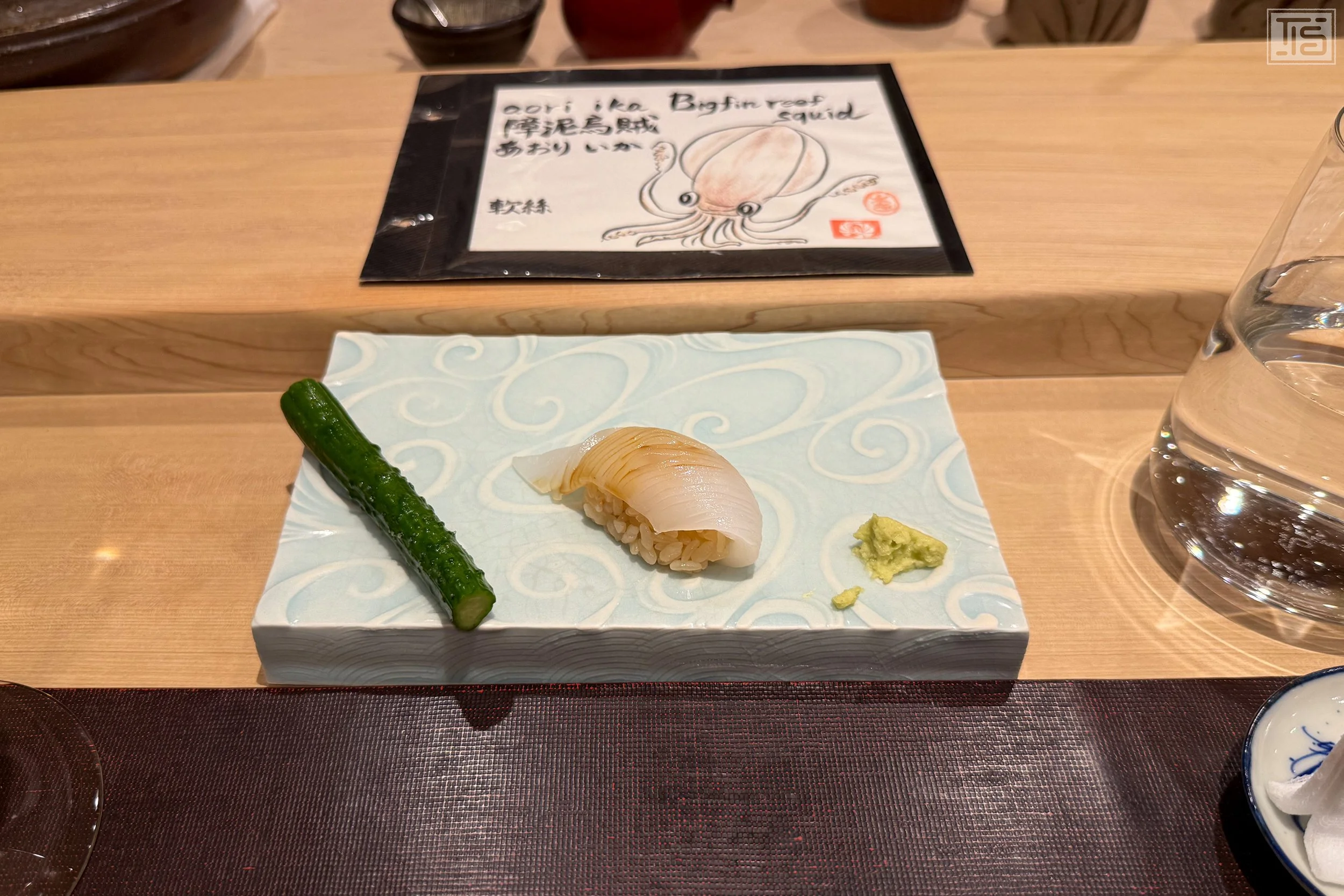
After eight sometimes outstandingly good starters, the sushi sequence now begins. For his nigiri, Tamura uses a mixture of aged Koshihikari rice from Niigata and young Nanahikari rice from Hokkaido. To consistently achieve the optimum balance, he follows no rigid ratio, but constantly adjusts the composition according to the condition of the rice. Equally unusual is his choice of vinegar for seasoning. Tamura uses two different types of akazu, a vinegar made from aged sake lees rather than rice. In addition to its red colour, this vinegar is characterised by somewhat milder acidity, greater umami and a savoury note. Tamura shapes his shari seemingly loosely and fixes the rice and topping in the same two-step rhythm every time: press twice, turn, press twice, until everything in his hand feels perfectly formed. Fascinating to watch. Just as fascinating is the way the rice holds together without difficulty despite its apparent looseness.
The first neta (topping) is aori ika (bigfin reef squid). The numerous incisions create precisely the right balance between tenderness and bite. The exactly measured soy sauce contrasts the squid’s inherent sweetness. Excellent.
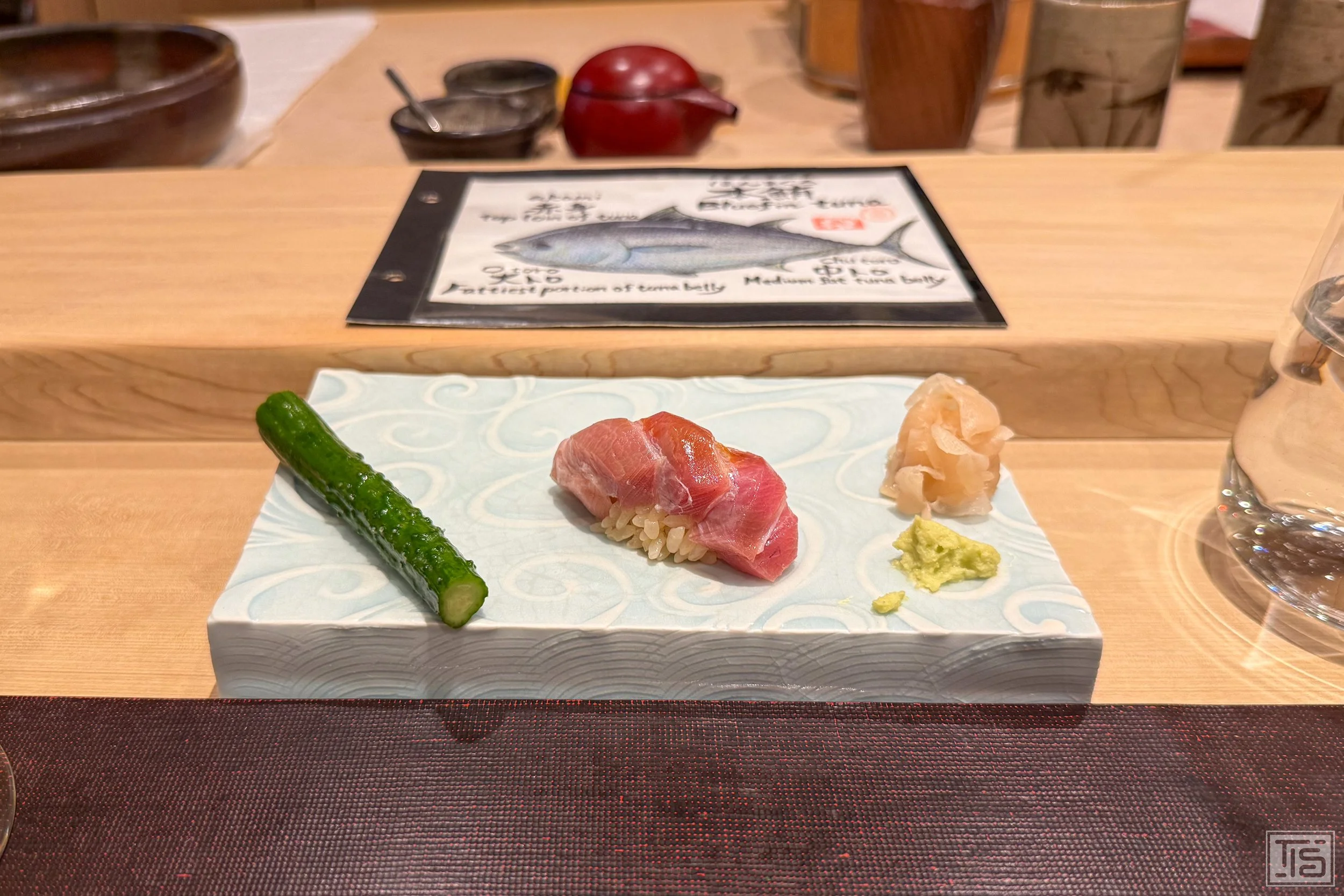
Tamura forgoes the usual tuna sequence of akami, chutoro and otoro. Not only that: with the otoro served already in second position, he brings out what many consider the supposed high point of a sushi sequence at an unusually early moment. When I ask, I understand that each day the chef selects the piece of tuna at the market that appeals to him most. He avoids the standard trilogy in order to focus more strongly on the catches from around Hokkaido. Fine by me. In any case, the fatty belly delivers what its appearance promises and impresses through excellent quality.
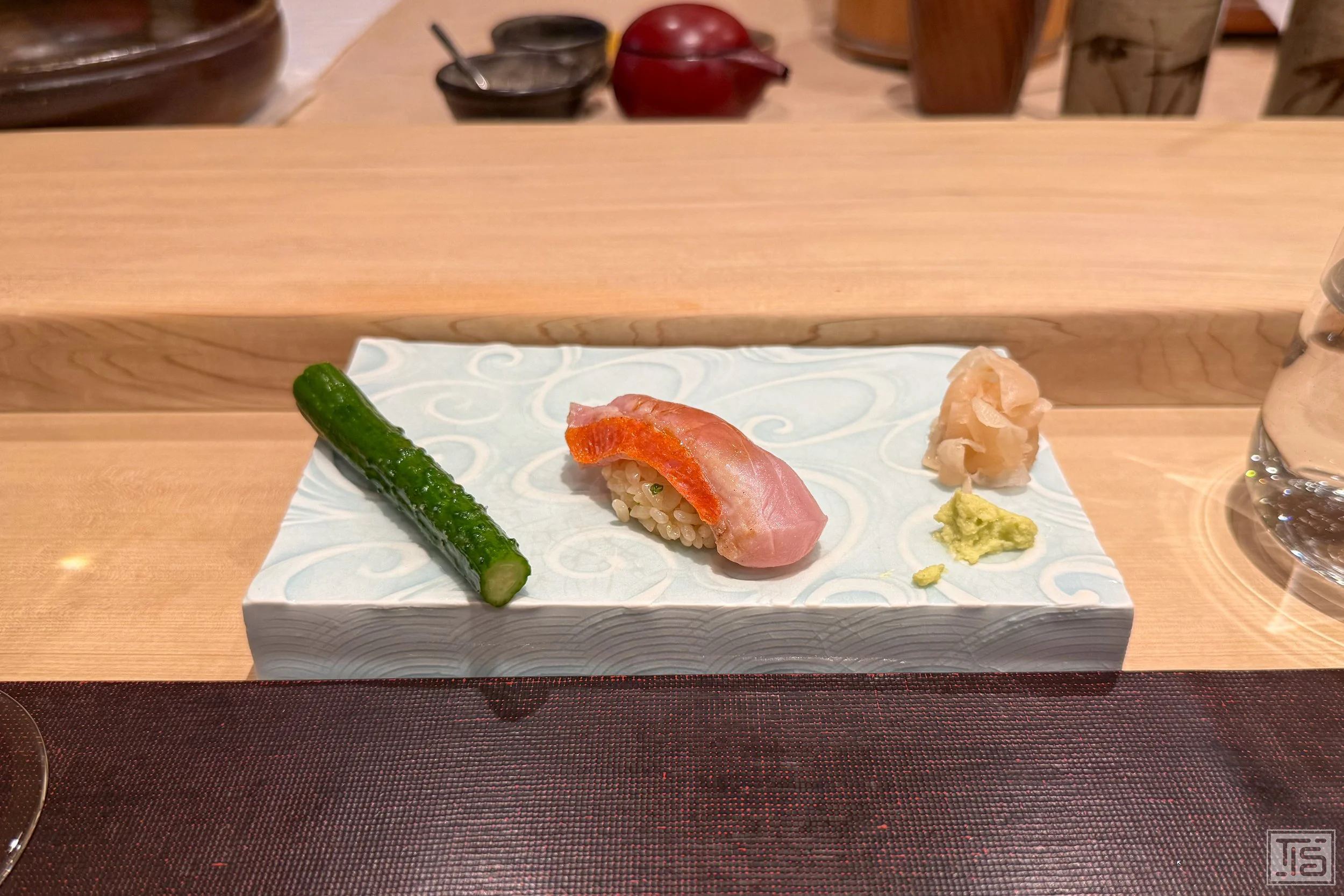
The following kinmedai (splendid alfonsino) has been given seductive roasted notes on the grill by what I assume to be Tamura’s wife. The fish is then passed quickly to the chef, who forms the rice, adds a little Japanese chive, places the fish on top and finally drips a few drops of sudachi over it. The result is an unusual, multi-layered nigiri in which the fish and seasoning are brought more to the fore than usual. And yet even here, the rice clearly plays the leading role. Stunning.
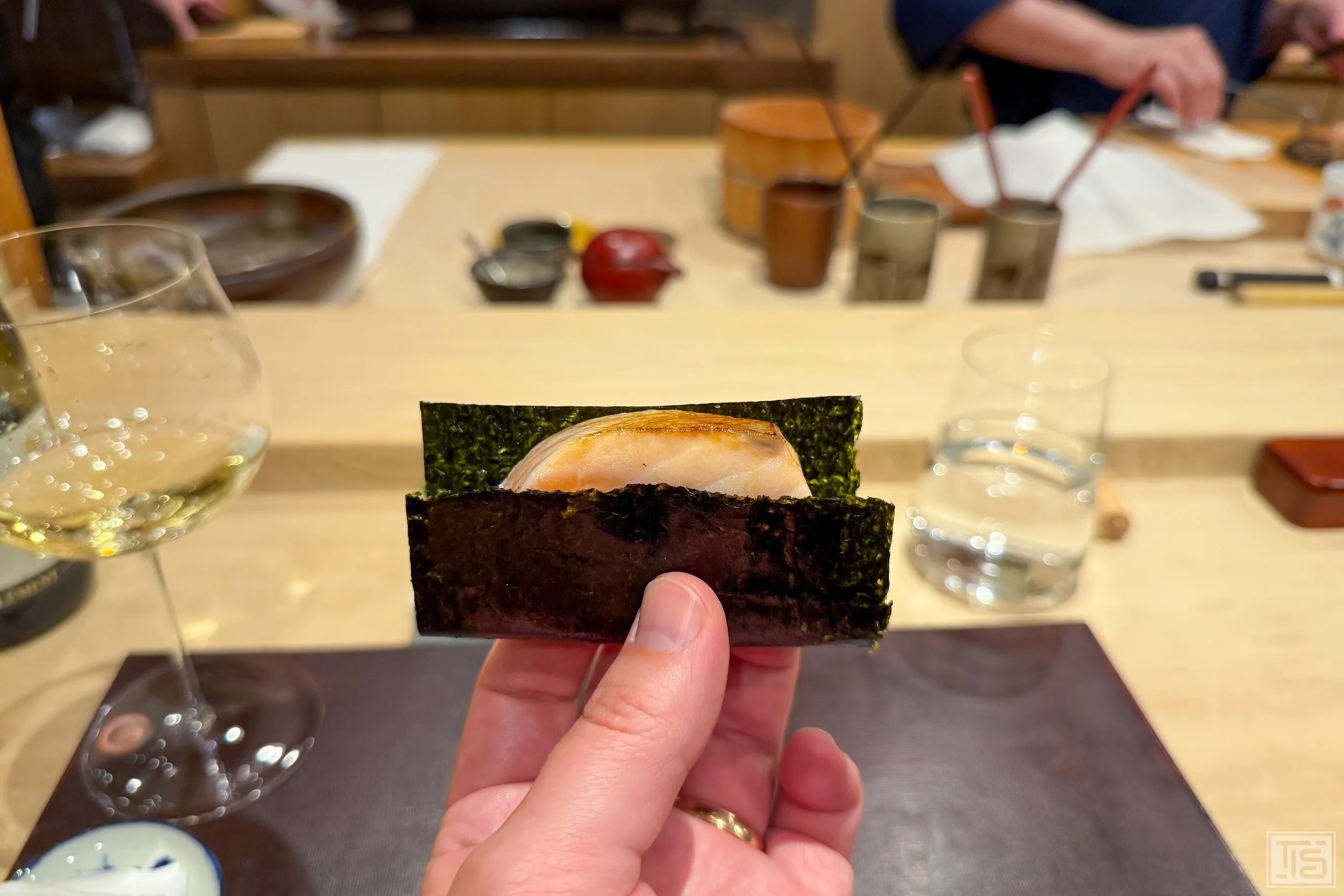
For the temaki, Tamura’s wife first waves the nori elegantly back and forth over the grill. The chef fills the seaweed sheet, also known as a hand roll, with lightly grilled Toki Shirazu (chum salmon) and seasons the snack with a beautifully tart, umami-rich ponzu sauce. It tastes excellent, though at this moment it also feels rather filling.
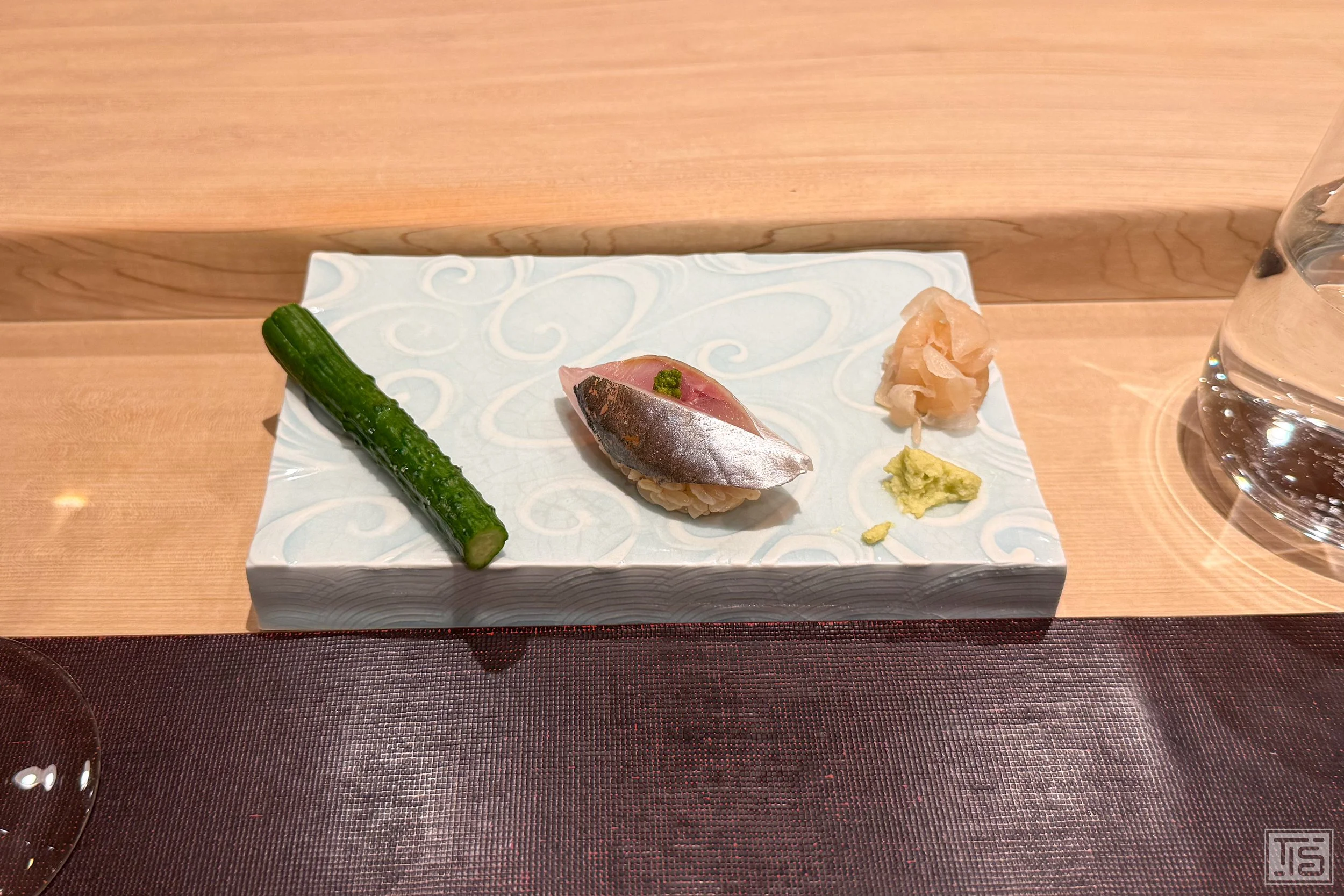
Next comes aji (horse mackerel). The silver-shimmering skin has been divided with a skilful cut, placed on the shari in a suggested butterfly cut and seasoned with a hint of that irresistible Japanese chive. The fish is benchmark quality: relatively oily, gently sweet and with the distinct flavour of a summer day at the beach as the fishermen bring in their catch. The cut reduces the need to chew, allowing the flesh to merge with the — as always today — perfectly dosed and tempered rice and the unobtrusive chive into yet another unforgettable nigiri.
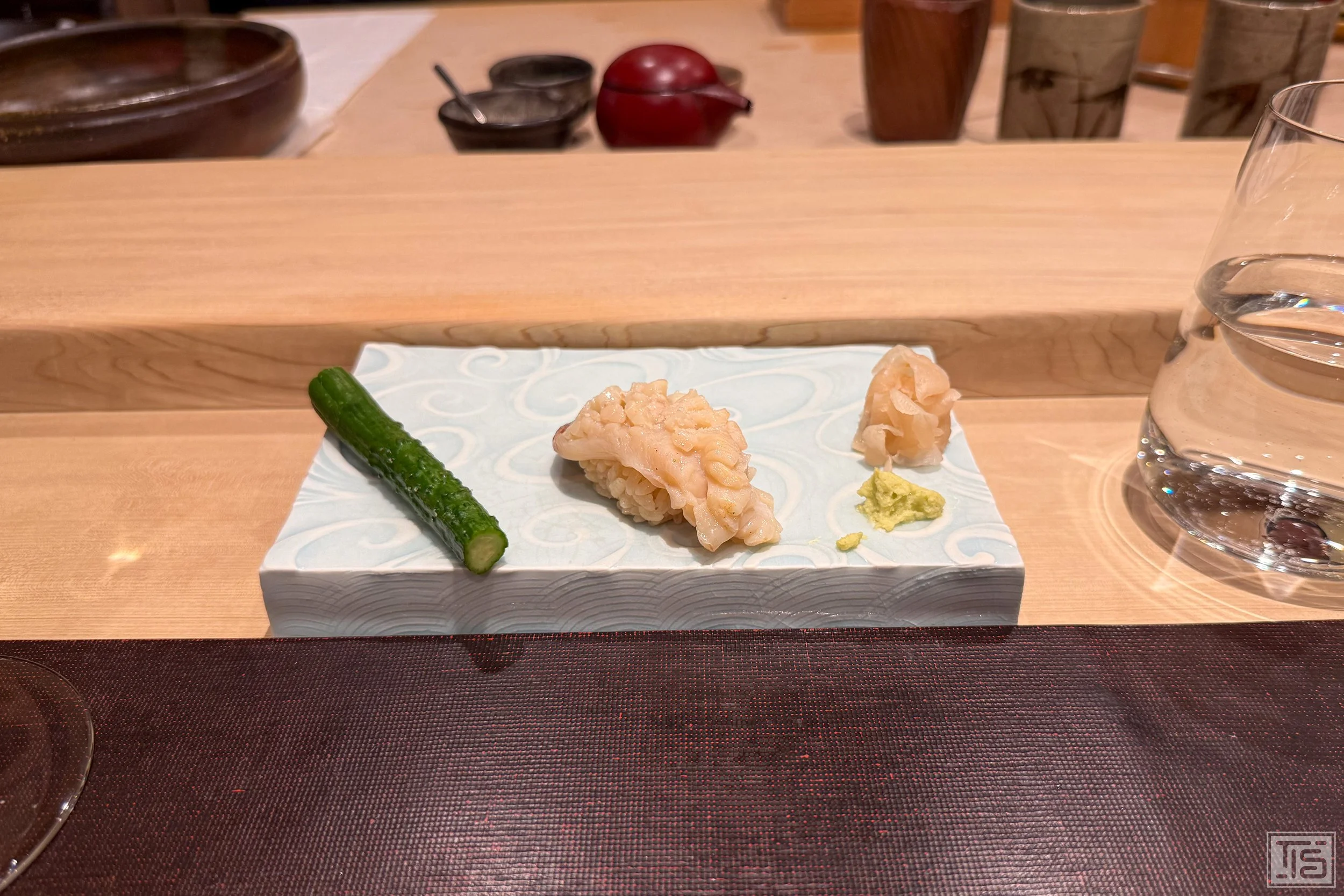
The hokkigai (surf clam) is freshly removed from its shell and still twitches under the master’s skilfully placed, confident and rapid cuts. Important to see, or to read, for all those who know the ingredients they eat only pre-packaged from the supermarket. Anyone who eats animals kills living beings. But back to the essential matter. The clam is left natural, relatively mild and contrasted by a few drops of sudachi. Once again, very, very good.
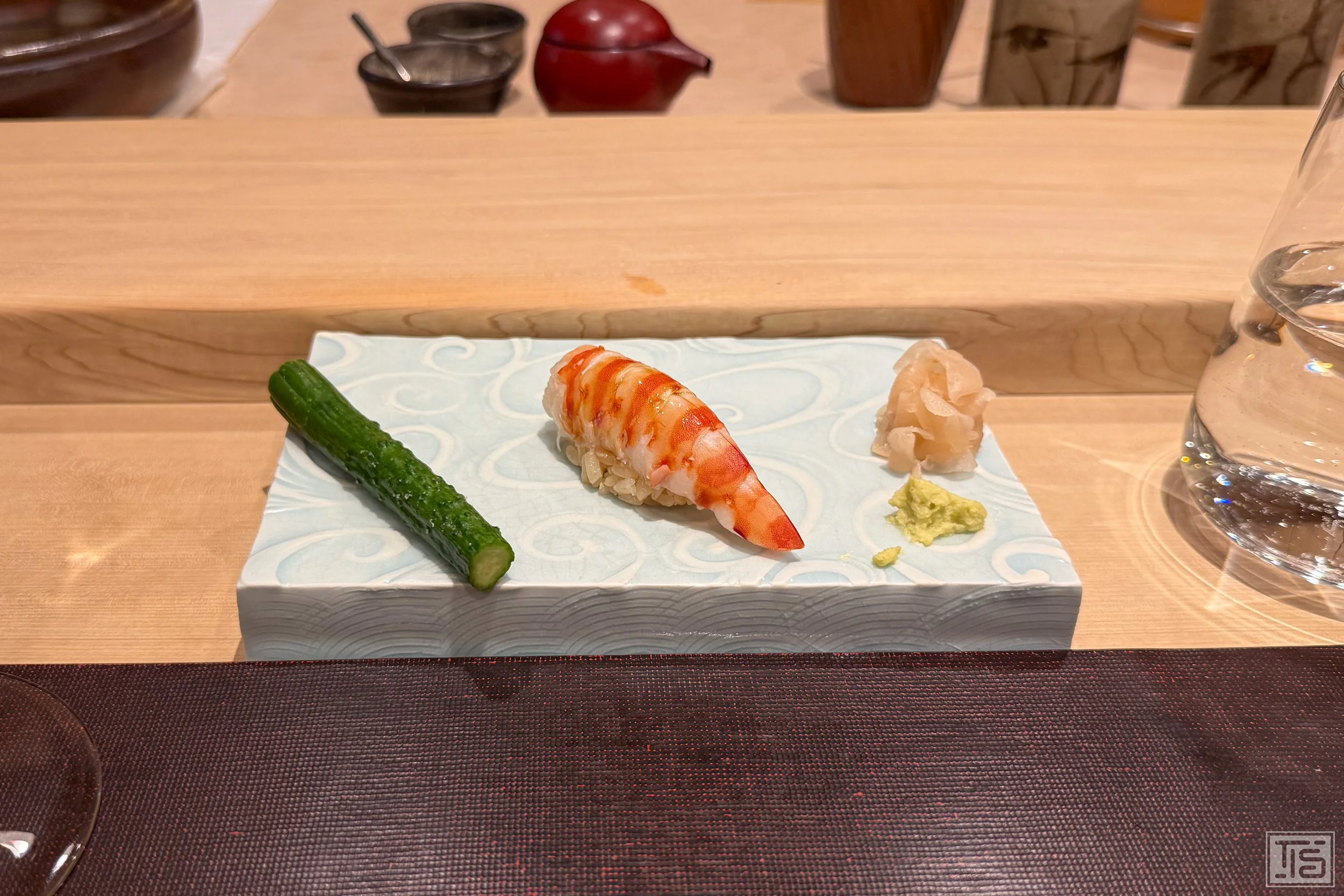
The kuruma ebi (Japanese tiger prawn) is excellent in flavour, but has been cooked a few seconds too long. The result is a slightly too firm texture that makes the prawn flesh at once a little tough and partly mealy.
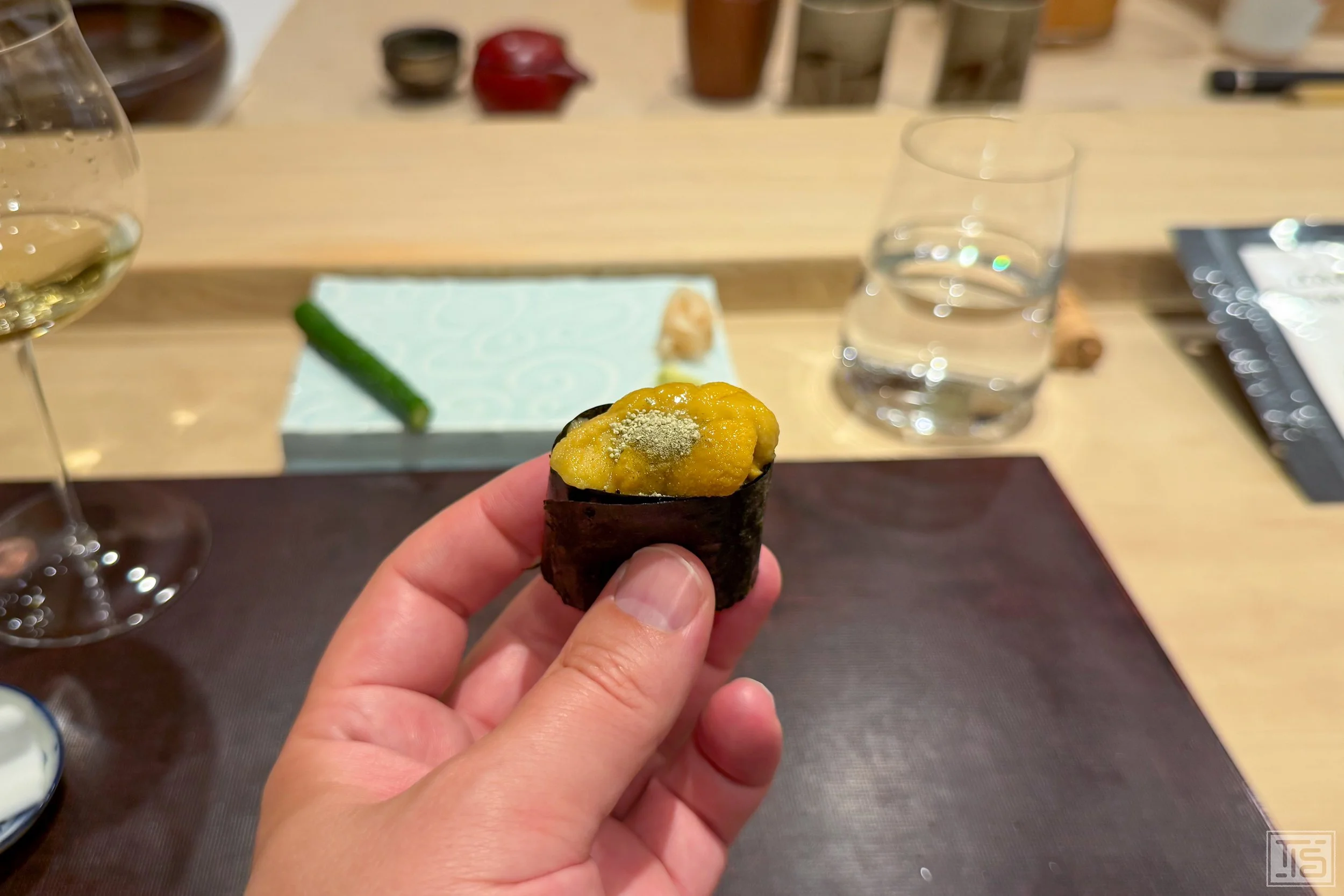
Of course, no sushiya in Hokkaido can do without perhaps the most famous treasure from the waters around Japan’s northernmost island: sea urchin. Today it appears twice. First, a temaki with Murasaki uni. These gonads, also known as purple uni, are, in contrast to the more common Bafun uni, milder, sweeter, creamier and yet somewhat firmer, with a wonderful scent of the sea. On top, as an accompaniment, lies a small dusting of an unspecified salt, further accentuating the oceanic aroma.
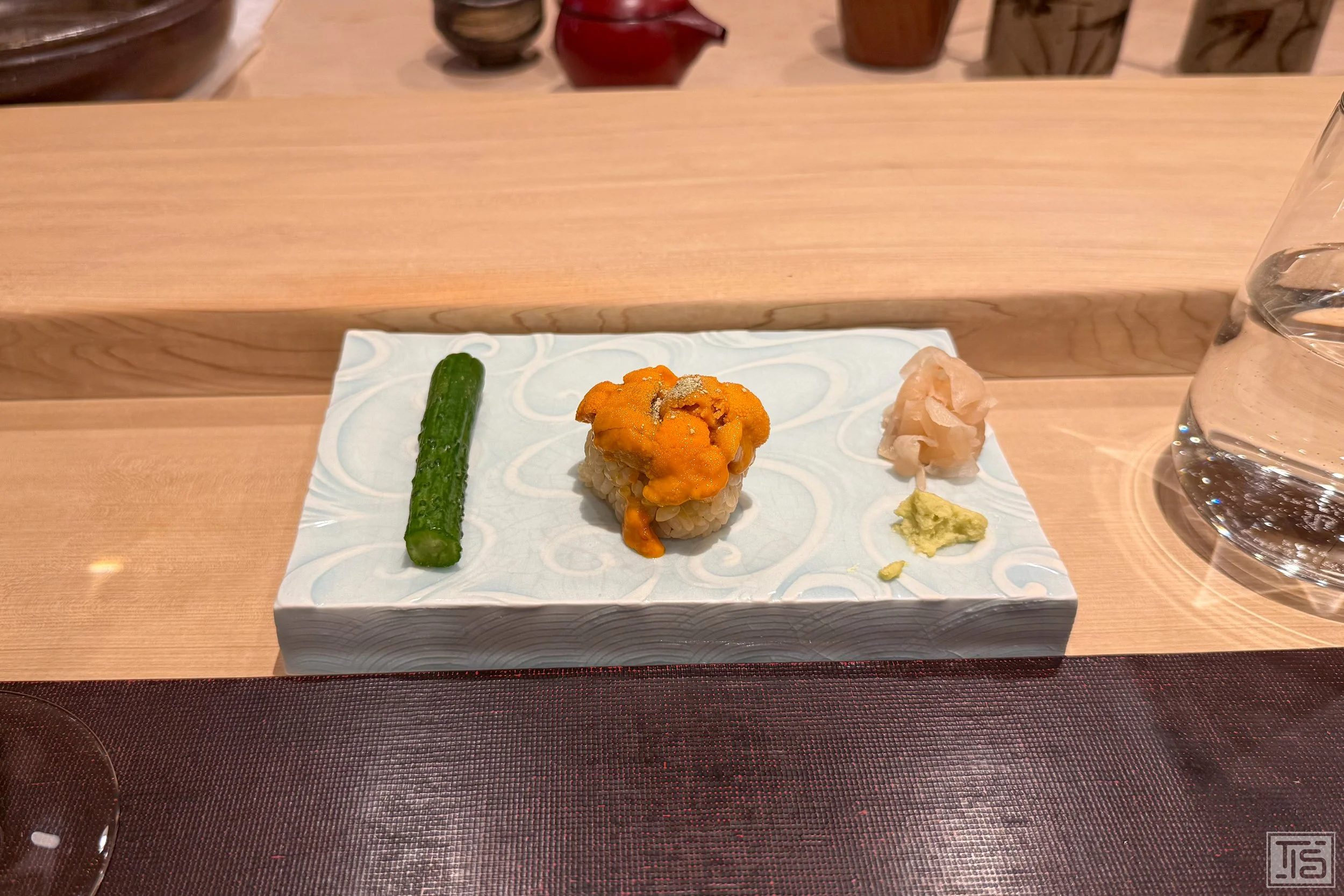
The Bafun uni arrive as nigiri. Unlike Murasaki uni, they are richer, more savoury, smell intensely of saltwater on a hot day and carry a deliciously delicate bitter undertone that adds further depth. A magnificent double act.
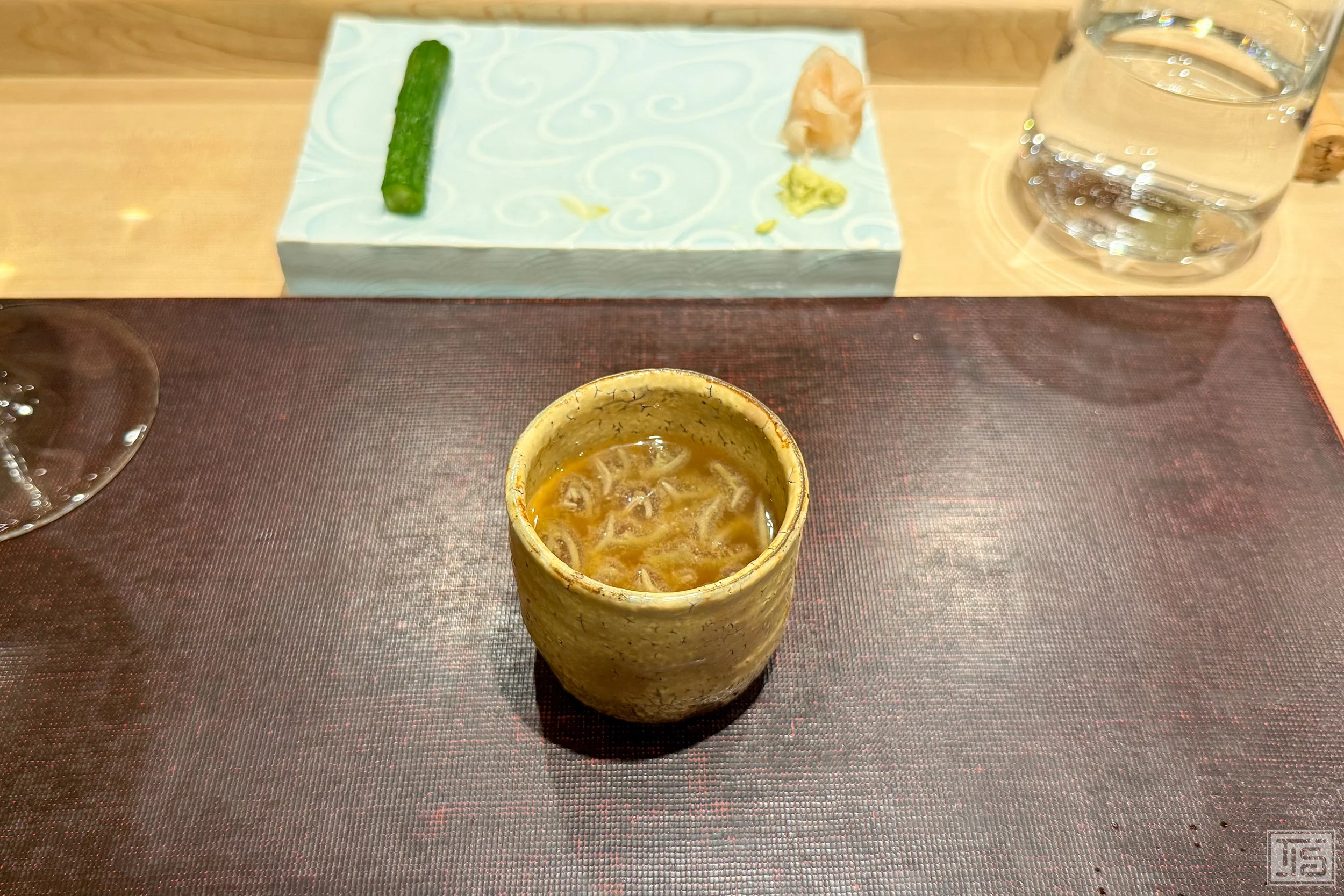
Since it is in season, jun sai (watershield) also makes an appearance in the form of a soup. Also known as frogbit, this water-lily relative is an unusual delicacy. Somewhat slimy, lightly bitter, with an almost crisp-seeming bite, yet without much flavour of its own. On the one hand, it is revered as a herald of (early) summer; on the other, it is eaten mainly for its texture. There is even a specific term for the latter: tsuru tsuru つるつる. It describes a very smooth, slippery or glassy texture, and in Japanese food culture forms part of the sensation of food in the mouth and throat known as nodogoshi 喉越し, often just as important as the taste itself. Even after repeated encounters with this rarity, I am still not entirely sure what to make of it though.
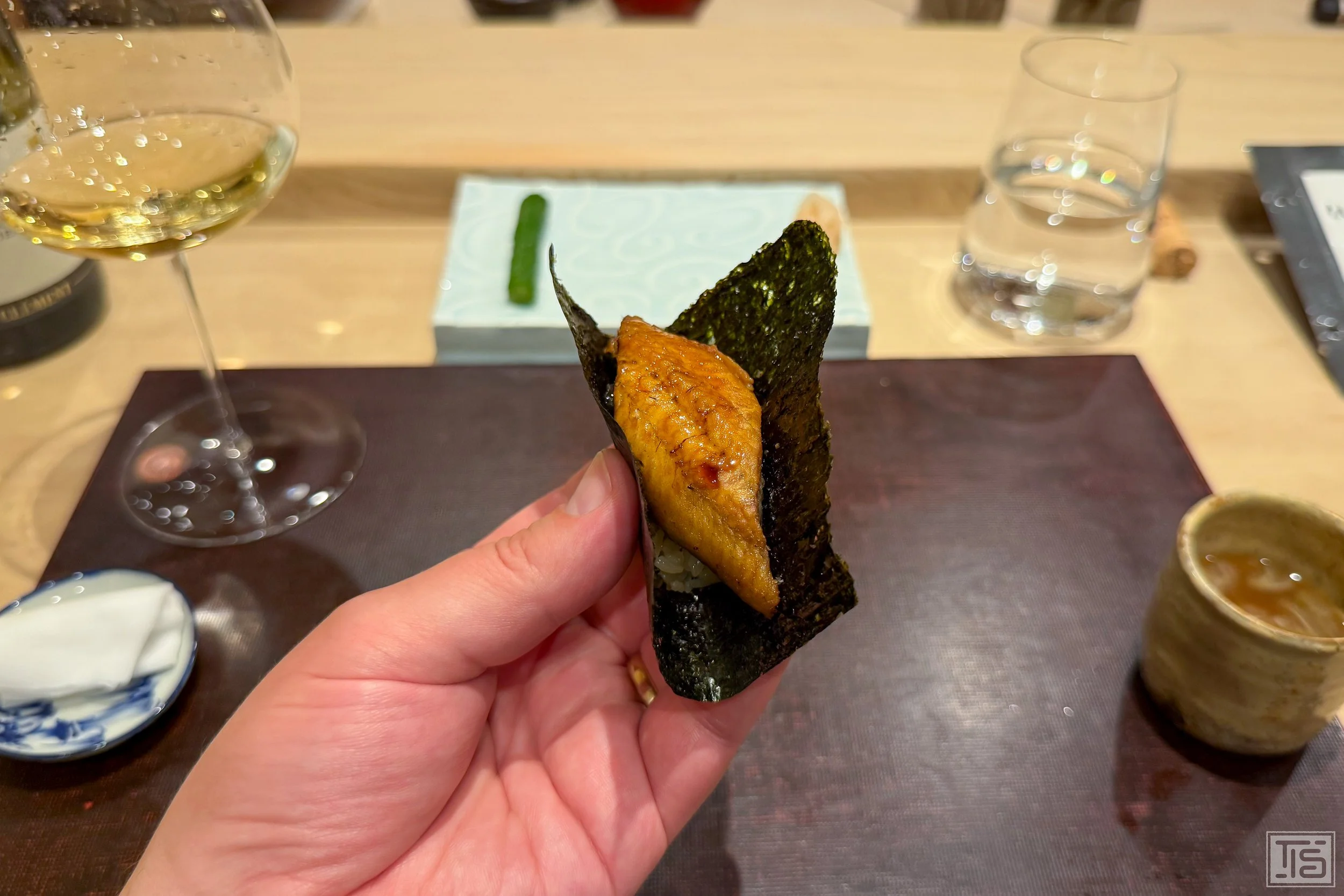
The sushi sequence ends with unagi temaki (freshwater eel). The eel is pleasantly fatty, juicy and naturally powerful in flavour. Its inherent umami is further intensified by a brief simmering in dashi and a generous brushstroke of soy sauce. A wonderfully uncomplicated, full-bodied finale, once again with a superb product at its centre.
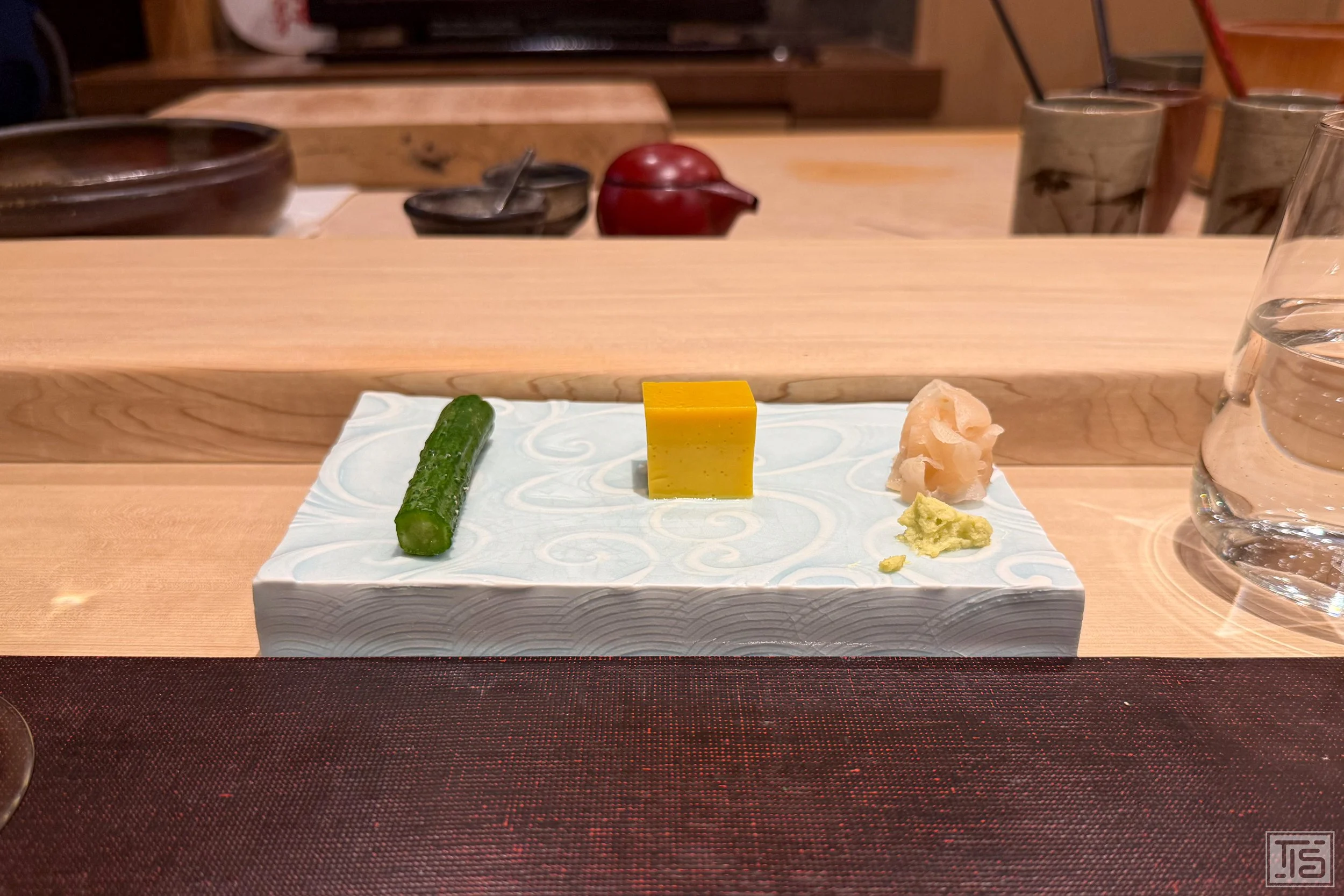
A small cubic piece of tamagoyaki (omelette), smelling almost otherworldly of egg and refined with dashi, once again demonstrates impressively why sushi masters are completely misunderstood when reduced to simple fish buyers and knife-wielders. As Anthony Bourdain once so aptly said: how you make an omelette reveals your character. On that basis, Tamura must have an immaculate character. And he is a fine chef besides.
Zwischenzeitlich hat es angefangen, in Strömen zu regnen. Auf dem Weg zurück ins Hotel wirkt die Taxifahrt durch nasse, neonbeleuchtete Strassen wie ein Ausschnitt aus Martin Scorseses Film Taxi Driver auf mich. Alles ist leer, in die blaue Nacht mischen sich lediglich die auf dem regengetränkten Asphalt reflektierenden Neonlichter, Sapporo wirkt müde. Taxis strömen aus allen Gassen wie Ameisen aus ihrem Bau in alle Richtungen, Menschen sieht man kaum. Die Stimmung ist absolut magisch und zieht mich komplett in ihren Bann. Genauso, wie es Tamuras Menü kurz zuvor getan hat. Wer in Sapporo ist, sollte unbedingt versuchen, einen Platz am Tresen des Sushisai Wakichi zu ergattern.
In the meantime, rain has begun pouring down. On the way back to the hotel, the taxi ride through wet, neon-lit streets feels like a fragment of Martin Scorsese’s Taxi Driver. Everything is empty; into the blue night there are only neon lights reflected on rain-soaked asphalt. Sapporo seems tired. Taxis stream out of every side street like ants from their nest, scattering in all directions, while hardly any people are visible. The mood is absolutely magical and casts a complete spell over me. Just as Tamura’s menu had done shortly before. Anyone in Sapporo should absolutely try to secure a seat at the counter of Sushisai Wakichi. Hokkaido's culinary treasures hold many revelations.
Sushisai Wakichi
25 Chome−1−22 和喜智
Minami 2 Jonishi
Chuo Ward
Sapporo
〒064-0802 Hokkaido
Japan
+81 11 640 3768
Book a Table - Sushisai Wakichi
Disclaimer: This article was translated from German into English with the support of artificial intelligence and editorially reviewed before publication.