Schauenstein (Andreas Caminada) - Fürstenau
Schauenstein - Alpine Fine Dining
Summer, sun, Sunday. The three S’s are the perfect premise for a trip to Fürstenau and a long, unhurried lunch at Schloss Schauenstein. Today, though, the sun is almost too generous. Just before noon, my car informs me, without being asked, that the temperature has already crossed 30 degrees Celsius. The air conditioning is running at full force, which does little to soften the shock of stepping out into the baking heat of the parking lot.
The castle garden, at least, seems delighted by the weather. Everything is in bloom, almost absurdly vivid, bursting with colour and life. Every time I come here, I have the same thought: what a beautiful place. But the heat quickly pulls me out of that daydream and back into the practical world. Up to the restaurant, fast, and into the shade. Today, the jacket could safely have stayed at home.
Once under the shelter of the parasols, I remove the unnecessary garment and drink a large glass of water. That helps. A glass of sparkling wine helps even more, cooling things down and easing the short wait before the apéritifs arrive. This is my first visit to Andreas Caminada since his self-imposed creative pause, and I am eager to see what has happened at Schauenstein, culinarily speaking, since my last stop here.
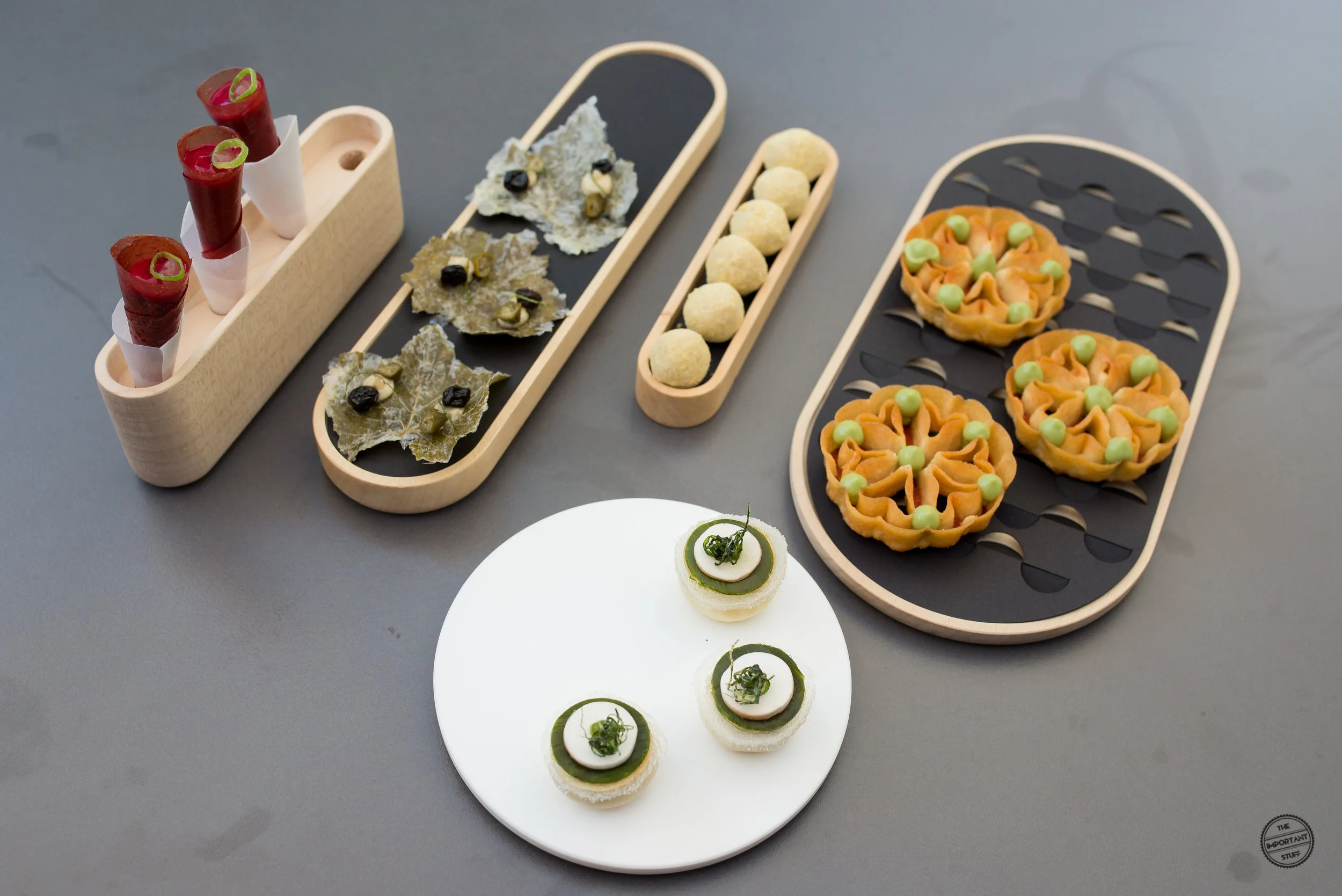
With the freshly refilled glass, the first snacks appear: vine leaf and grape; duck liver and hazelnut; beetroot ice cream; mushroom and leek; buckwheat crisp with tarragon and tomato. Precise, varied, lightly composed. A picture-perfect opening, exactly the sort of thing one expects from the kitchen of this castle.
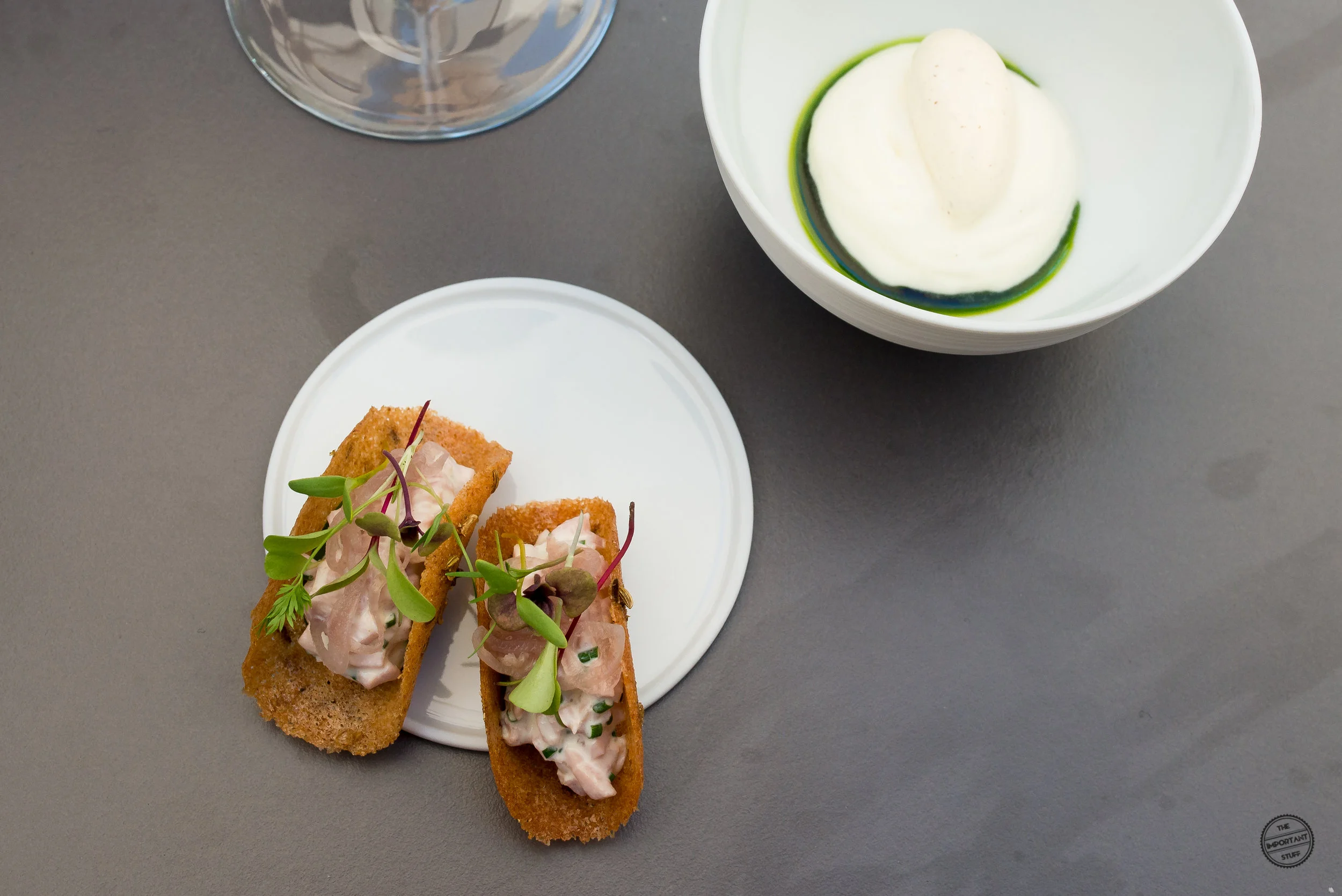
Next come mustard ice cream, ham and chive oil, followed by a bread taco with ham. Ham has been a recurring theme here since my first visit to Fürstenau, each time interpreted with the utmost elegance and indulgence. This duo is no exception. Superb.
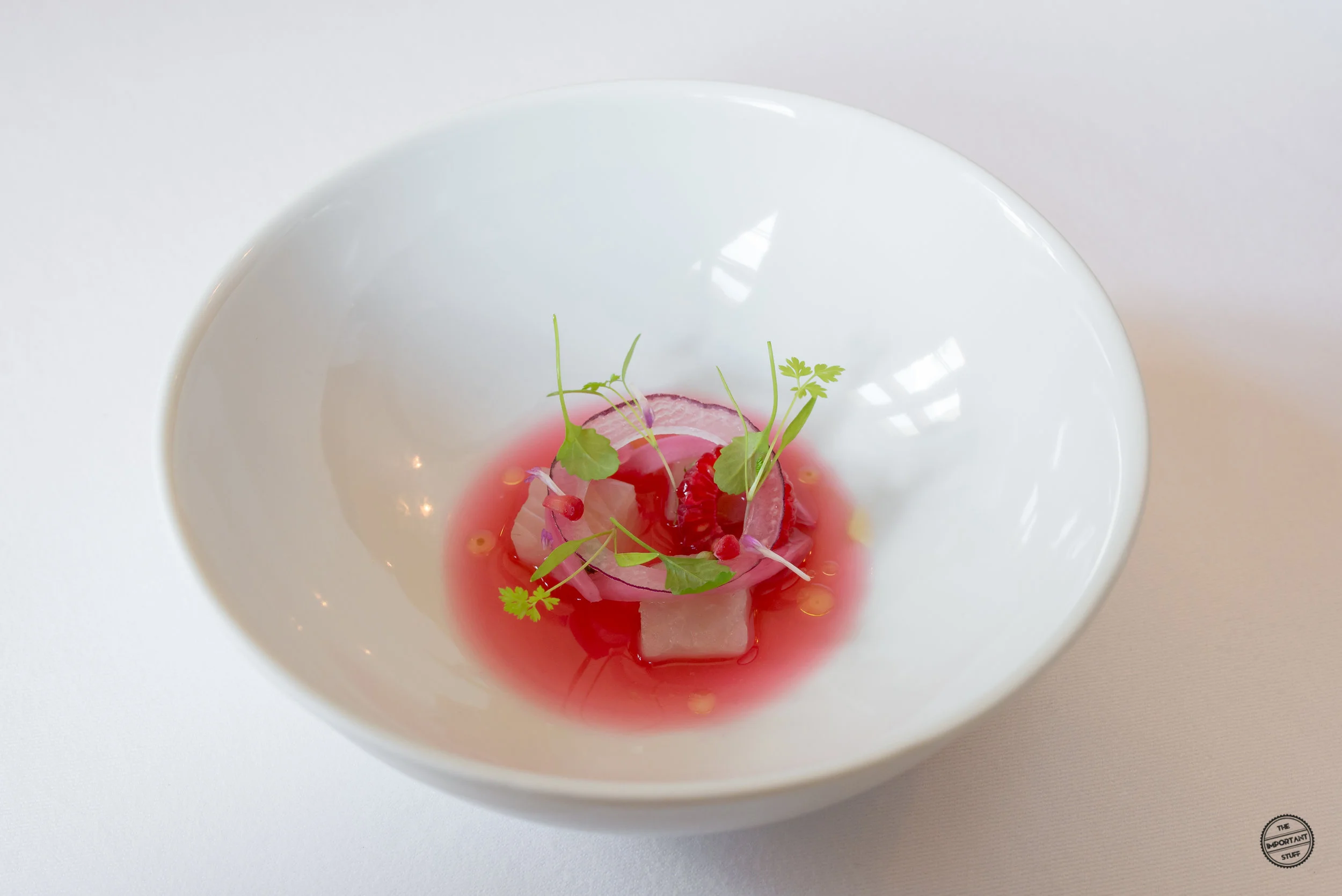
Lunch continues inside the castle walls - providing a little bit more shelter from the blistering sun and heat - with whitefish, onion broth and raspberry. It is a dish that captures Caminada’s particular gift. He tames the sharpness of the onion and the acidity of the raspberry so that neither overwhelms the delicate fish. At the same time, he preserves their integrity and folds everything into a harmonious whole. Very strong.
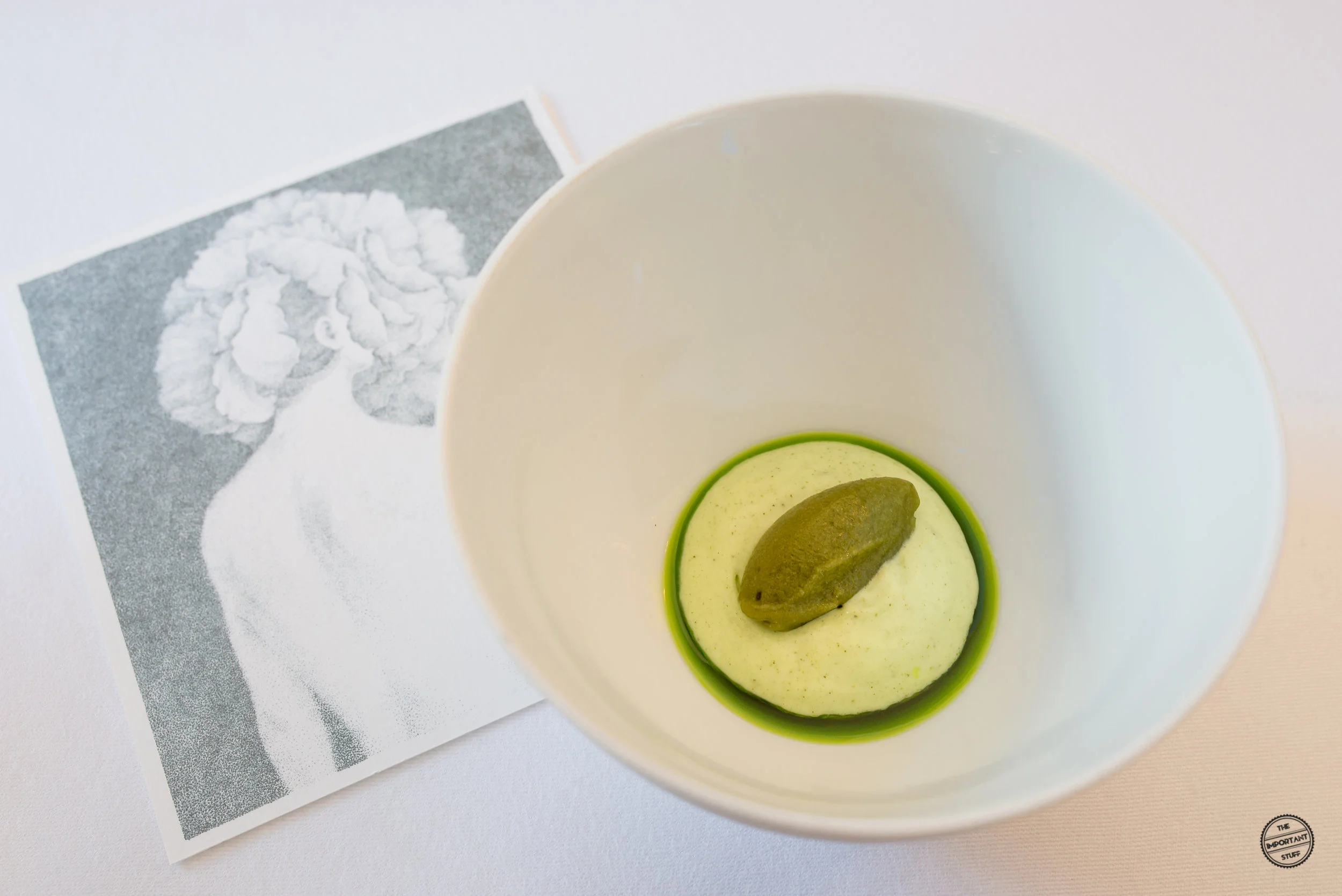
An old friend appears in the form of lettuce gazpacho. Its green freshness and pleasant chill feel made for a hot summer day like this one.

Foie gras, truffle and beetroot falls a little outside the line of the meal. It lacks the airy lightness that marked the preceding dishes. It is, of course, hard to go too wrong with this combination, and both the ingredients as well as the technique are convincing. Still, the dish is only partly exciting and not especially summery.
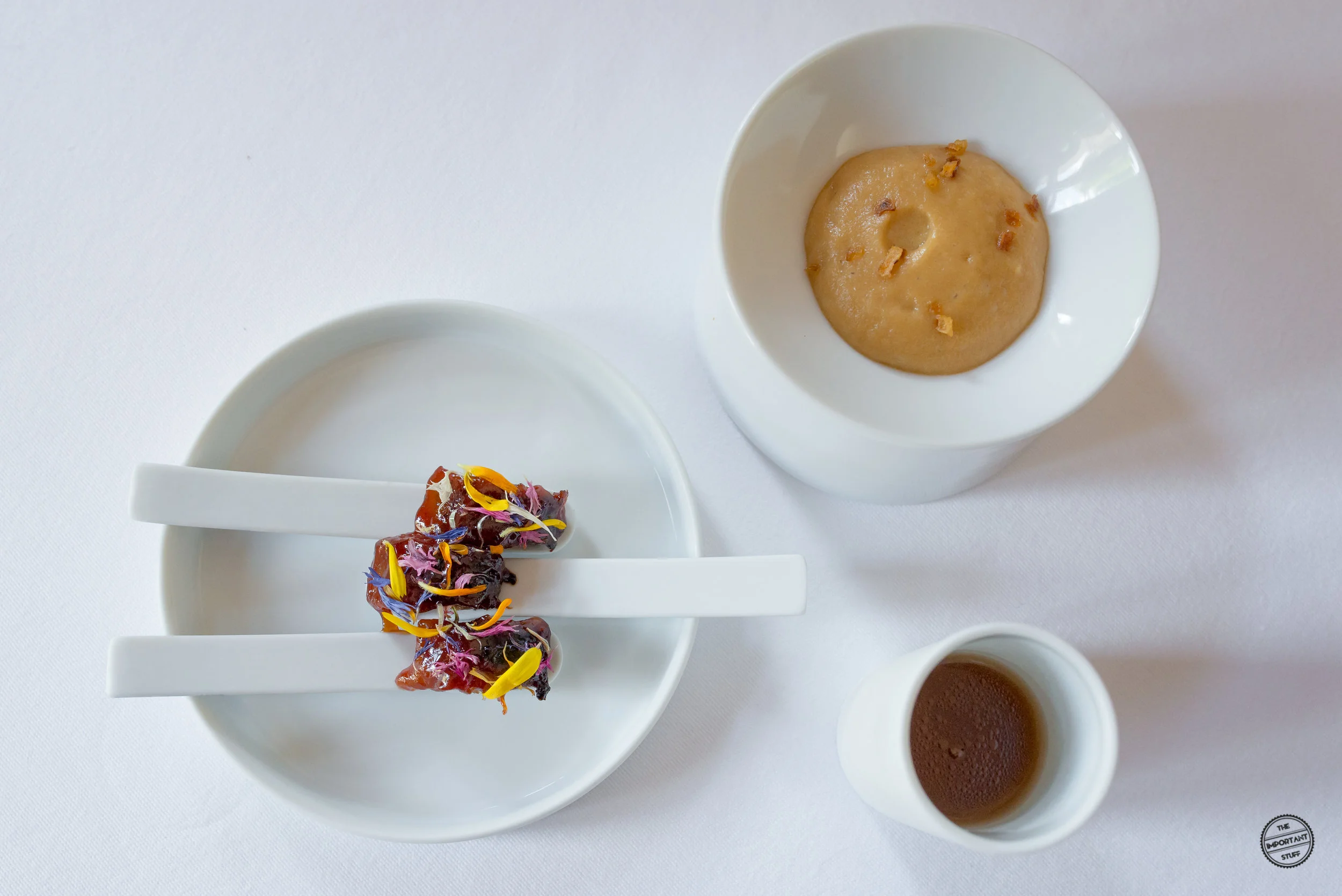
The final greeting from the kitchen is an altogether different matter. And yes, the menu has still not officially begun: spare ribs, fried onion and dried pear. I will admit that pork has a fairly easy path to my heart. But not many kitchens make it taste this good. Juicy, tender, full-bodied without becoming heavy, and beautifully accentuated by an elegant bouillon. The pear supplies the counterpoint, a low, slightly muted fruit sweetness. This ensemble deserved a larger portion and a more prominent place. Wow.
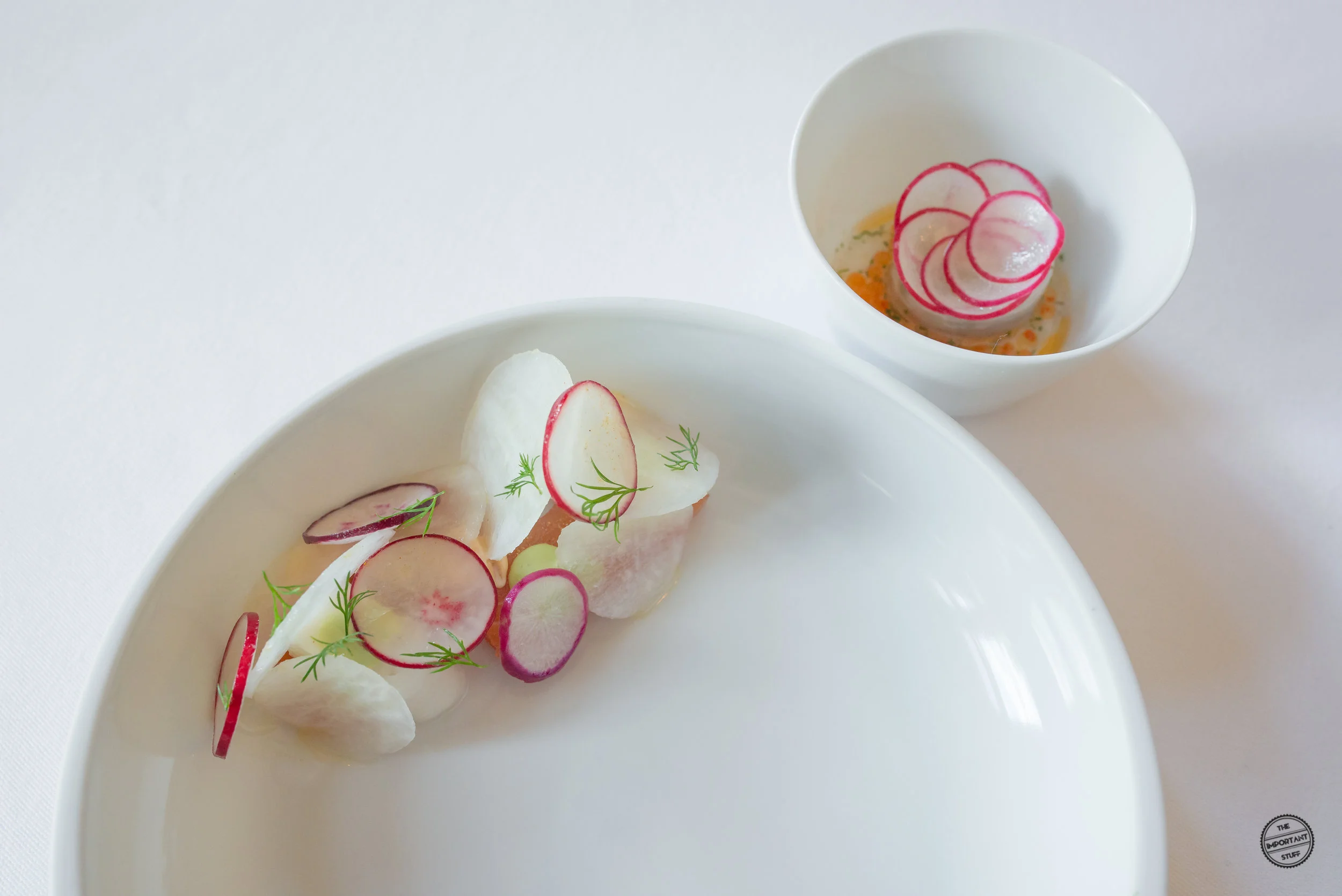
The first official course is char with kohlrabi and radish. On the main plate, the fish has been cured a touch too long, making it slightly too firm and costing it some of its otherwise seductive melt. Still, the product quality is beyond question, as is the simple, crisp framework, which complements the delicate char beautifully. In the small bowl is something like a char tartare with its roe and a vinaigrette. It stands fully alongside the main plate, distinguished by its spot-on seasoning.
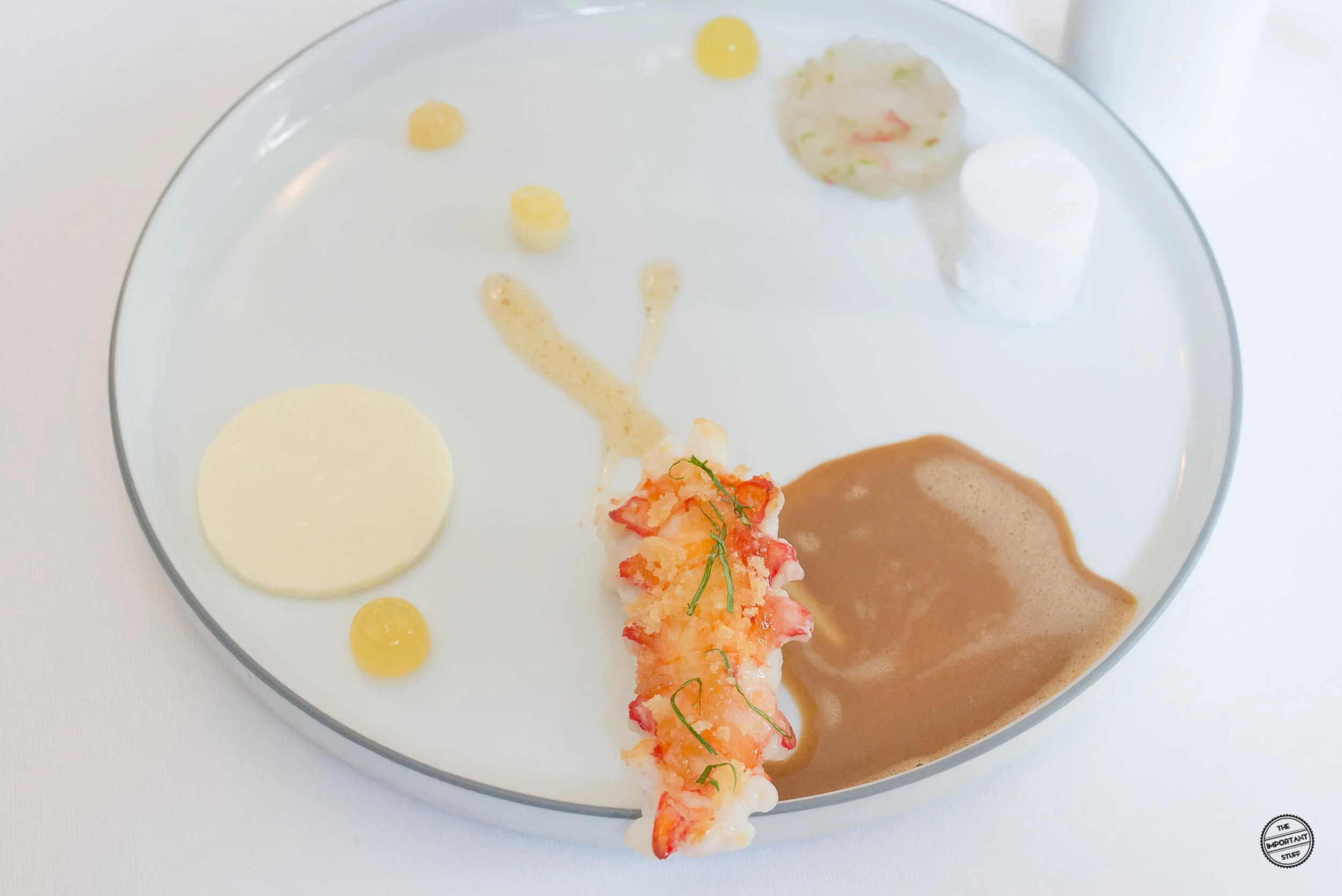
The langoustine with lemon, a house classic from 2008, was long one of my favourites. Compared with what Caminada cooks today, and with what he now largely represents, the dish feels almost impossibly anachronistic. I still find it appealing though. The langoustine is of good quality and the execution technically faultless. But when this creation, more than a decade old, is set beside the dishes of recent years, the difference is unmistakable. The pillars of Caminada’s cuisine may not have shifted, but the newer work is more precise, more nuanced and, above all, more delicious.
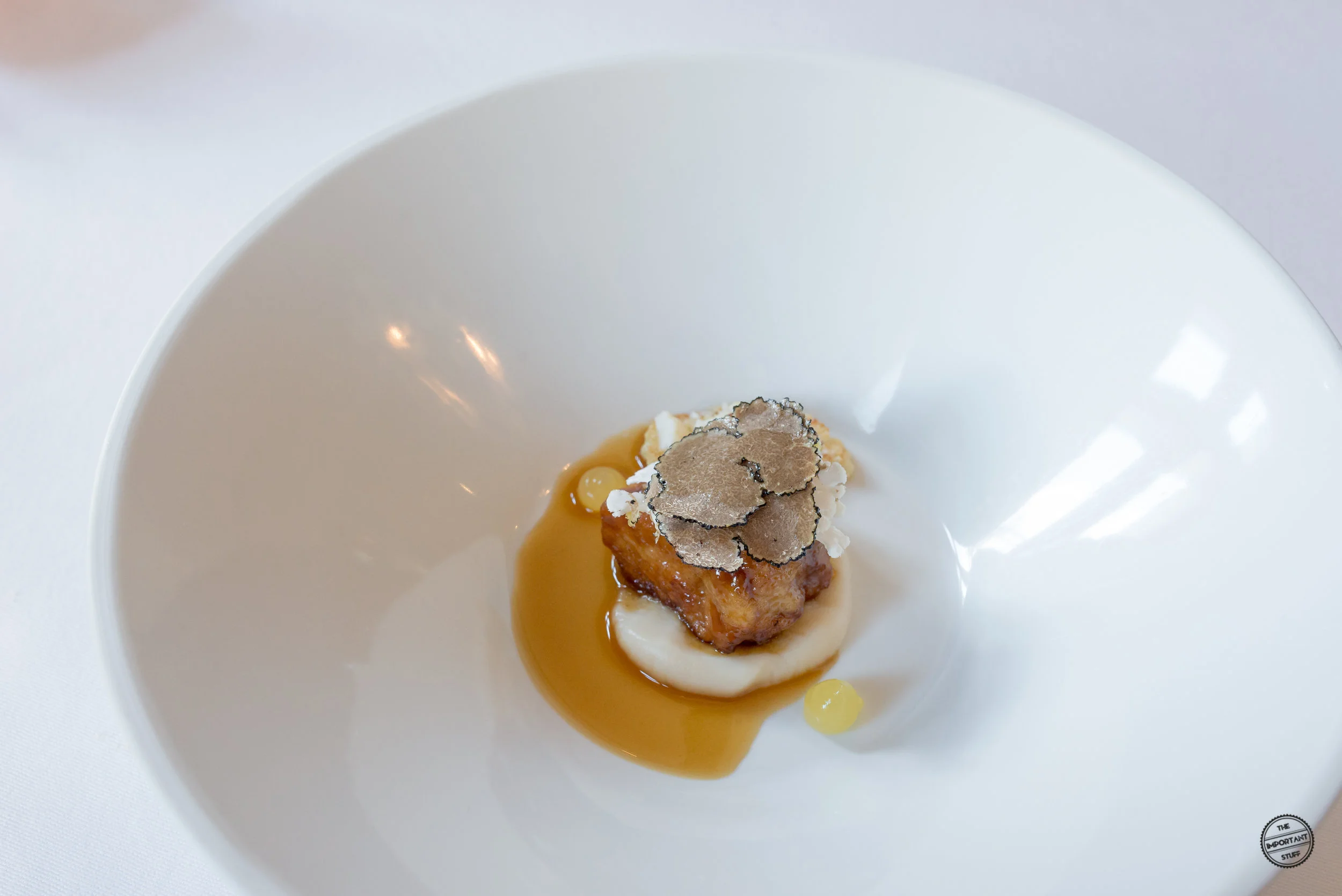
By Schauenstein standards, the veal sweetbread with cauliflower and truffle is almost classical. This proven trio needs little explanation. It works. And when executed as flawlessly as it is here, its rich, luxurious melt delivers deep satisfaction. Even in this relatively light presentation, it is not exactly a summer dish. If one were determined to find a small criticism, it would be the lack of crust on the sweetbread. A little more texture would have given the trio more life and made the eating even more pleasurable.
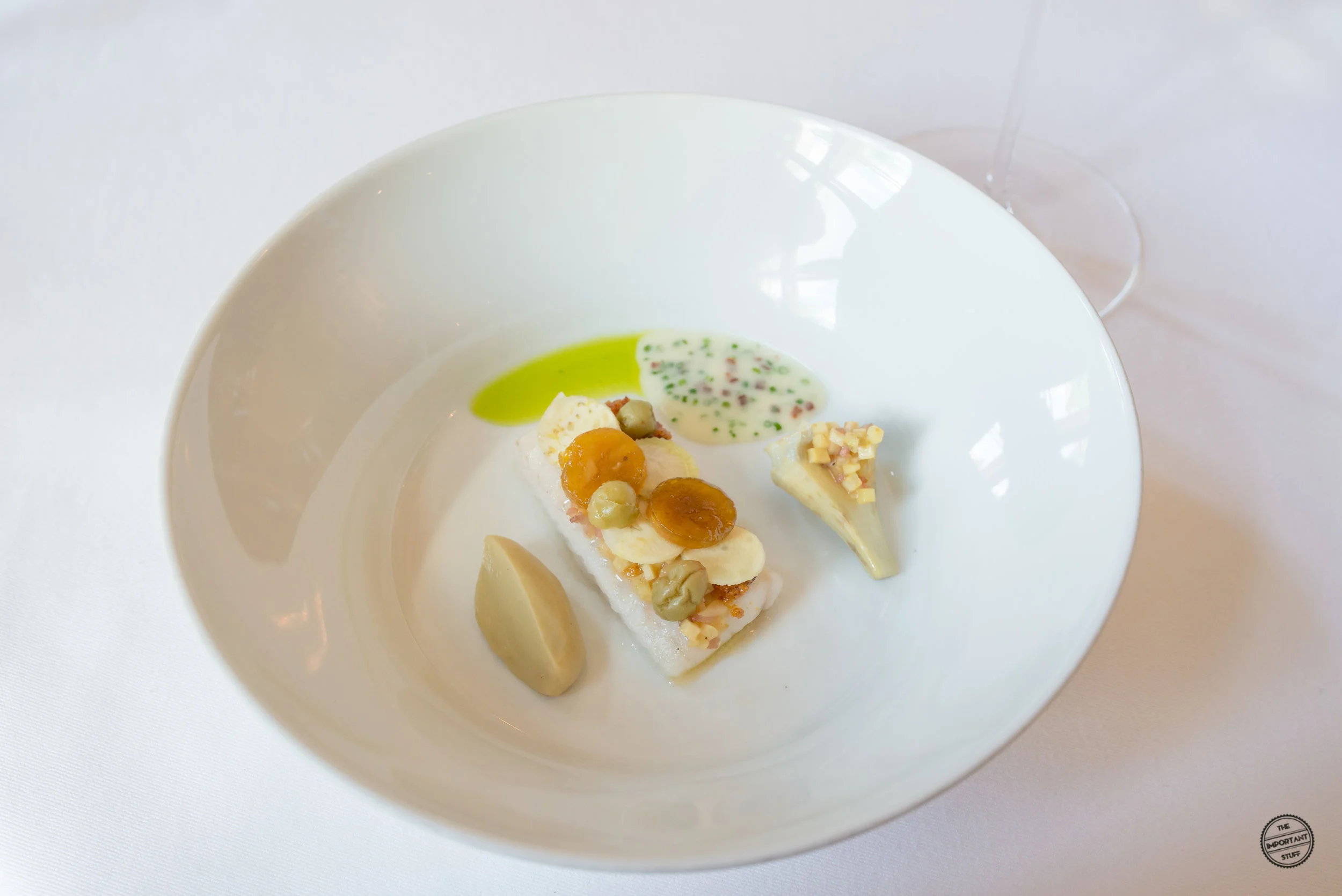
Next comes pike-perch with aubergine and artichoke. The bitterness of the artichoke beautifully highlights the fine structure of the fish. The aubergine, however, leaves me unconvinced even after a third forkful. Its slightly heavy flavour does not seem the ideal additional companion. Like the discreet but noticeably salty bacon in the sauce, the eggplant slightly undercuts the otherwise immaculate elegance of the bowl. But this is criticism at a very high level.
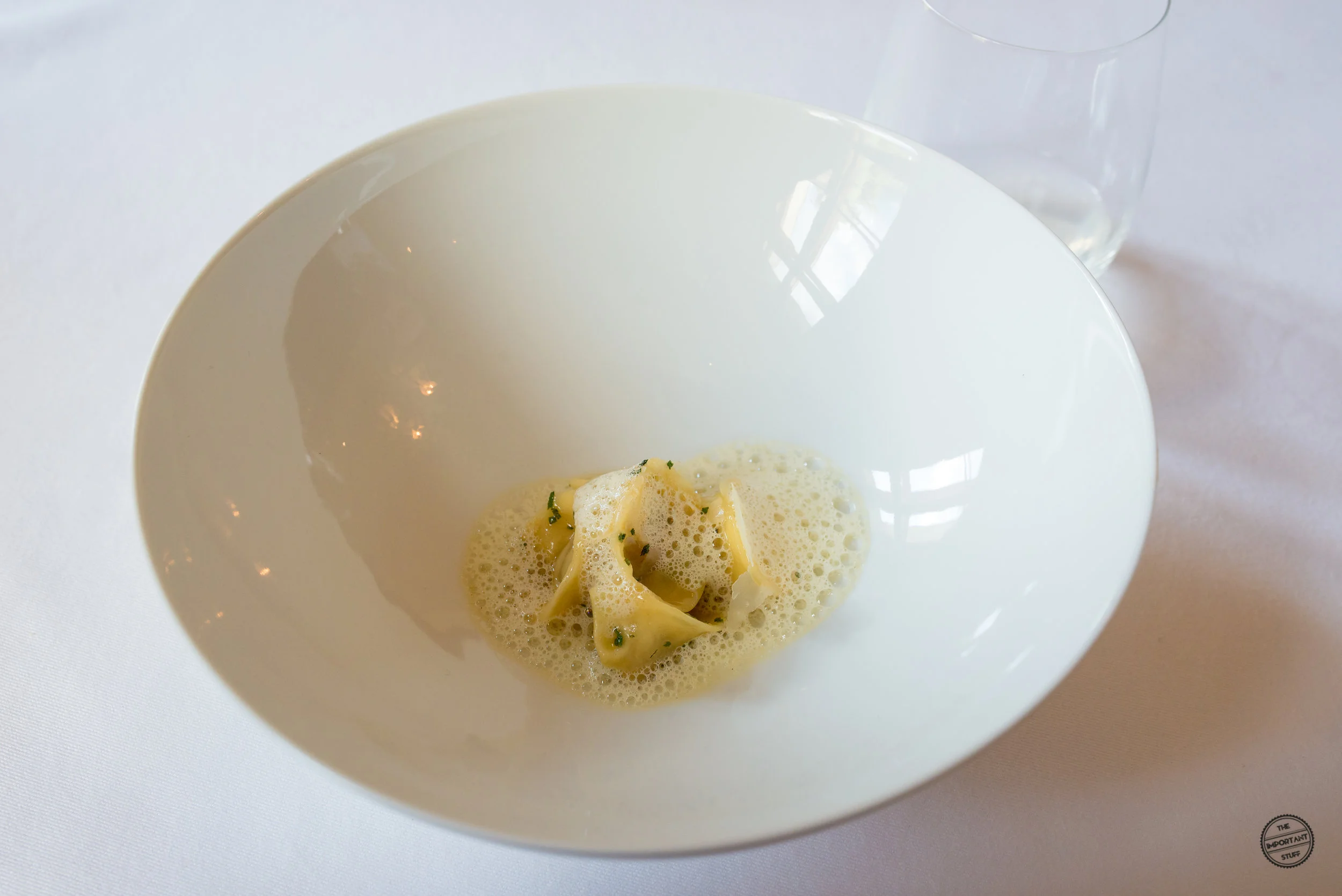
As a small interlude, I add the tortellini with braised beef filling. The pasta could have been cooked a fraction longer, but the dish is still a worthwhile, generously pleasurable little intermezzo.
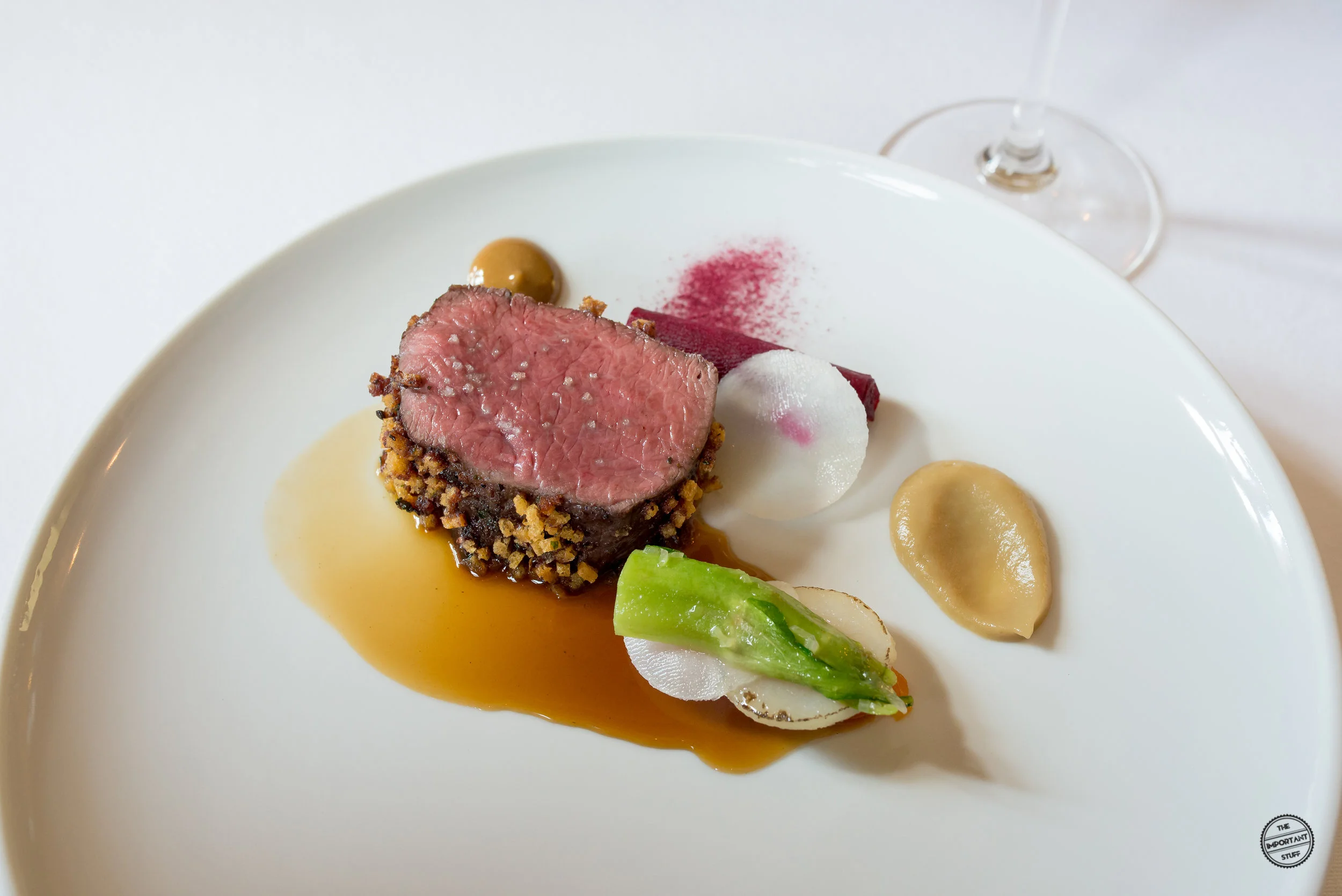
To make sure the carnivorous appetite is not neglected, the main course brings venison loin with Jerusalem artichoke, garlic and puntarelle. The intention is clear, and the combination of components makes sense in theory, but here one gear does not quite catch the next. The pepper used on the venison is somewhat overly dominant. At the same time, despite the bitterness of the puntarelle, the overall impression drifts a little too far toward sweetness. These are nuances, but this is not quite the effortless perfection one expects from this kitchen. None of it is disastrous; the dish still tastes very good. It simply does not belong among the countless highlights Caminada has served me in years past.
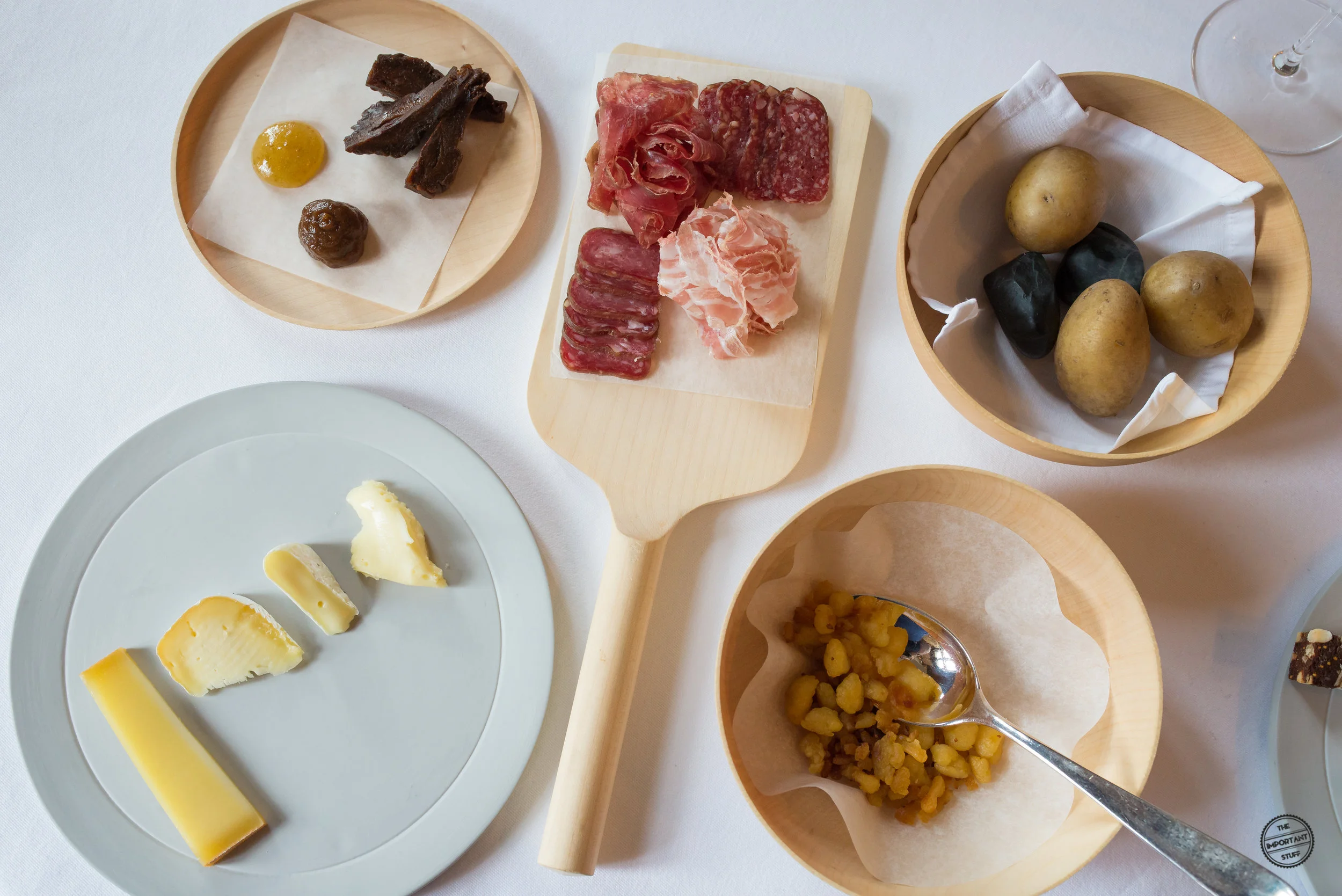
Then comes the moment I await with longing on every visit to Fürstenau: the cheese trolley. Today it is not fully functional and does not unleash its entire mechanical grandeur, but that hardly diminishes the cheeses themselves. As always, the noble products are in prime condition, perfectly ripened and perfectly tempered. Alongside them comes a kind of best-of Bündnerland: maluns, mountain potatoes, dried meat, mustard and dried pear. These days, some restaurants justify the journey for the cheese trolley alone. Schauenstein is certainly one of them.
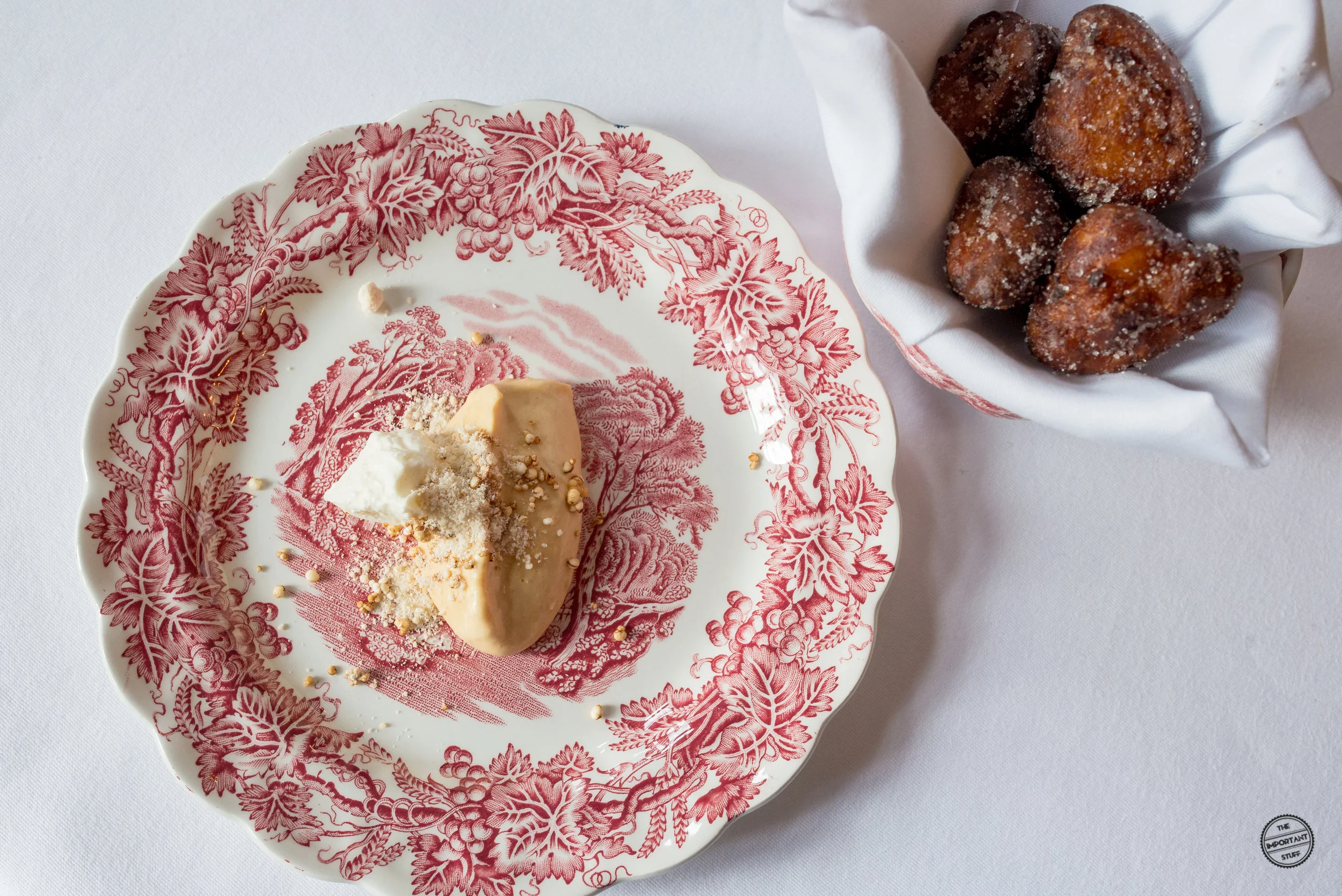
The opening into the sweet world of the castle is deeply comforting. Burnt crème d’atta and apple beignets have become familiar companions, dishes through which Caminada shows that even the simplest home-style cooking can be brought to three-star level. You can simply eat them without thinking. Or you can pause, if you like, to admire the perfect craft, the fine calibration, the harmony. Wonderful. Every single time.
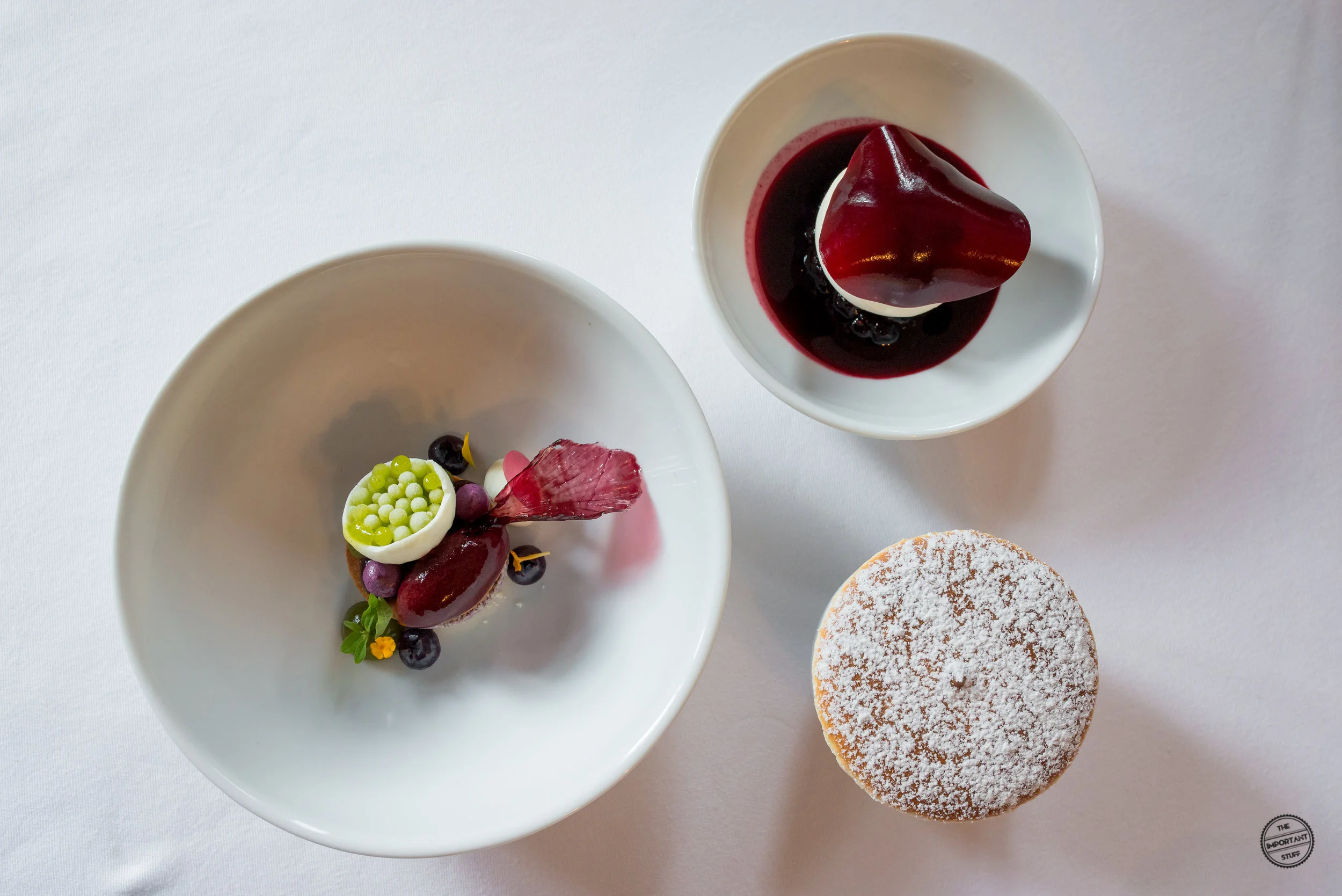
Even better are the blueberries with yoghurt, buckwheat and lemon. Fruity, fresh and light, the dish almost throws summer in your face. Everything that makes dessert joyful is here in full: sweetness, yes, but never too much; an invigorating play of acidity that keeps it all beautifully lightweight; deep, intense fruit, arriving like an olfactory wave; temperature and texture contrasts that prevent even the smallest flicker of boredom. The superb, airy soufflé is the final touch. Dessert does not get better than this.
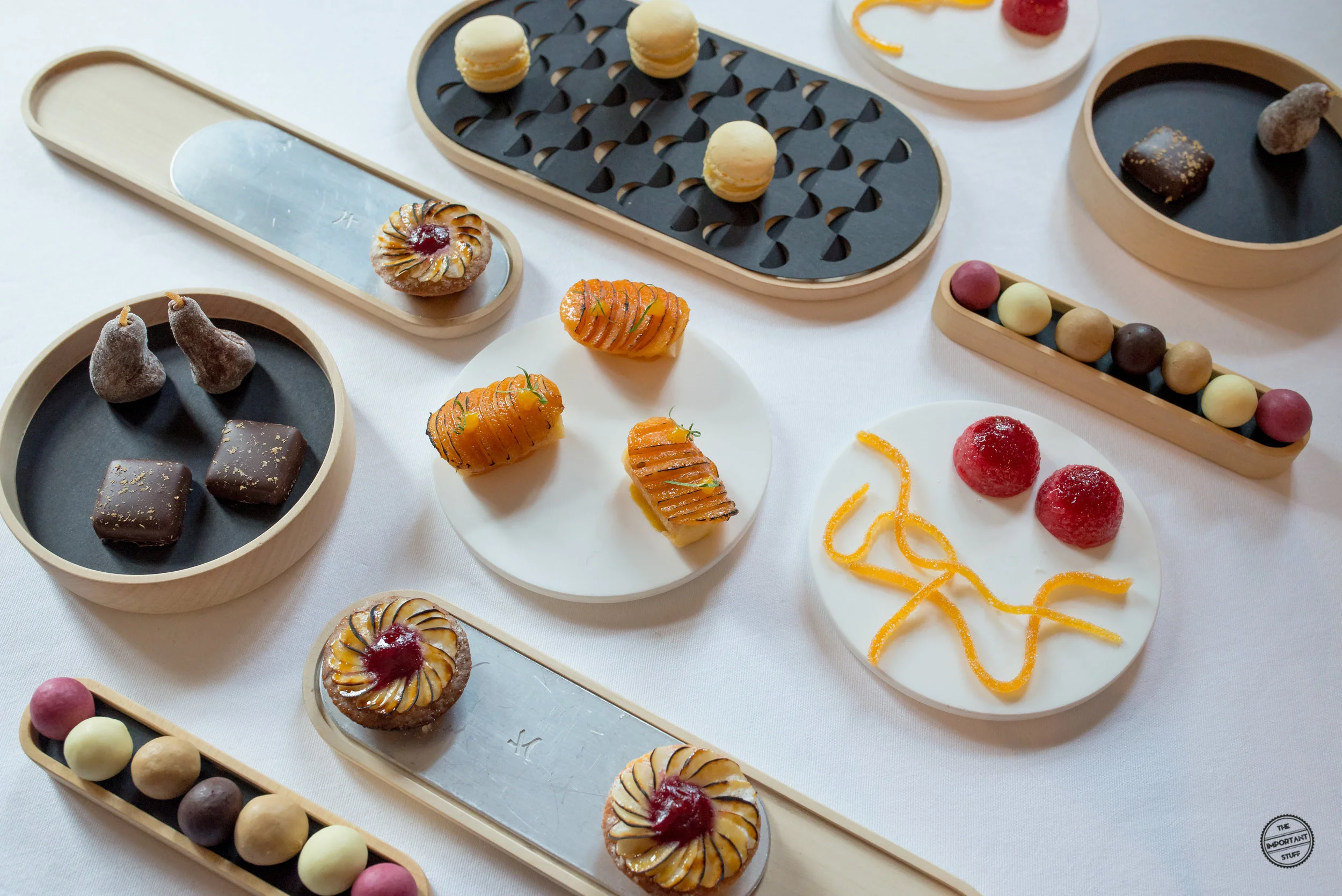
In the salon, a few petits fours arrive with the espresso. Caminada’s cuisine is mostly so light that there is still space for them. A rare pleasure.
For me, there are few things more closely tied to the joy of living than a visit to Schloss Schauenstein. The total experience Andreas Caminada and his team create is difficult to surpass, and only a small number of restaurants in the world inhabit this level with such conviction. And yet, as wonderful as the experience was again today, purely from a culinary perspective one has to acknowledge that the kitchen has had stronger days.
That statement needs immediate qualification. Guests less familiar with Caminada’s cuisine, or those making their first pilgrimage to Fürstenau, would very likely have been stunned by today’s menu. If, however, one has eaten here many times, the small deviations from the culinary completeness that usually feels so natural in this house become visible. On a few plates, the final measure of precision in seasoning and cooking was missing. But this is, of course, criticism at the very highest level. On the next visit, everything will surely be immaculate again. I am quite certain of it.
Schloss Schauenstein
Schlossgass 77
7414 Fürstenau
Schweiz
+41 81 632 10 80
Book a Table - Schloss Schauenstein
Our visit was supported by the restaurant. Information on how we handle press conditions can be found in the FAQ.